Springs · Cundles
Garage Door Roller Replacement in Cundles
Every morning the door announces itself: a rattle on the way up, a grinding squeal on the way down, loud enough that the neighbours know when you leave.
In plain words
A garage door opener is designed to guide a balanced door, not to haul a rough one. Rollers that bind, wobble or grind add resistance across the whole travel, and the opener answers by working harder, running hotter and tripping its force limit or reversing partway. Replacing worn rollers with a smooth-running set takes that load away, which is why the opener often sounds calmer after the same visit. The technician confirms the door holds its own weight with the opener released, then checks the opener's force and reversal settings once the new rollers are in.
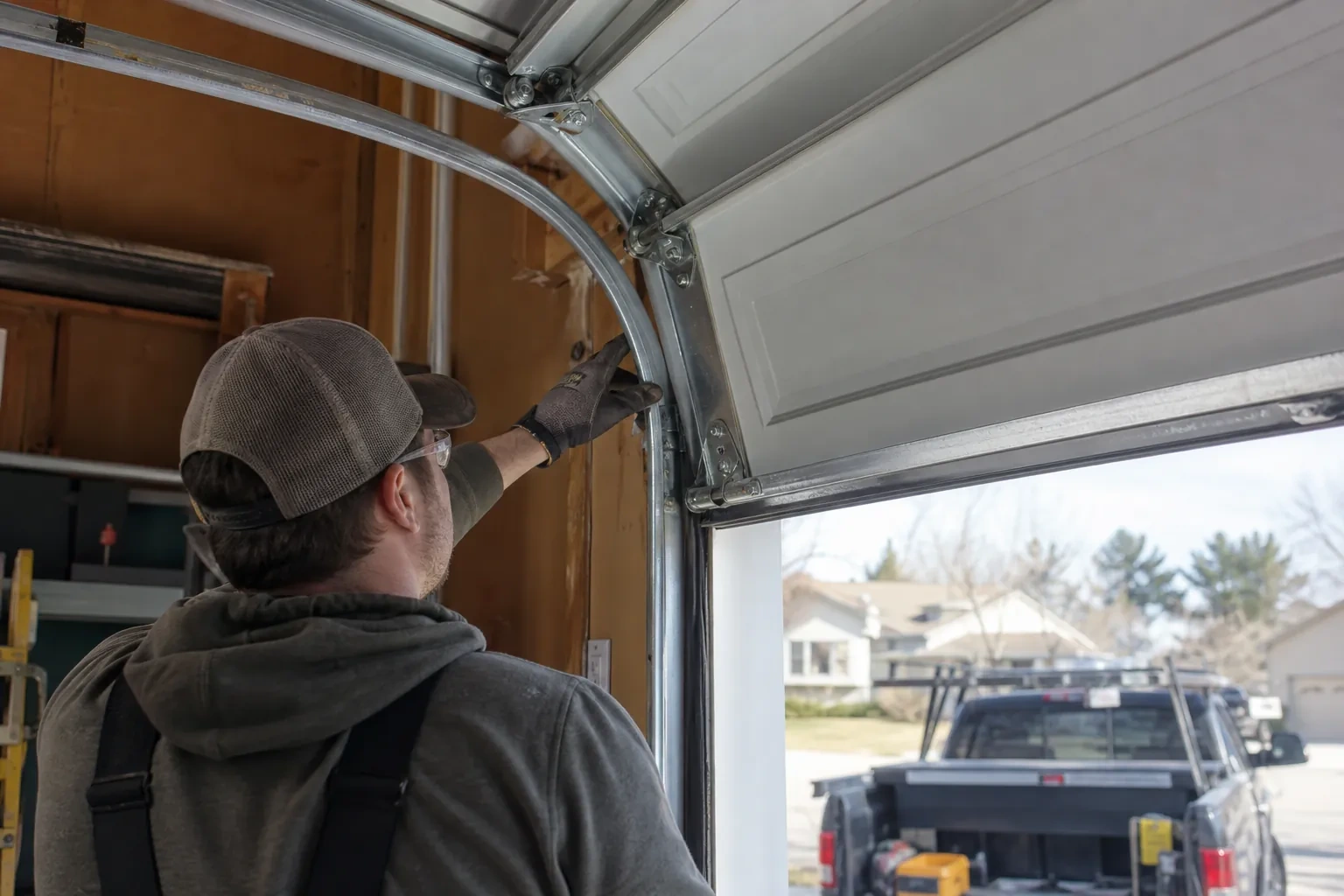
How the visit goesA roller near the top corner is riding on the lip of the track rather than inside it, and the section above leans back a little more each week. The door still moves, but it looks one bump away from coming out altogether.
Garage Door Roller Replacement
How the visit goes
What the winter left behind
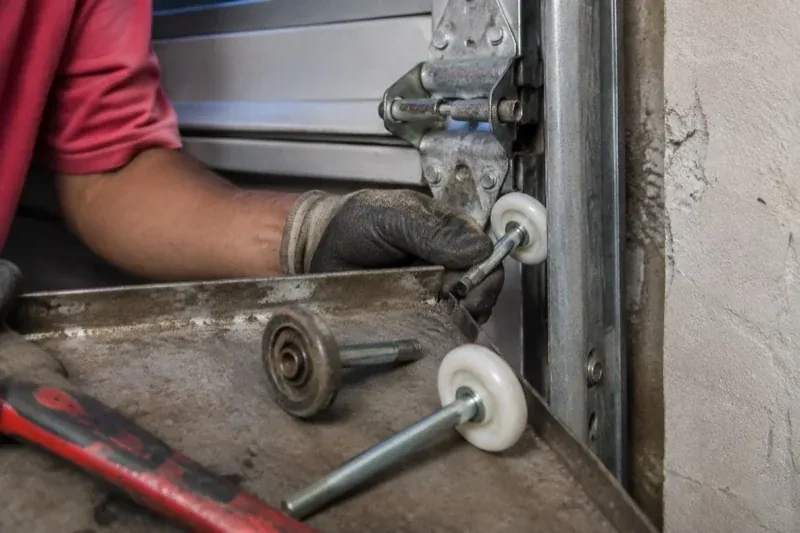
In this climate the foot of the track is where trouble collects. Slush and salt carried in on the tires settle in the bottom few inches, freeze overnight into ridges and leave a brine that attacks steel. The technician looks for corrosion on the bottom rollers and their stems, rust on the bottom brackets, ice damage or flat spots on wheels that have been skidding rather than turning, and the state of the lifting cables that share that wet corner. Finding salt damage here steers the recommendation toward sealed-bearing rollers and a thorough track cleaning, and occasionally toward new bottom brackets as well.
Top rollers and the adjustable fixtures
The top rollers sit in fixtures that slide in and out on the top section rather than in fixed hinges. The technician loosens the fixture, swaps the roller and then sets the fixture position with care, because that adjustment is what pushes the top section snug against the header seal when the door closes and keeps the wheel riding in the track rather than binding against it as the door starts to open. On heavy doors the top rollers do the most work of any on the door, so this is also where a higher load rating or a longer stem earns its place.
Looking after nylon rollers
Modern nylon rollers ask for very little. Twice a year, glance along each track with the door closed for a wheel that sits crooked, a cracked tire or a stem that has begun to wobble. Give the hinge knuckles a short burst of garage door lubricant once or twice a year, and leave the wheels and track dry; lubricate bearings only if the roller's maker calls for it, since some are sealed or built to run without added grease. Keep the bottom of each track swept clear of leaves, grit and, in winter, slush. Rollers with sealed bearings need even less, since the seal keeps dirt and moisture away from the balls; a wipe and a look is enough.
Garage Door Roller Replacement
In the van
Adjustable top fixtures
1-1/2 inch reversal test block
Garage door lubricant
Three-inch rollers for commercial track
Replacement numbered hinges
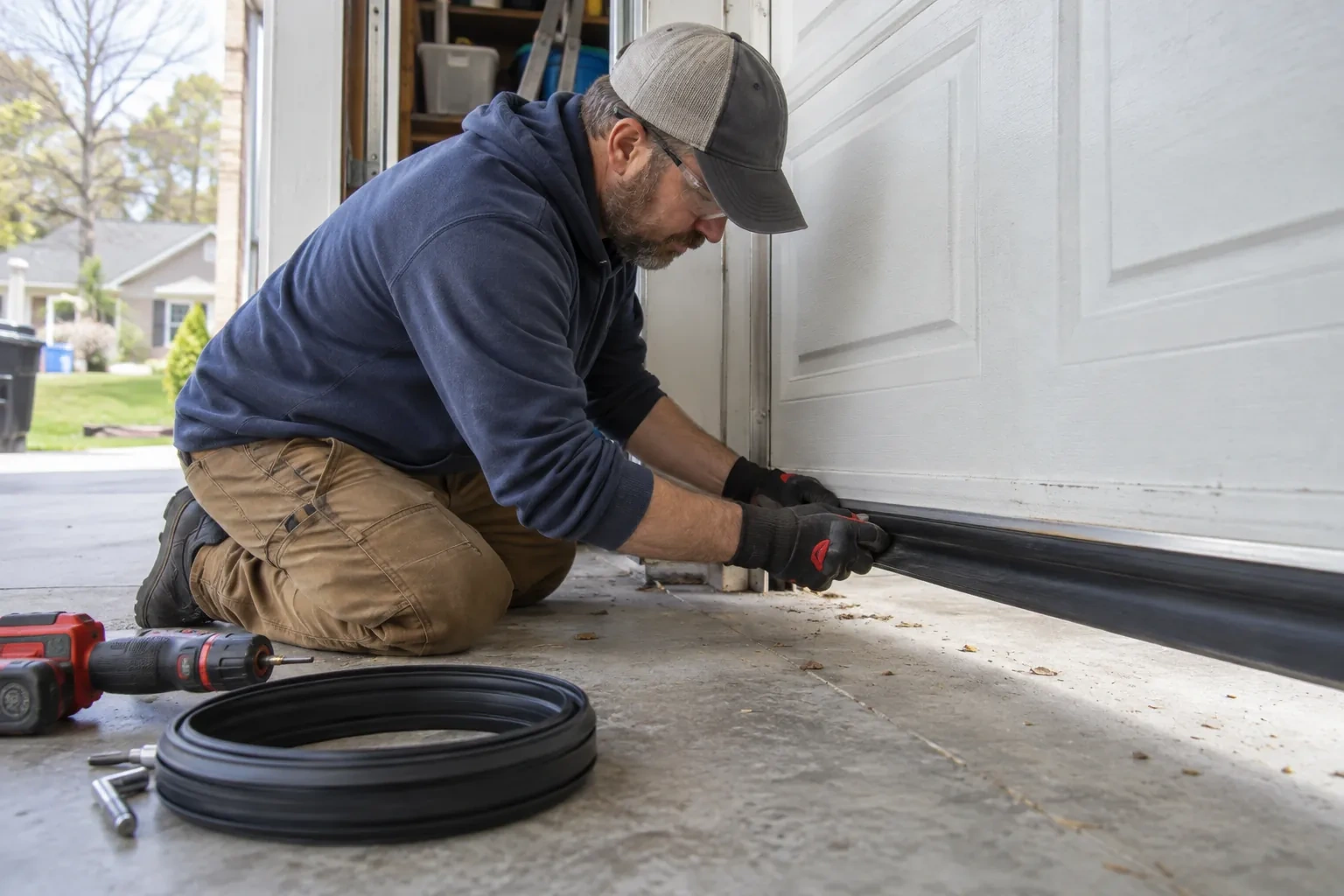
Garage Door Roller Replacement
What affects the quote
Hinges that need replacing
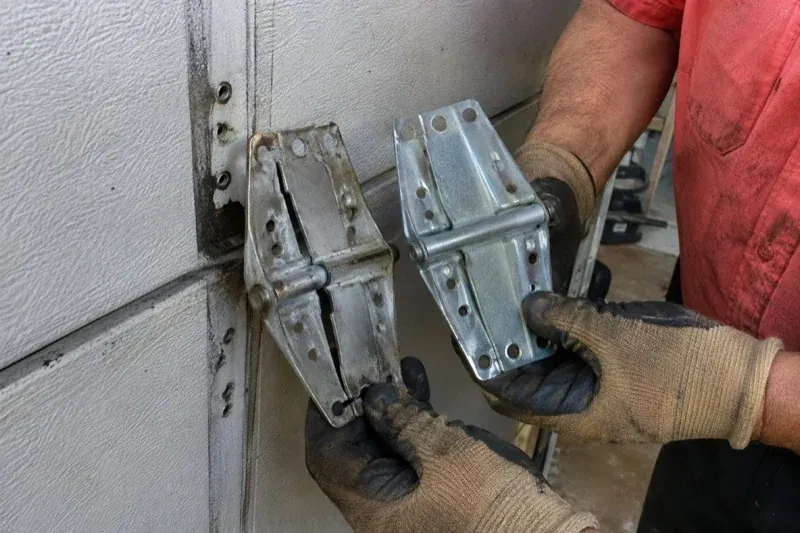
Cracked, elongated or rusted hinges found during the inspection are replaced with the correct numbered hinge, each priced as its own item alongside the rollers.
Relieving spring tension for the bottom rollers
When the bottom brackets have to be unbolted, the technician takes the spring load off first with winding bars, skilled extra work that is included in the figure for that position.
Combining with spring or cable work
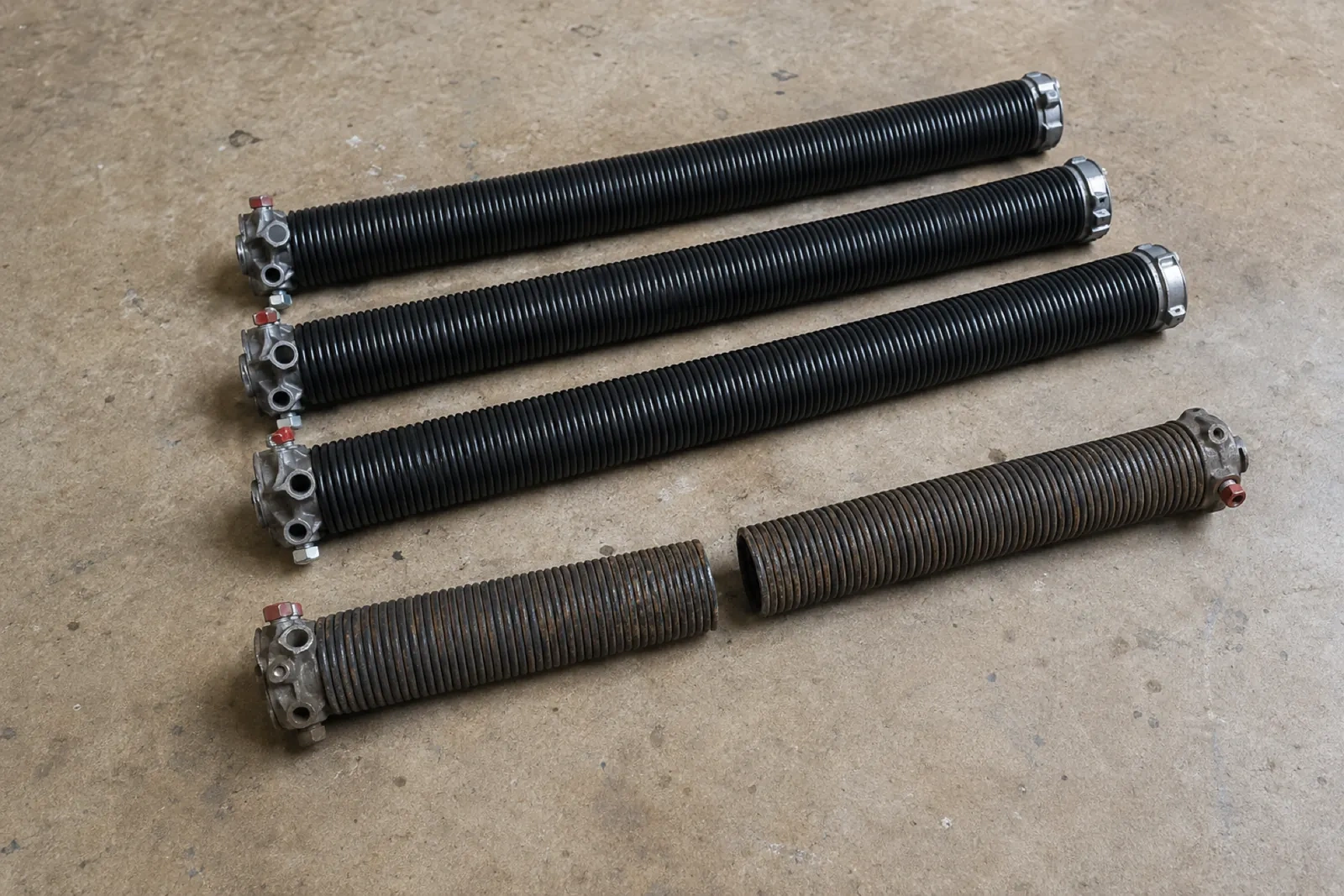
If springs or cables are being replaced in the same visit, the door is secured once and the roller set is added to that job, which is often more economical than a separate call.
What to have ready
- Are there two hinges stacked at the ends of each section, or one?
- How many sections does the door have, and is it wood, insulated steel or single-skin?
- Has the door ever come off its track or been hit by a vehicle?
Garage Door Roller Replacement: questions
QuestionsDo nylon rollers need lubricating?
The nylon tire itself needs none; spraying it or the track only collects dust that grinds the wheel. The hinge knuckles and stems where they turn benefit from a light coat of garage door lubricant once or twice a year, worked in by running the door. The ball bearings themselves are lubricated only where the roller's own maker calls for it, since some nylon rollers should not be greased there. Rollers with sealed bearings come greased from the factory and need only a wipe and a look.
How does the technician tell rollers from hinges or track as the cause?
By watching where and when the trouble happens and then checking the parts in that spot. Rollers are spun and wiggled to reveal rough bearings and worn wheels; hinges are checked for cracks, elongated holes and loose bolts; tracks are checked for plumb, dents and spacing. A shudder at the curve tends to be rollers, a pop as sections pivot tends to be a hinge, and a rub the full height of the door tends to be track. Often more than one is involved, and the visit covers them all.
What is the difference between nylon and steel rollers?
Both are a wheel on a steel stem, commonly on ball bearings though standard nylon rollers can be bearingless; the bigger difference is the wheel material. A steel wheel is tough and suits very heavy or commercial doors, but steel on a steel track is loud and grows louder as bearings wear. A nylon wheel wraps a tire around the hub, absorbing vibration rather than passing it into the track, so the door runs more quietly and the wheel never rusts. For most residential doors, nylon is the usual recommendation.
Related services
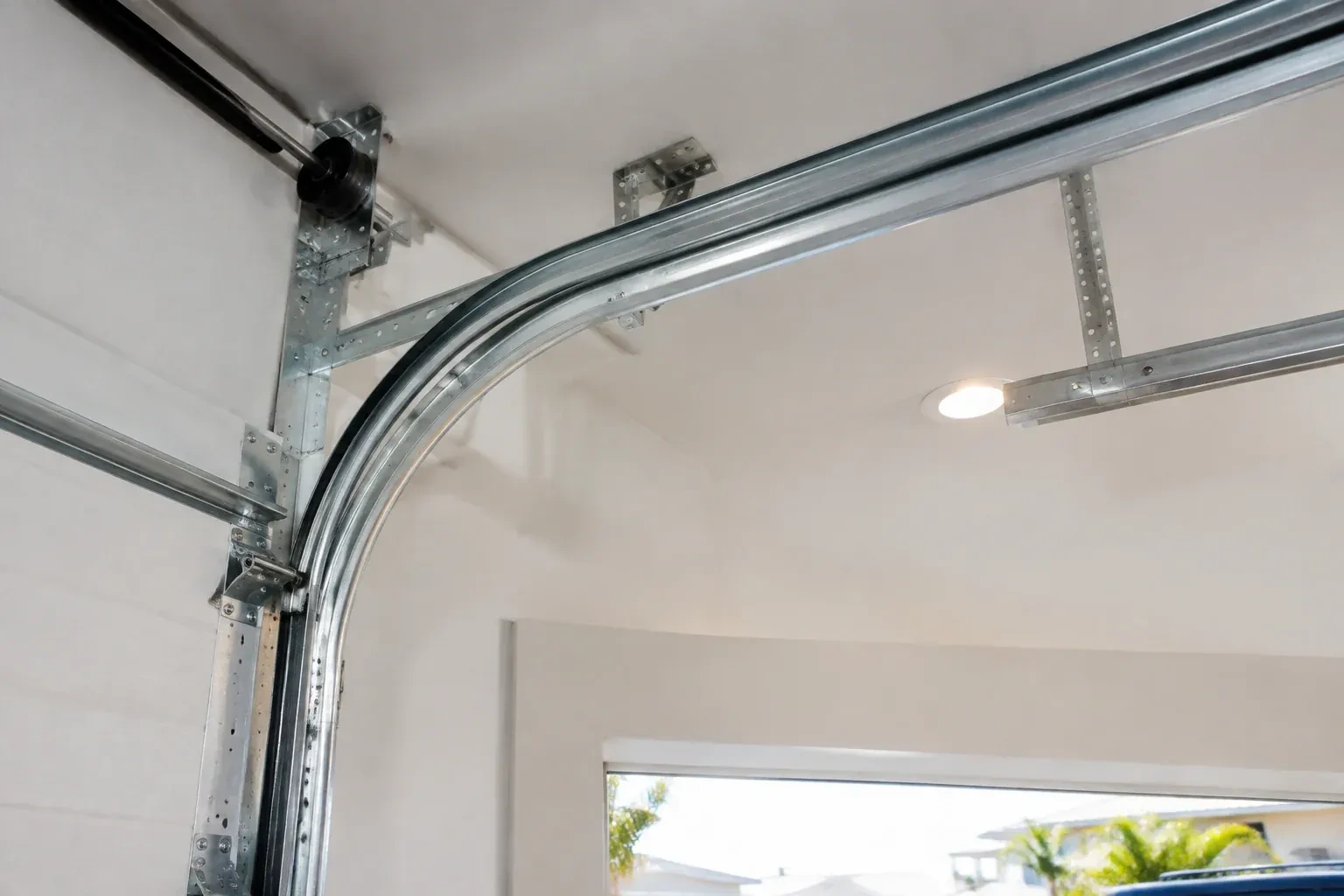
- Garage Door Track Repair or ReplacementHalfway up, the door lurches and one roller rides onto the lip of the channel.
- Garage Door Cable ReplacementStanding inside with the door closed, you notice the cable on the right side near the floor has gone fuzzy.
- Torsion Spring ReplacementAfter pulling the red release cord, you tried lifting the door yourself and it would barely leave the floor.