Springs · Barrie
Garage Door Hinge Replacement
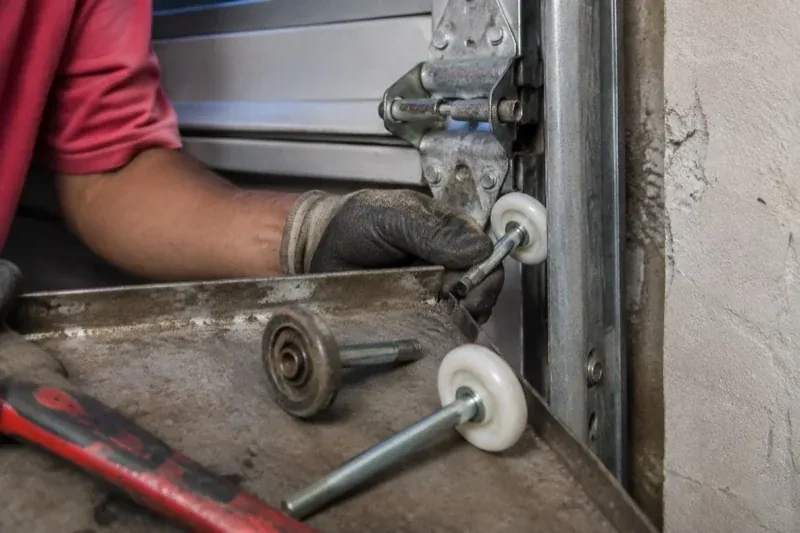
The roller at the top of the second panel is leaning outward and only half of the wheel is still in the track.
In plain words
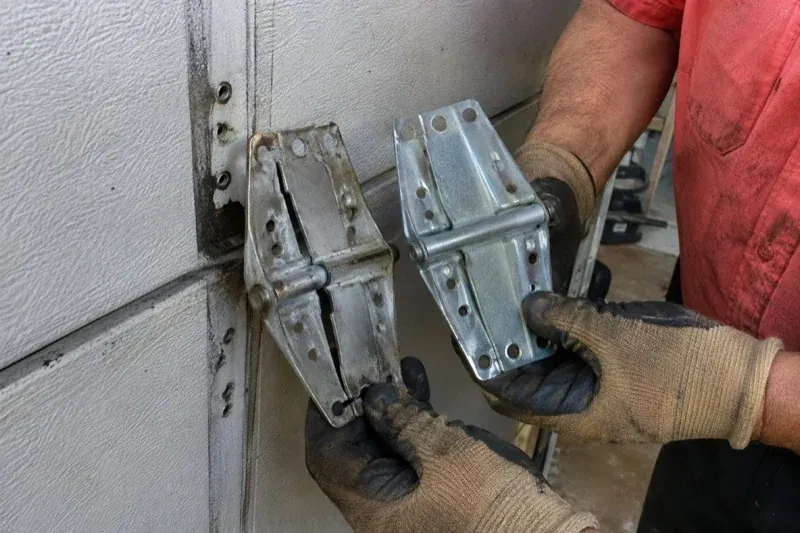
Hinges come in different thicknesses, and the visit is a chance to fit the right one. Steel gauge runs backwards: a larger number means thinner metal, so an 18-gauge hinge suits a light single door while 14-gauge is the heavier residential standard and 11-gauge is commercial stock. A heavy insulated double door, a door used many times a day, or a door whose hinges keep cracking at the knuckle benefits from moving up a gauge. The technician also checks that the hinge width and hole pattern match the door's stiles, since patterns vary between makers. You leave with hinges suited to the door's weight.
How the visit goesPressing a hand against one of the middle hinges makes it rock on the panel. The screws turn and turn without ever tightening, and there is a rattle from that spot every time the door settles onto the floor.
Garage Door Hinge Replacement
How the visit goes
How the door meets the jambs
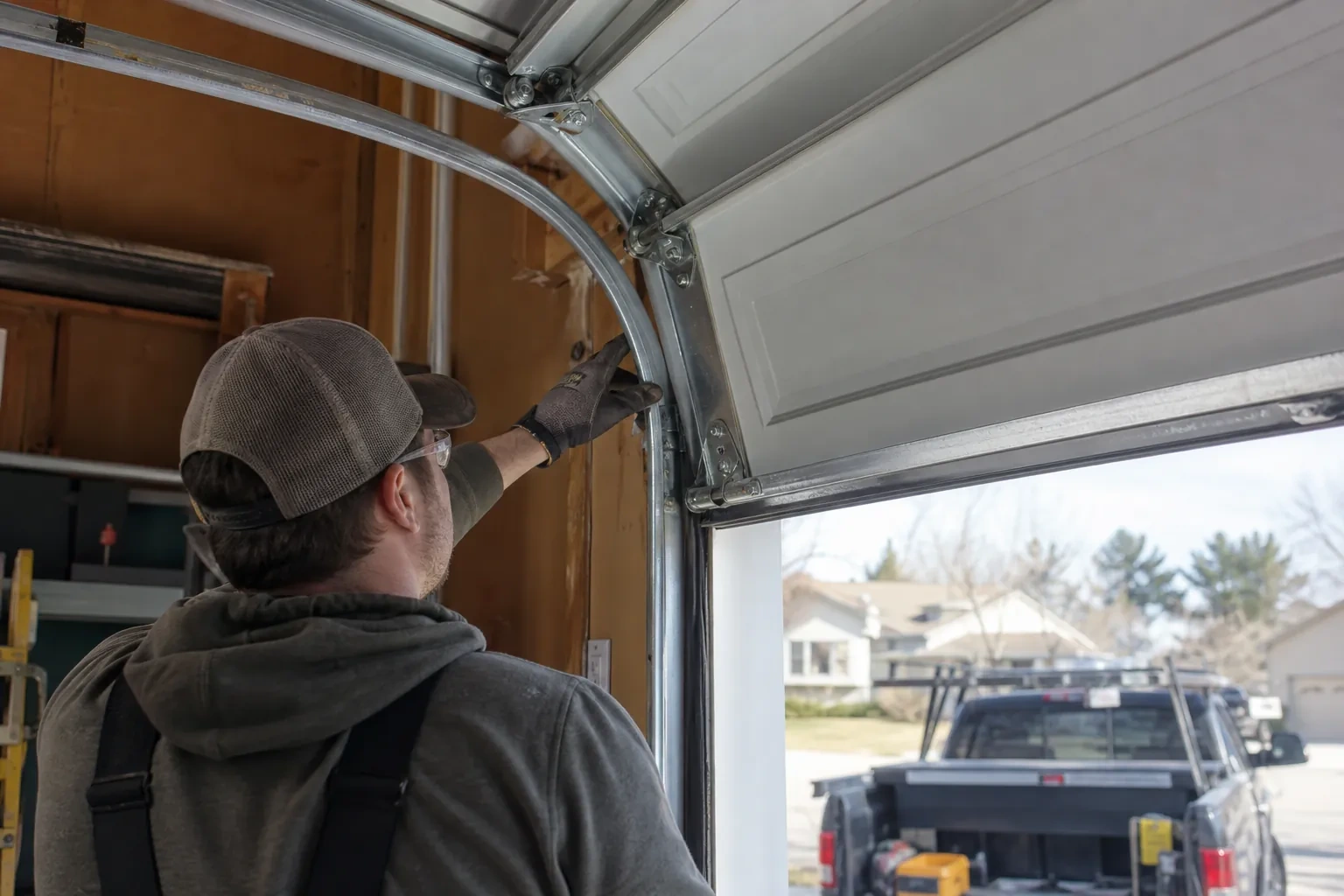
With the door still closed, the technician checks how it sits against the opening: does the door press evenly against the jambs on both sides, is there daylight at one edge, and do the panels line up flush with each other? Then the vertical tracks are checked for plumb, spacing from the door face and secure brackets, and the curve is examined for a smooth run. This matters because hinge numbers and track angle work together; a hinge of the wrong number, or a track that has crept, shows up here before the door moves. It also gives a baseline to compare against once the new hinges are on.
Swapping a centre hinge
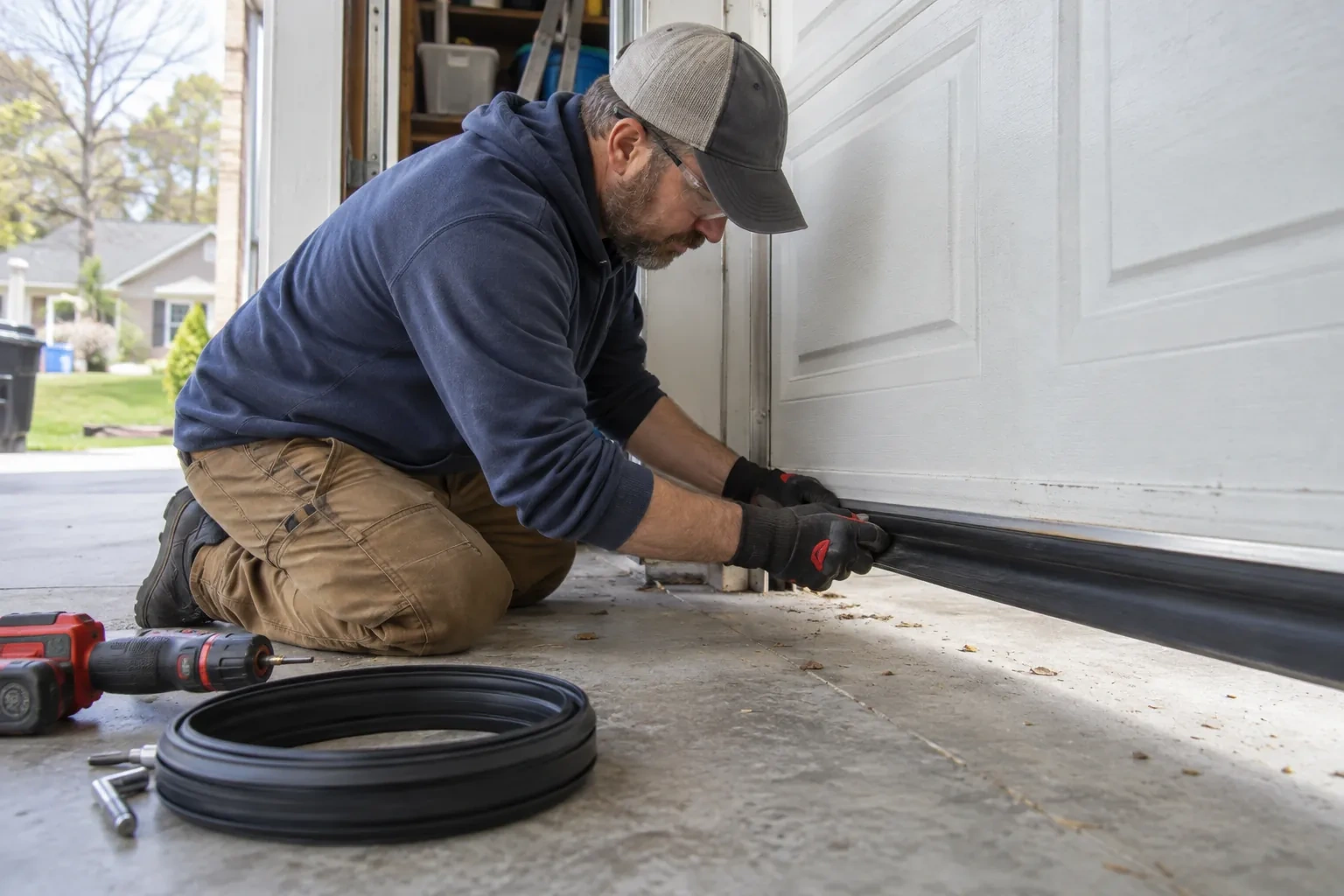
A centre hinge carries no roller, so its exchange is the simplest part of the day. The screws into the upper and lower panels are backed out, the old hinge lifted off, and the stile checked for damage around the holes. The new hinge, a 1 in most cases since centre hinges share that geometry, is placed on the same hole pattern, and new hex-head self-drilling screws are driven into the stile or the support plate behind it. If the old holes are tired, the technician moves the hinge slightly to fresh metal within the stile or bolts through with a nut and washer, then confirms the joint closes tight with no gap.
Screws you can tighten and hardware you leave alone
Hinge screws loosen with vibration and temperature swings, and snugging them with a socket wrench once a year is a homeowner task; do it with the door closed and the opener disconnected. The hardware to leave alone is the bottom bracket in each lower corner, which anchors the lift cable and is under spring tension whenever the springs are wound; many doors fit tamper-resistant fasteners there for that reason. The springs, cables and their brackets are the technician's job. Knowing which screws are yours and which are not is what makes the annual tighten-up both useful and uneventful.
Garage Door Hinge Replacement
In the van
Numbered galvanized edge hinges
Silicone or lithium hinge lubricant
Hex-head self-drilling screws
Replacement rollers
Centre hinges
Garage Door Hinge Replacement
What affects the quote
Damage to the stile or panel
After an impact, straightening a stile, fitting a support plate or adding a strut comes with the hinge work and is quoted as separate items so you can see each one.
A full hardware tune-up while the technician is there
Some people use the visit to have every hinge screw snugged, all rollers checked and the whole door lubricated. That service is optional and quoted as one line.
Door width and panel count
A tall or double door has more joints and more hinges per joint, so a full-door hinge refresh on a double is a bigger job than the same work on a single.
What to have ready
- Did the door feel heavy, jerky or noisy before the hinge failed?
- Is the door steel, wood or insulated steel?
- Is the door closed, open or stuck partway right now?
Garage Door Hinge Replacement: questions
QuestionsDoes hinge work affect the springs or the door's balance?
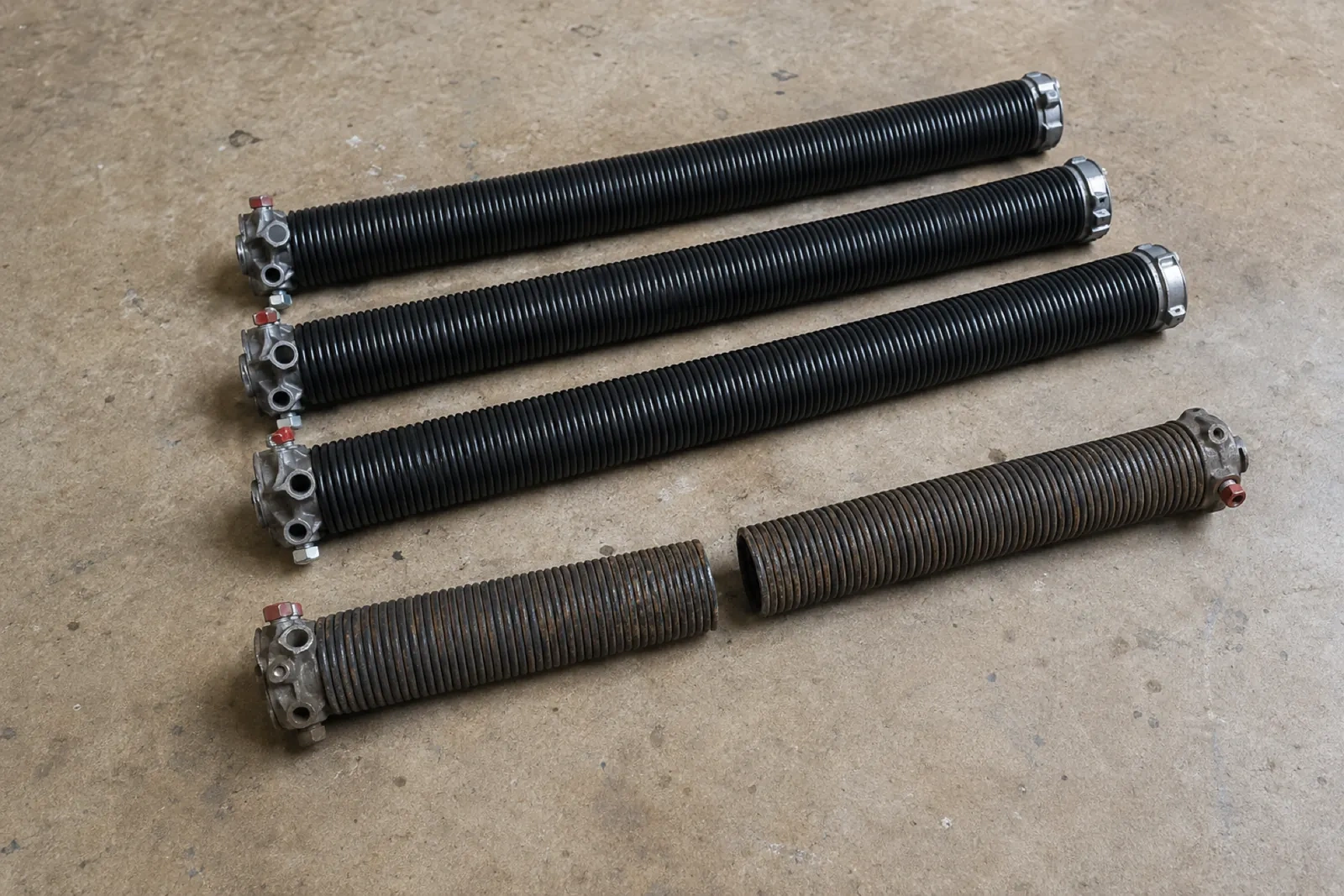
Hinge replacement leaves the springs untouched, since the door stays closed and the counterbalance is not unloaded. Balance is checked at the end all the same, because a door the opener has to drag is one of the main reasons hinges fail early. If the door drifts up or sinks when lifted by hand and released, the technician explains the spring adjustment needed and offers it as its own decision.
How many hinges does a typical door have?
Count the joints between panels and multiply. A single door usually carries two edge hinges and one centre hinge per joint, so a four-panel door has three joints and nine hinges. A double door adds one or two more centre hinges per joint to keep the wider panels flat. The top panel uses adjustable top fixtures rather than hinges, and the bottom corners use bottom brackets, which are different parts.
Will new hinges make the door quieter?
Often noticeably. A cracked or loose hinge is the source of many pops, clicks and rattles, and a hinge that holds its roller square lets the wheel run flat instead of scraping the track lip. Combined with fresh lubricant on the knuckles and rollers, the door settles into a steady rumble. Any noise that remains usually points to the rollers, the opener chain or the springs, which the technician can identify for you.
Related services
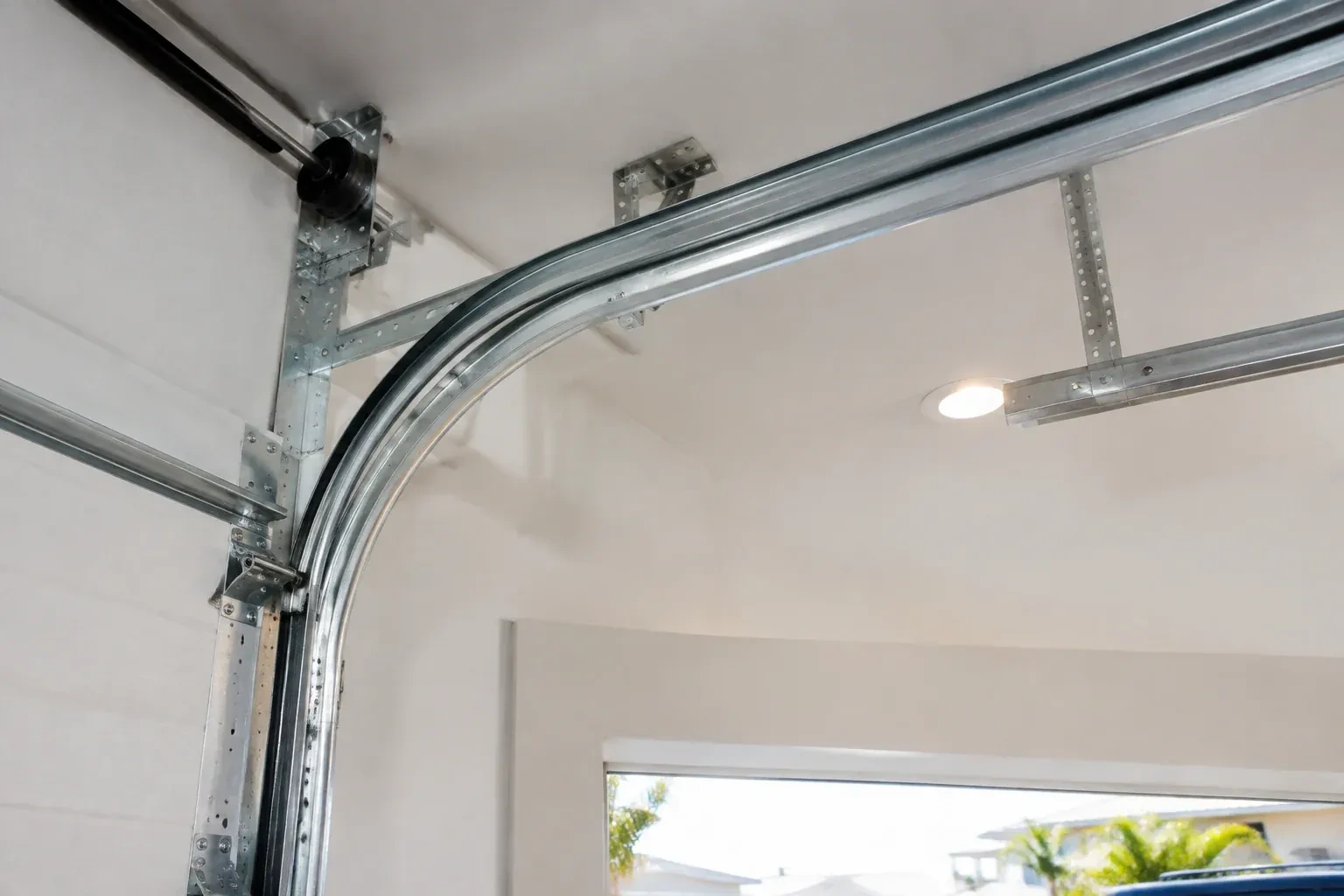
- Garage Door Track Repair or ReplacementHalfway up, the door lurches and one roller rides onto the lip of the channel.
- Garage Door Cable ReplacementStanding inside with the door closed, you notice the cable on the right side near the floor has gone fuzzy.
- Torsion Spring ReplacementAfter pulling the red release cord, you tried lifting the door yourself and it would barely leave the floor.