Repairs · Barrie
Garage Door Perimeter Weatherstrip
Dry leaves keep appearing in the same corner inside the garage, and this fall there were mouse droppings along the wall beside the door.
In plain words
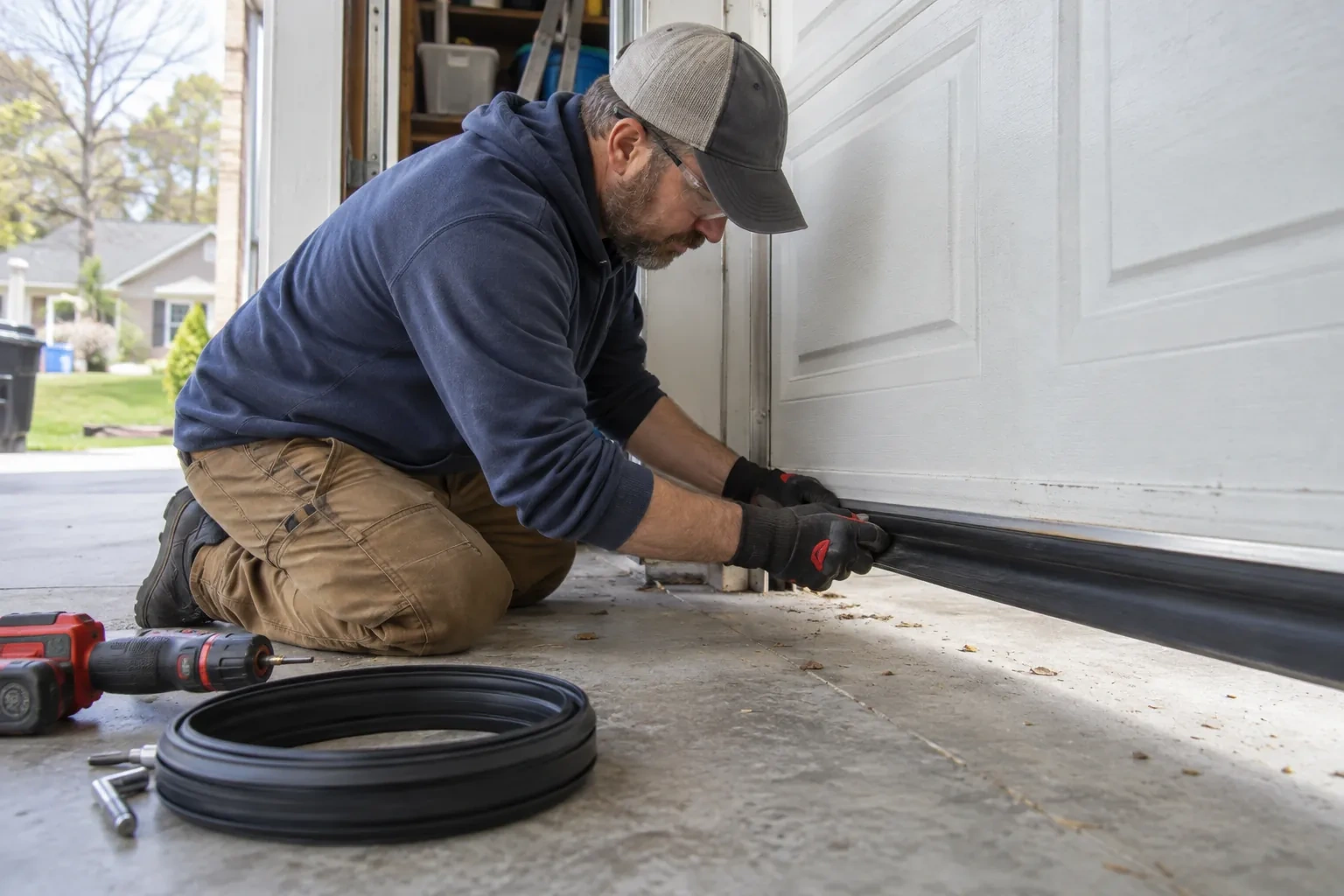
Perimeter seal comes in two common forms, and the visit begins by deciding which suits your opening. The simpler is a flexible vinyl fin nailed to the face of the existing wood stop, which works well where the stop is sound. The other is a one-piece vinyl stop moulding with the fin built in, which replaces the wood stop altogether and suits jambs that are weathered or where the old stop is cracked and paint-heavy. Commercial doors sometimes carry an aluminum retainer with a replaceable rubber insert. Each is cut to your header and sides on site and set against the closed door.
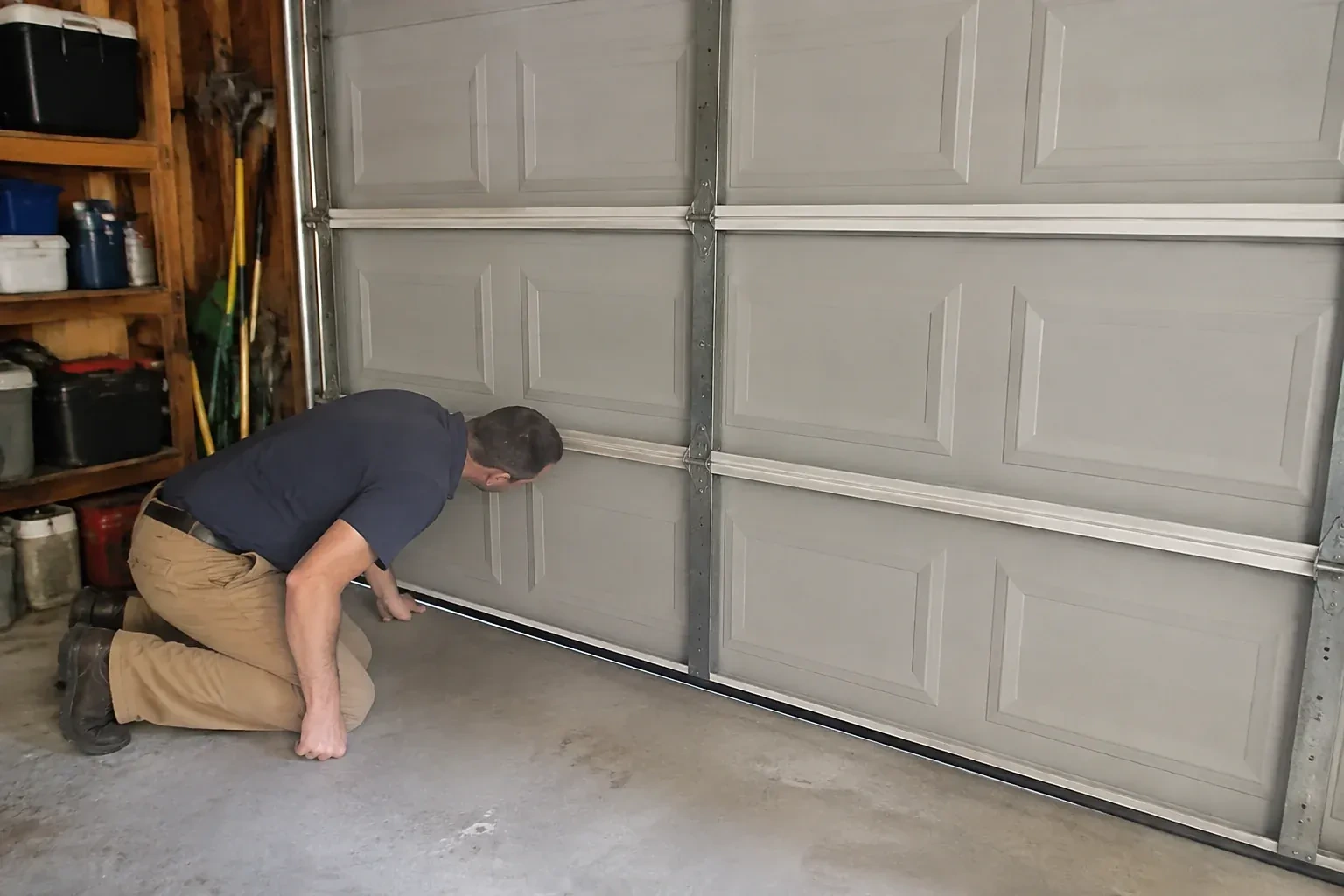
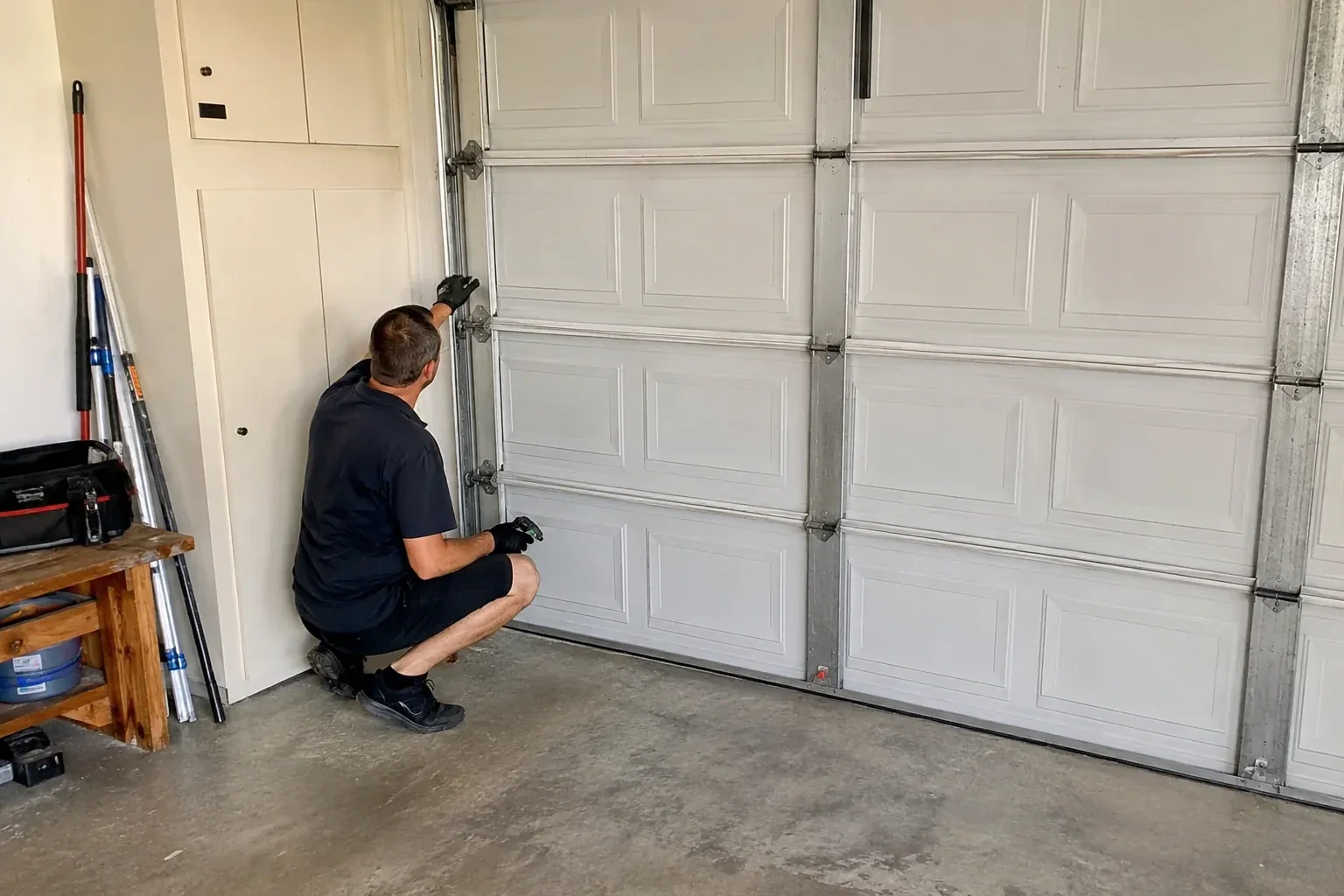
How the visit goesWith the door closed and the garage lights off, a thin bright line runs down the whole left side of the opening. You can see the neighbour's fence through it. The strip that should close that gap has shrunk back from the door.
Garage Door Perimeter Weatherstrip
How the visit goes
What kind of seal is there now
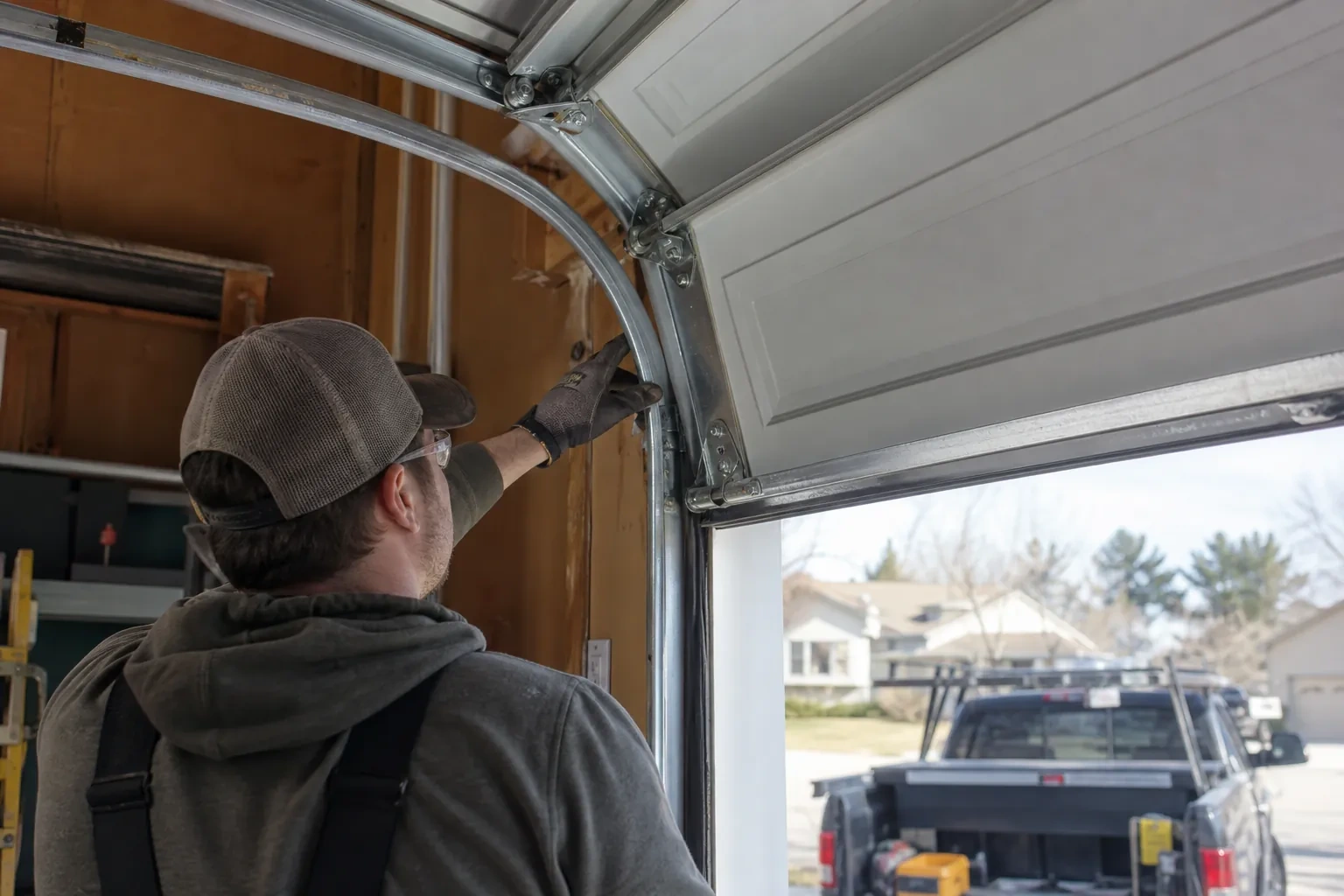
Openings carry different seals depending on their age and who last worked on them. Many older garages have a painted wood stop with a flexible vinyl fin nailed to its face. Newer installations often have a one-piece vinyl stop with the fin moulded in. Some commercial and premium doors use an aluminum retainer with a slide-in rubber insert, or a brush seal. The technician identifies which is present, whether the rigid part is sound enough to keep, and what the fastening was, because that decides whether a new fin goes onto the existing stop or the whole stop is replaced.
Making the jamb sound
Where probing found soft wood, it is dealt with before the seal. Rot at the base of the jamb is cut back to solid material and a matching piece of lumber or PVC trim is spliced in, fixed and primed. Minor soft spots are hardened with an epoxy consolidant and filled. Fasteners that will hold the new stop are then going into wood that grips them, which is what keeps the strip tight through years of the door pressing on it. Where the jamb is clad, the technician finds the solid framing behind the cladding and fastens through to it rather than into the thin skin.
Keep paint off the fin
When the trim is next painted, the flexible fin stays bare. Paint fills the flexible material and stiffens it, and a stiff fin cracks well before its time once the cold takes hold. If the rigid part of the stop is wood, it can be painted, but with the brush kept off the fin or the fin masked. One-piece vinyl stop needs no paint at all and simply washes clean. This single habit is the difference between a seal that stays soft for many years and one that fails early, and it is the most common cause of early failure the technician sees.
Garage Door Perimeter Weatherstrip
In the van
Exterior screws and weatherproof staples
Exterior caulking and gun
Jamb repair lumber or PVC trim
Epoxy consolidant and exterior primer
Tape measure, level and square
Garage Door Perimeter Weatherstrip
What affects the quote
Colour and profile
Standard colours and fin widths are carried on the truck. A less common colour, an extra-wide fin or a commercial retainer with insert may be a special order, with the difference noted.
Adding a brush or foam seal to the sides as well as the stop
Some households want only the top and side stop replaced, while others add a brush or foam seal along the same run for a tighter fit against wind-driven snow. That extra material and the time to fit it are agreed before the old stop comes off.
Working height and access
A tall header, a sloped driveway that makes a ladder awkward, shrubs against the jambs or cars and storage close to the door all affect how long the work takes.
What to have ready
- Is it a single or double door, and roughly how wide and tall?
- Is the bottom seal on the door also worn?
- Is anything stored against the jambs, or a car parked close to the opening?
Garage Door Perimeter Weatherstrip: questions
QuestionsDoes new weatherstrip make the door any quieter when it opens and closes?
A little, though it is not the main reason to do it. A fresh bottom seal cushions the door's contact with the floor, and snug side and top seals stop the panel rattling against loose or worn stops. Most of the noise people notice from a garage door comes from rollers, hinges and the opener chain or belt rather than the seals, so a technician checking the weatherstrip will usually point out those parts too if they are the louder culprit.
Can you replace just one side or only the top piece?
Yes, a single damaged length can be replaced when the rest is sound and still soft; the new piece is matched to the existing profile and colour and its corner is overlapped with the neighbouring fin. When the whole set is the same age and the others are hardening too, replacing all three at once gives an even seal and saves a second visit, and the technician will say which applies.
What is the difference between perimeter weatherstrip and the bottom seal?
The bottom seal is a rubber or vinyl strip fixed to the lower edge of the door itself and presses against the floor. Perimeter weatherstrip is fixed to the frame, running up both jambs and across the header, and the closed door presses against it from inside. They wear differently and are replaced separately, though it is common to renew both in one visit when each is showing its age.
Related services
- Garage Door Tune-UpThe door lands with a thud you can feel through the kitchen floor, and sometimes it bounces back up a few centimetres before settling.
- Off-Track Garage Door ResetYou tapped the door with the bumper while backing in, barely a nudge, and now the bottom corner has swung inward.
- Garage Door Panel ReplacementA stray ball went through one of the window panes in the top section.