Openers · Barrie
Garage Door Remote and Keypad Programming
Your remote was in the visor when the car was broken into last night.
In plain words
Older openers set their code with a row of tiny switches inside the remote and the receiver, and once those remotes stop being made the door seems stranded. It is not. An add-on receiver wires to the same two terminals as the wall button and plugs into the ceiling outlet, giving the old motor a modern rolling-code radio along with new remotes and a keypad. The door mechanics stay as they are, provided the opener already has photo eyes near the floor. Where it has none, the conversation turns to a new opener, and the reasons are explained plainly.
How the visit goesYour remote was in the visor when the car was broken into last night. So was the insurance slip with your address on it. The door still answers that remote, wherever it is now, and you would very much like it not to.
Garage Door Remote and Keypad Programming
How the visit goes
Is the opener itself ready?
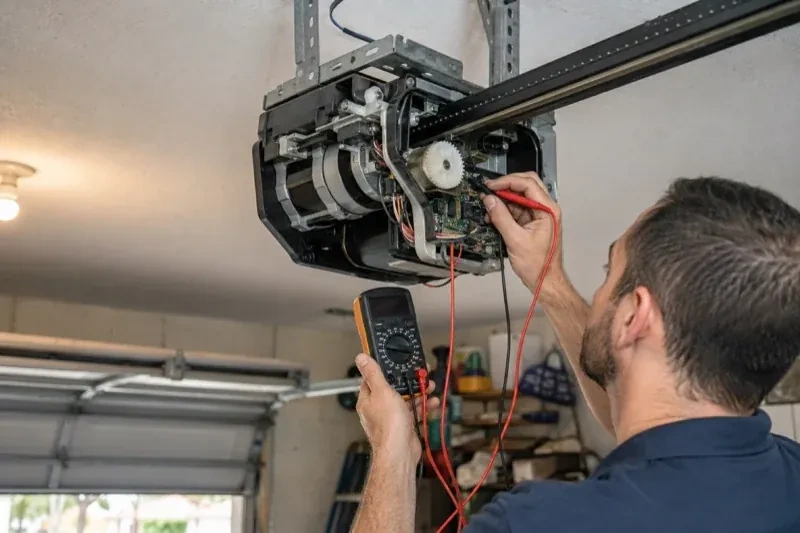
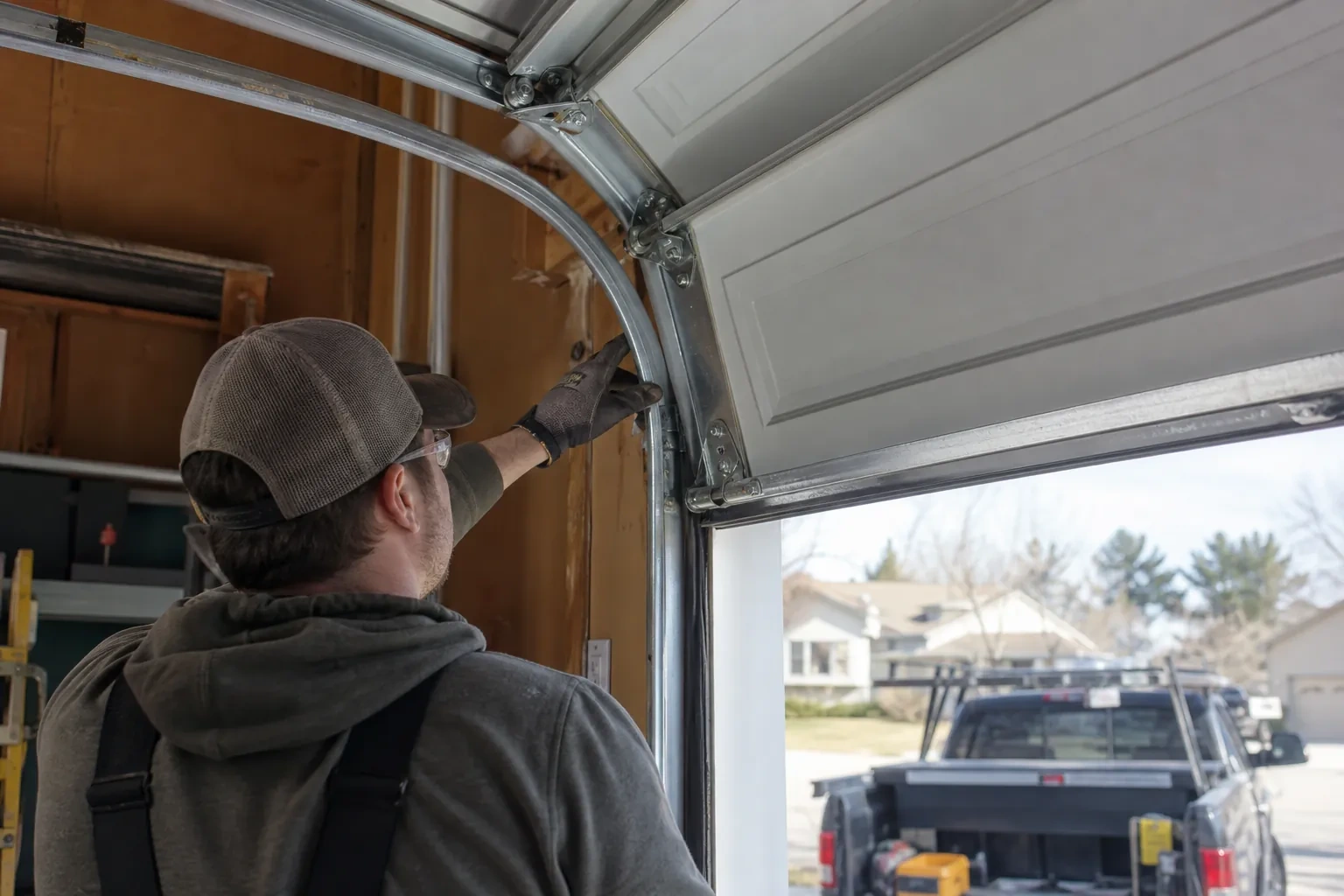
Programming only takes when the opener is in a state to accept it, so the first minutes are spent on the unit rather than the remote. The technician confirms the head unit has power and responds to the wall control, checks that the lock indicator is not blinking, and looks at the photo-eye lights near the floor to see the beam is aligned. The door is run through a cycle to be sure it travels and reverses properly. If the wall button moves the door and the remotes do not, the fault is on the wireless side and programming is likely to help; if nothing moves the door, the visit becomes a repair first.
Bringing a fixed-code opener into the present
For an older opener whose remotes were set by rows of small switches and are no longer made, the work is a receiver upgrade rather than a pairing. The technician mounts a compact rolling-code receiver near the head unit, wires its two conductors to the same terminals that serve the wall button, and plugs its transformer into the ceiling receptacle beside the opener. The opener now has a modern radio and can store a handful of new remotes and a keypad. This route is used only when the opener already has photo eyes at the floor; without them, the recommendation is a new opener.
Every control tested in your hand
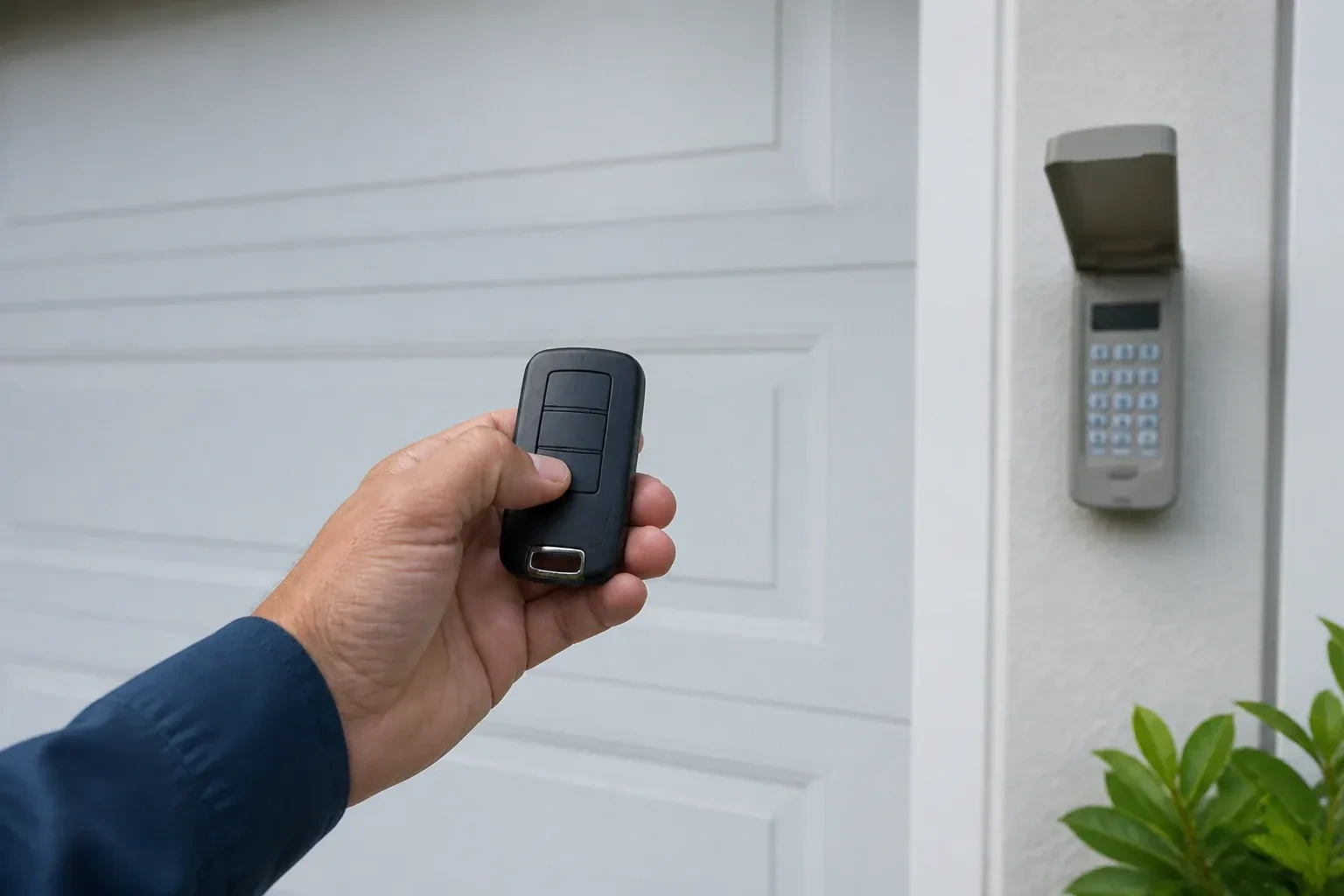
Before the technician leaves you operate each device yourself: the remote from each car, the keypad with your new code, the vehicle button from the driver's seat, the wall control. You see the door open fully and close to a gentle seal from each one. If a remote has two or three buttons, you know which door or gate each drives, and a small label says so. You also watch the reversal tests performed, so you know the door backs off an obstruction and stops for the sensor beam. Nothing is left as something to try later on your own.
Garage Door Remote and Keypad Programming
In the van
CR2032 and CR2016 coin cells
Replacement remote (one, two or three buttons)
Add-on rolling-code receiver kit
Wireless outdoor keypad
Low-interference replacement bulbs
Garage Door Remote and Keypad Programming
What affects the quote
Multiple doors or a gate
A second opener or a driveway gate doubles the pairing and testing, and may call for multi-button remotes or a multi-door keypad.
Clearing and rebuilding the memory
Erasing all stored controls after a move or a loss, then reprogramming every remaining device and vehicle, takes longer than adding one remote, and the quote says so.
Time of the call
A weekday daytime appointment and an evening, weekend or holiday visit cost the same amount for programming remotes and keypads. The technician confirms the exact figure once the number of controls and the opener model have been checked in person.
What to have ready
- How many cars need built-in buttons trained, and what model years are they?
- Which controls fail: one remote, all remotes, the keypad, or the car buttons?
- Does the wall button move the door normally right now?
Garage Door Remote and Keypad Programming: questions
QuestionsDoes programming a new remote erase the old ones?
No. A short press of the learn button adds a control to the memory alongside the others. Erasing them takes that model's own sequence, a longer hold on many openers and a different button combination on others. Pressing into the erase sequence by accident is what occasionally leaves a household finding every remote dead after trying to add one. The fix is to reprogram each device.
Why won't the new remote I bought pair with my opener?
Most often because it belongs to a different radio generation. Openers have changed their radio format several times since the mid-1990s, and a remote built for one format is silent to a receiver from another. On many makes the colour of the learn button, together with the model label, identifies your generation, and the maker's compatibility chart names the remotes that match. A universal remote that covers several generations is another route. Once the two sides share a format, pairing takes moments.
What is rolling code and why does it matter for programming?
Most openers made from the mid-1990s on change their code every time a remote is pressed, choosing from billions of possibilities, so a copied code is usually useless next time; the technician confirms the actual system from the model, not age. Programming matters because the opener has to learn each remote's sequence at the learn button; a remote cannot simply be set to match. Older fixed-code openers, set by small switches, can be upgraded with an add-on rolling-code receiver.
Related services
- Chain-Drive Opener RepairThe door closes, touches the floor, then climbs straight back up as if it hit something.
- Belt-Drive Opener RepairHalfway up, every single time, the door hesitates and there is a ratcheting sound from the motor head, then it carries on.
- Garage Door Opener ReplacementThe opener in the ceiling is older than the car parked under it.