Openers · Barrie
Belt-Drive Opener Repair
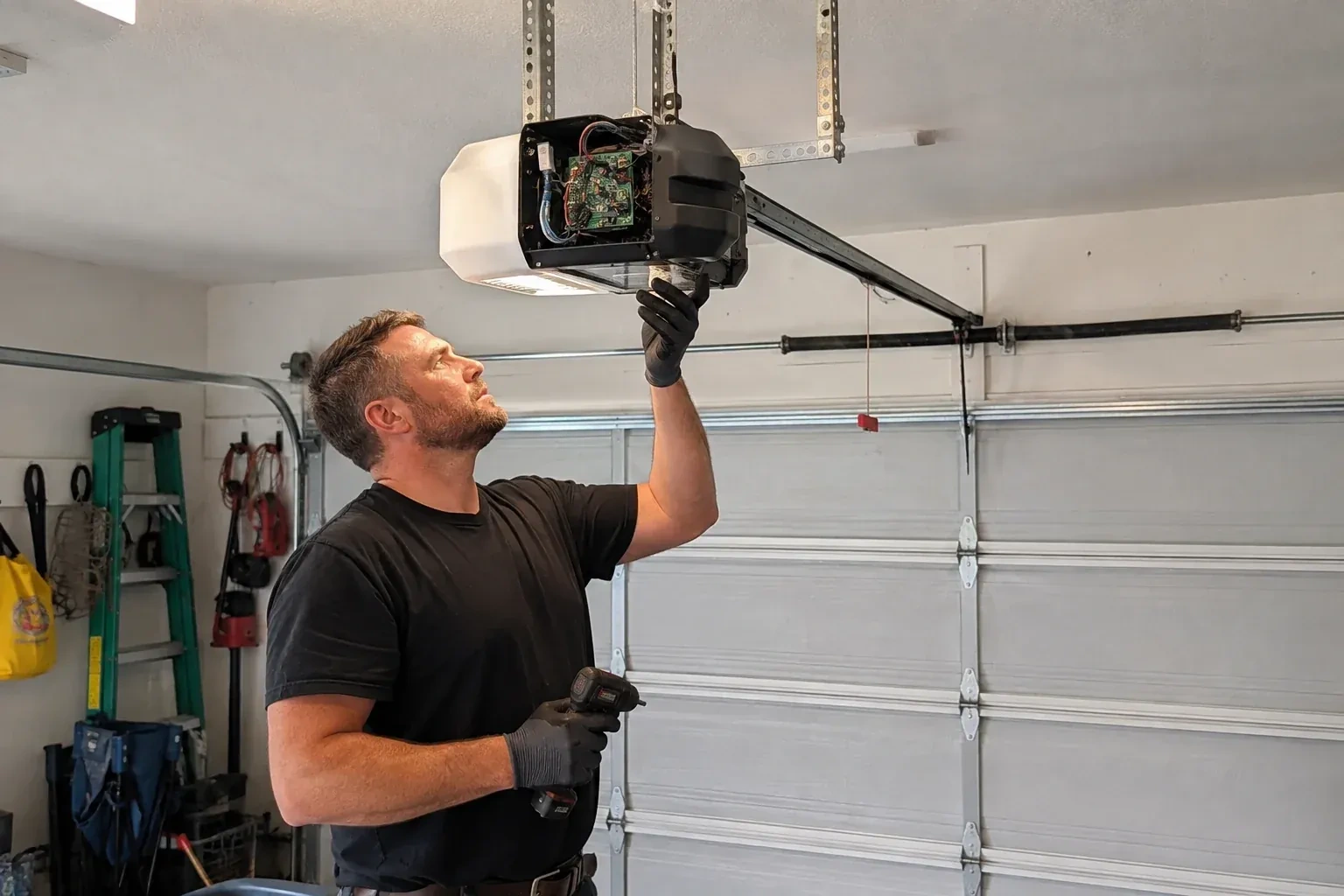
Halfway up, every single time, the door hesitates and there is a ratcheting sound from the motor head, then it carries on.
In plain words
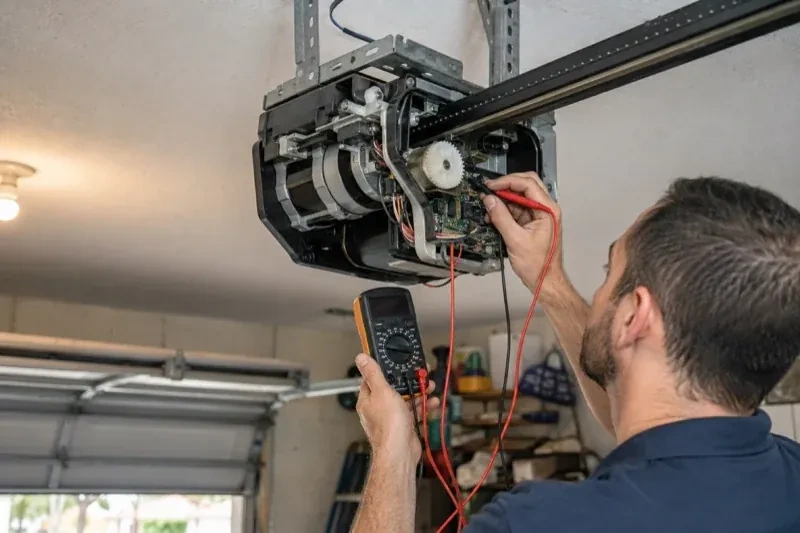
A belt drive is chosen for its quiet, so one that has started to rattle is saying something specific. Sprocket noise usually means the belt is either too loose or too tight. A squeal from the front of the rail points to the idler pulley bearing. A clack at the same point in every cycle is a run of worn teeth or a rail joint out of line. A hum with no movement is a broken clip, a stripped gear or a belt off its sprocket. Repair means reading those sounds, confirming them by inspection and replacing the one component responsible, so the operator returns to its hush.
How the visit goesHalfway up, every single time, the door hesitates and there is a ratcheting sound from the motor head, then it carries on. A closer look shows a stretch of the belt where the teeth are worn almost flat.
Belt-Drive Opener Repair
How the visit goes
How tight is tight enough
Belt tension is measured, not guessed. At the inner trolley a threaded shaft carries a coil spring and a square nut; turning the nut draws the belt tighter and compresses the spring, and the maker states the spring length that means the belt is right, roughly the width of a thumb. The technician checks that length, presses the belt at mid-span for a little give, and watches it run. A belt hanging below the rail is loose and will skip teeth. A belt pulled drum-tight makes sprocket noise, loads the motor bearings and wears the idler pulley. Both are corrected on the spot, and an adjuster wound to its end tells the technician the belt has stretched past saving.
Replacing the trolley
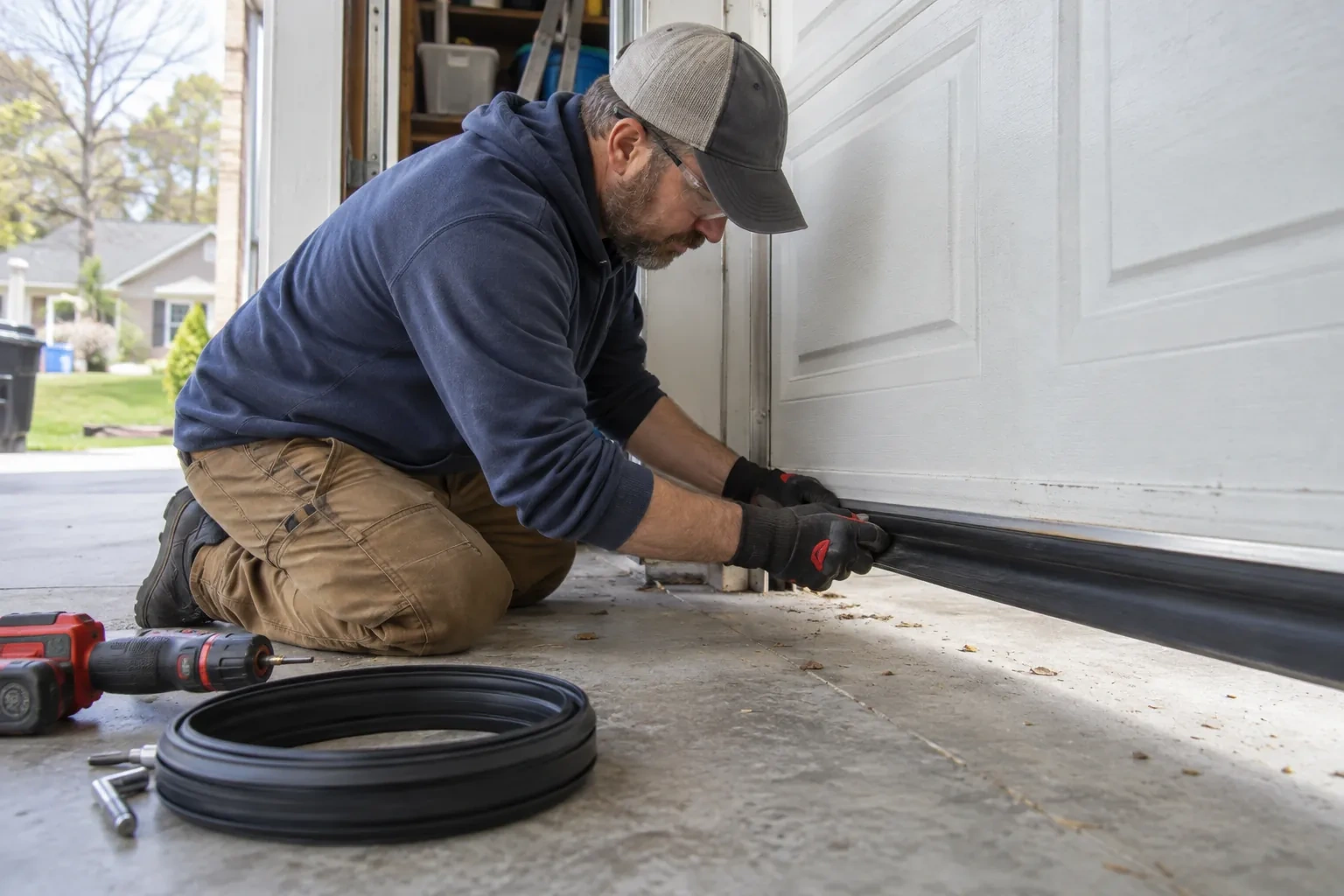
A cracked, worn or stuck trolley is removed by unclipping the belt, unhooking the door arm and sliding the assembly off the end of the rail, which on many models means loosening the rail at the header bracket first. The new trolley slides on, the belt is reconnected with a fresh clip, the tension spring and square nut are set, and the door arm is pinned back to the outer half. The technician works the release lever several times to be sure the halves part and lock as they should, then runs the door by motor. Play between trolley and rail is checked, since a loose trolley rattles and wears the belt edge.
The two tests you do each month
The repair ends with the reversal tests run in front of you, and they are yours to repeat monthly. With the door fully open, lay a scrap of 2x4 flat on the floor where the door meets it, press the wall control and watch: the door should touch the wood and climb back to the top. Then, with the door closing, pass a broom handle through the beam near the floor; it should reverse the same way. Both take under a minute. If either test ever fails, stop using the operator, work the door by the red cord, and have a trained technician check it; the fault can be the settings, the sensors, the wiring or the opener itself.
Belt-Drive Opener Repair
In the van
Drive gear and sprocket kit
Rail joint brackets and stop bolts
2x4 offcut for the reversal test
Door arm and clevis pins
Light grease for the drive gear
Belt-Drive Opener Repair
What affects the quote
How far the technician drives
A garage on the edge of town and one down a long rural road take different time to reach, and that trip is a line of the quote.
When you call
An evening, weekend or holiday visit costs the same amount as a weekday one for a belt-drive repair. The technician looks at the belt, trolley and rail once on site, and the exact figure follows from what is actually found, not from the day of the week.
Trolley condition
A trolley that releases and re-engages cleanly stays. One that is cracked, stuck or loose on the rail is replaced during the same visit and listed as its own part.
What to have ready
- Is anything hung from the ceiling or rail, such as a bicycle hook or storage rack?
- Is the garage heated and attached to the house, or a cold detached one?
- How wide is the door, and is it a single or a double?
Belt-Drive Opener Repair: questions
QuestionsWhy is the door tested by hand before the belt is touched?
Because the belt guides the door; the springs carry it. A door that lifts with moderate effort and stays put a metre off the floor is balanced, and a belt on that door lasts. A door that drops or drifts is loading the belt, trolley and sprocket far beyond their design, so a new belt would wear the same way. Spring work comes first in that case.
The motor runs but the door stays still. What has happened?
Something between the motor and the door has let go. On a belt drive the usual suspects are a broken clip where the belt joins the trolley, a belt that has jumped off the sprocket or idler pulley, a trolley that failed to re-engage after the red cord was pulled, or a stripped drive gear inside the motor head, which leaves plastic shavings on the housing. Each is a specific repair.
What are the plastic shavings under the motor head?
They are from the drive gear inside the head unit, which is stripping its teeth. On a belt drive the gear turns the sprocket that moves the belt, so a stripped gear leaves the motor humming and the belt still. The gear-and-sprocket kit is replaced as a set, the shaft's end play is checked, and the belt is refitted and phased.
Related services
- Chain-Drive Opener RepairThe door closes, touches the floor, then climbs straight back up as if it hit something.
- Garage Door Opener ReplacementThe opener in the ceiling is older than the car parked under it.
- Photo-Eye Sensor Alignment or ReplacementSince shelving went up along the garage wall, the door will not close and both sensor lights are dead.