Repairs · Barrie
Garage Door Safety Inspection
Your toddler has discovered the wall button.
In plain words
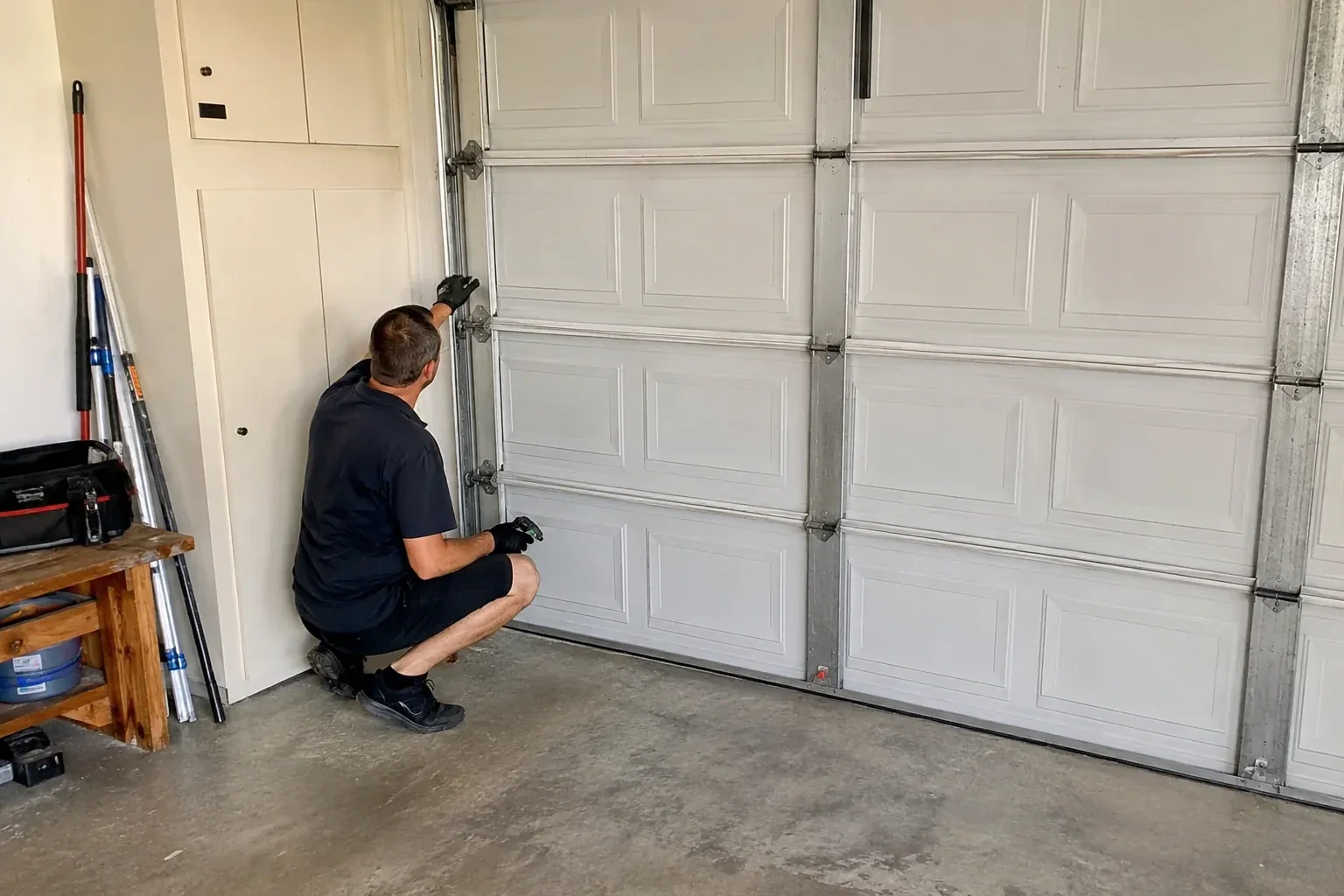
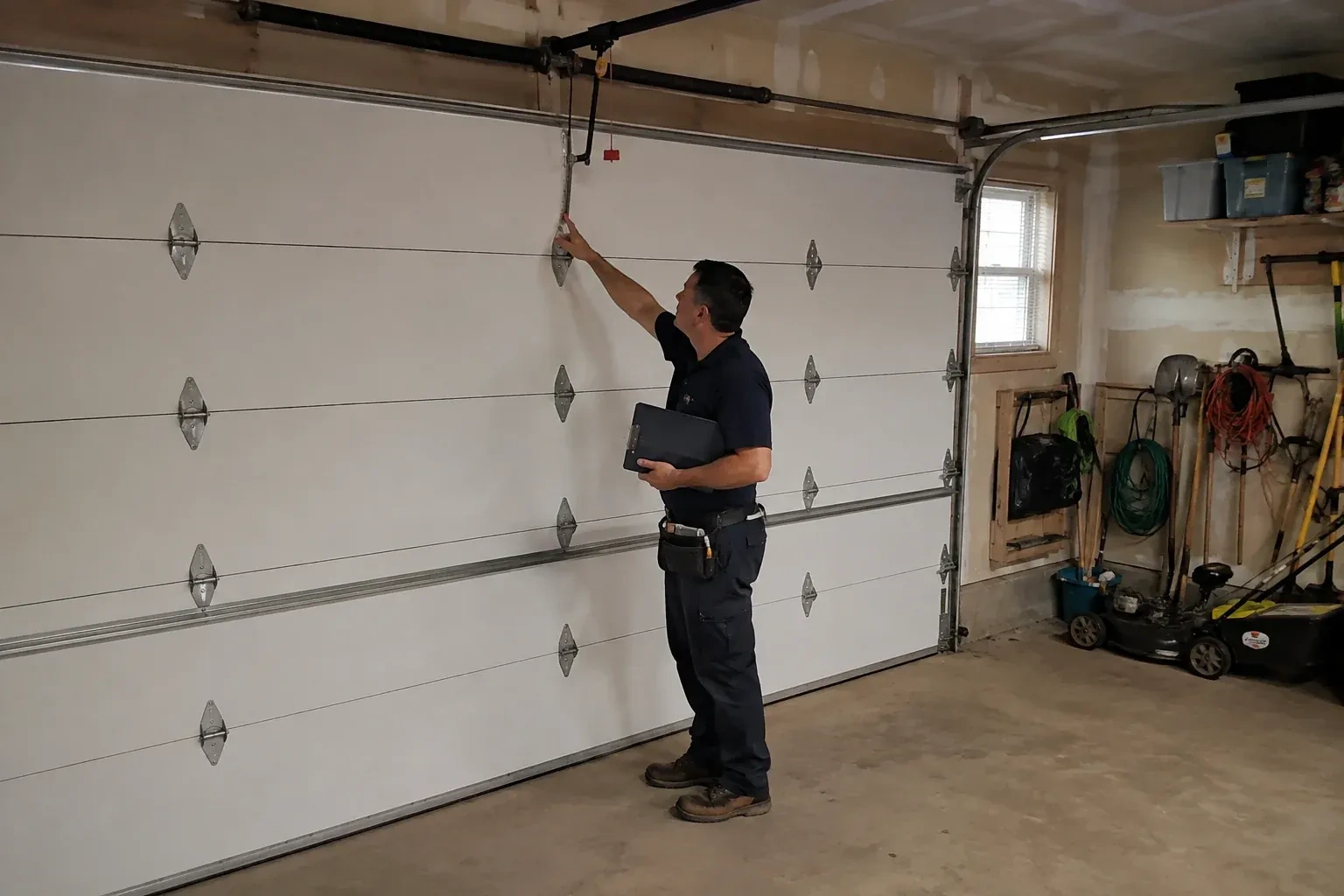
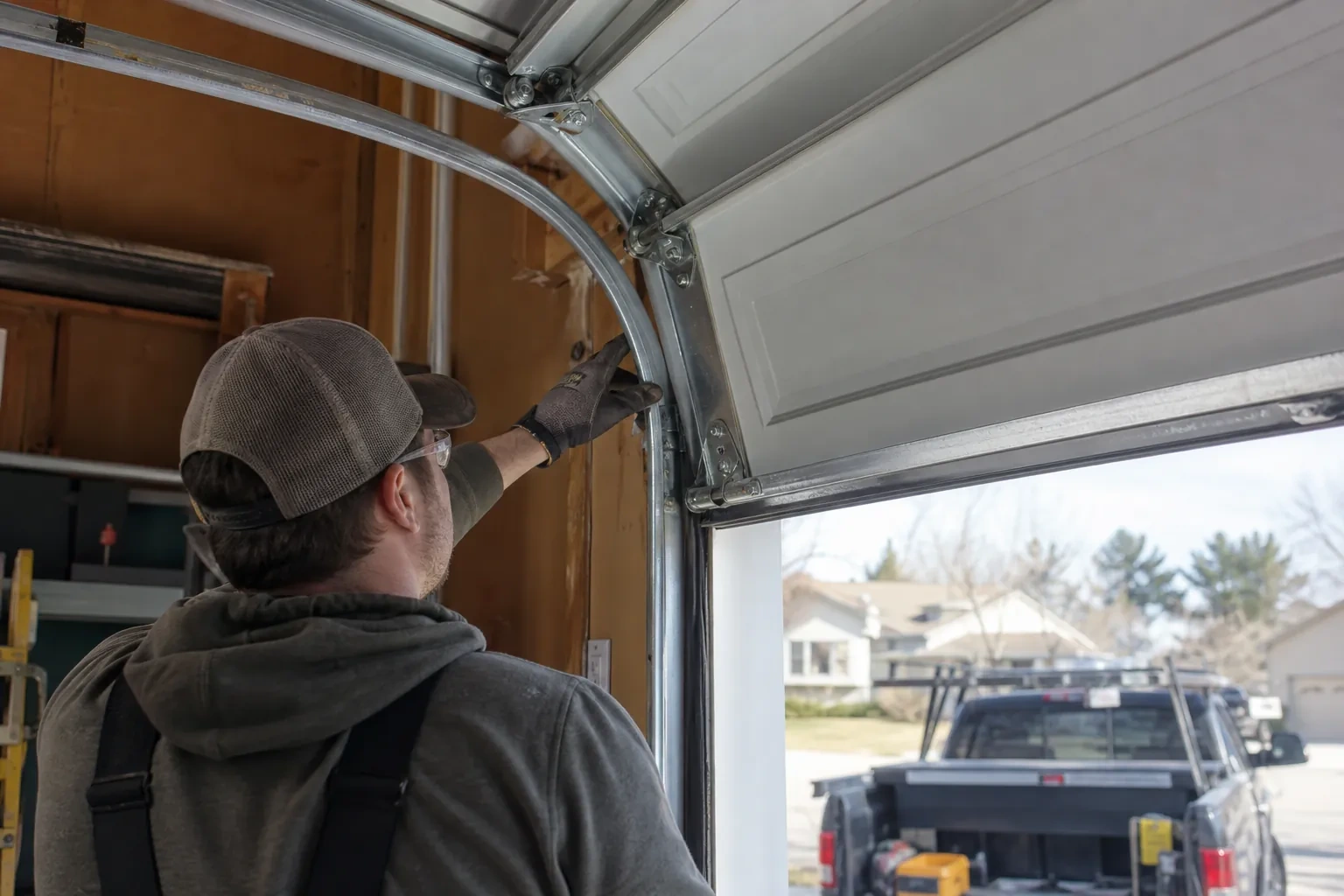
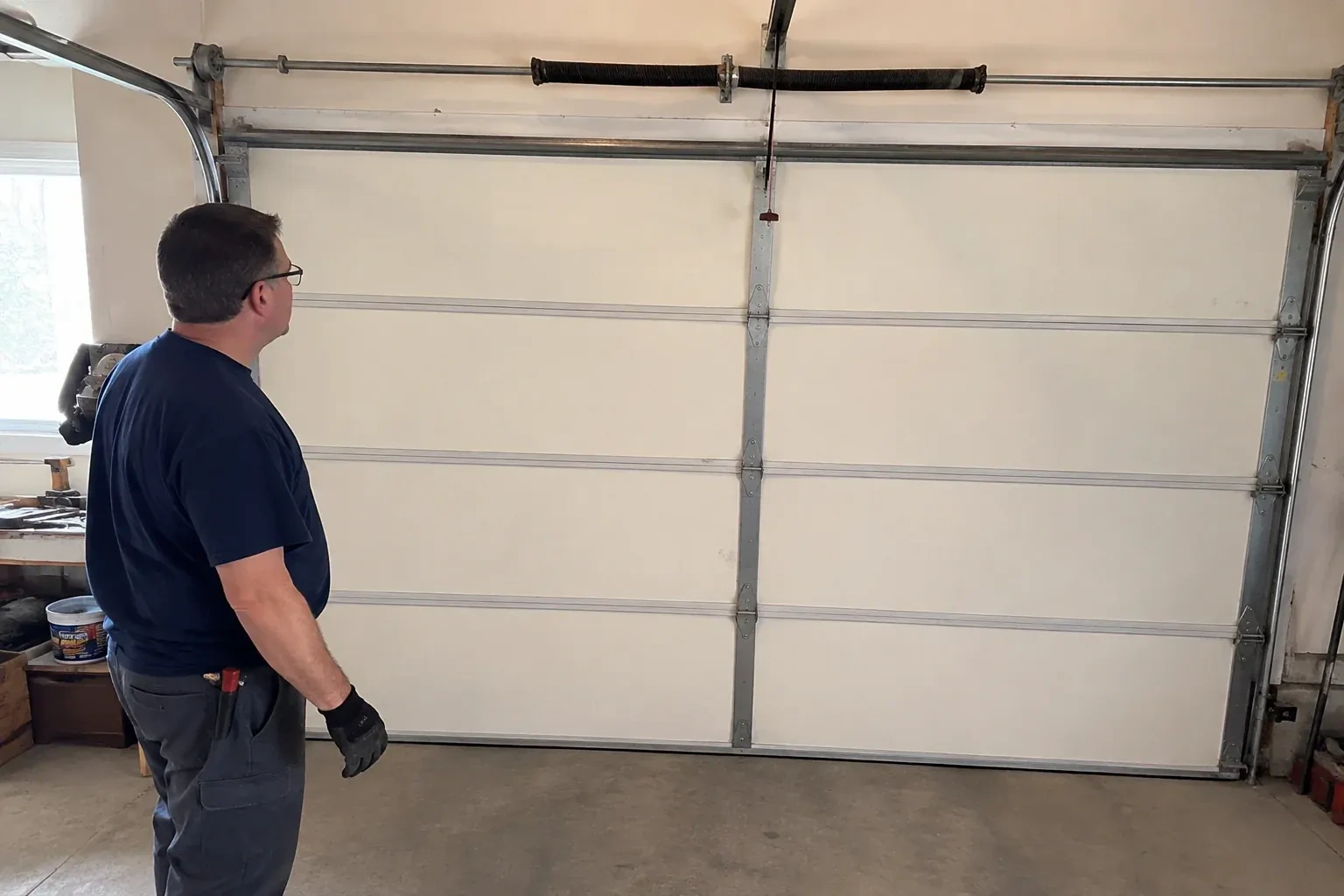
The visit runs in a settled order. First the door and opener are identified and the right test procedure looked up. Then a visual walk of the closed door, from the top section down to the bottom seal, and along both tracks. Next a full cycle under power while the technician listens and watches. Then the opener is disconnected for the manual balance check, reconnected for the reversal and photo-eye tests, and the controls, release cord and mounting brackets are checked. Finally the findings are explained at the door and written up, so you know exactly where the door stands before anyone leaves.
How the visit goesYou moved in three months ago. The door works, but nobody can say how old the springs are, when anyone last looked at it, or whether the little sensors by the floor have ever been tested.
Garage Door Safety Inspection
How the visit goes
Putting a name to the door and the opener
The first thing the technician does is read labels. The door's model tag is usually on the inside of an end stile or the bottom section, and the opener's is on the motor head; between them they tell the technician the door's weight class, the lift hardware it was built with and the exact test procedure the opener maker publishes. That matters because reversal settings, photo-eye mounting heights and force limits differ between models and generations. Writing the model numbers down at the start also means the report is tied to a specific door, so the next person to look at it, years from now, starts from the same page.
Testing contact reversal with a board
The opener is reconnected and a flat 2x4 offcut is laid on the floor across the centre of the opening. The door is sent down from the wall control. On meeting the board it should stop and reverse to fully open on its own. If it stalls on the board, pushes against it, or only reverses after a long pause, the opener's down-force or travel limit needs attention and the finding goes in the report. Older openers without photo eyes are tested this way too, and their behaviour is recorded against the test the maker specifies. The board is used every time; a hand or foot never stands in for it.
Repairs in a sensible order
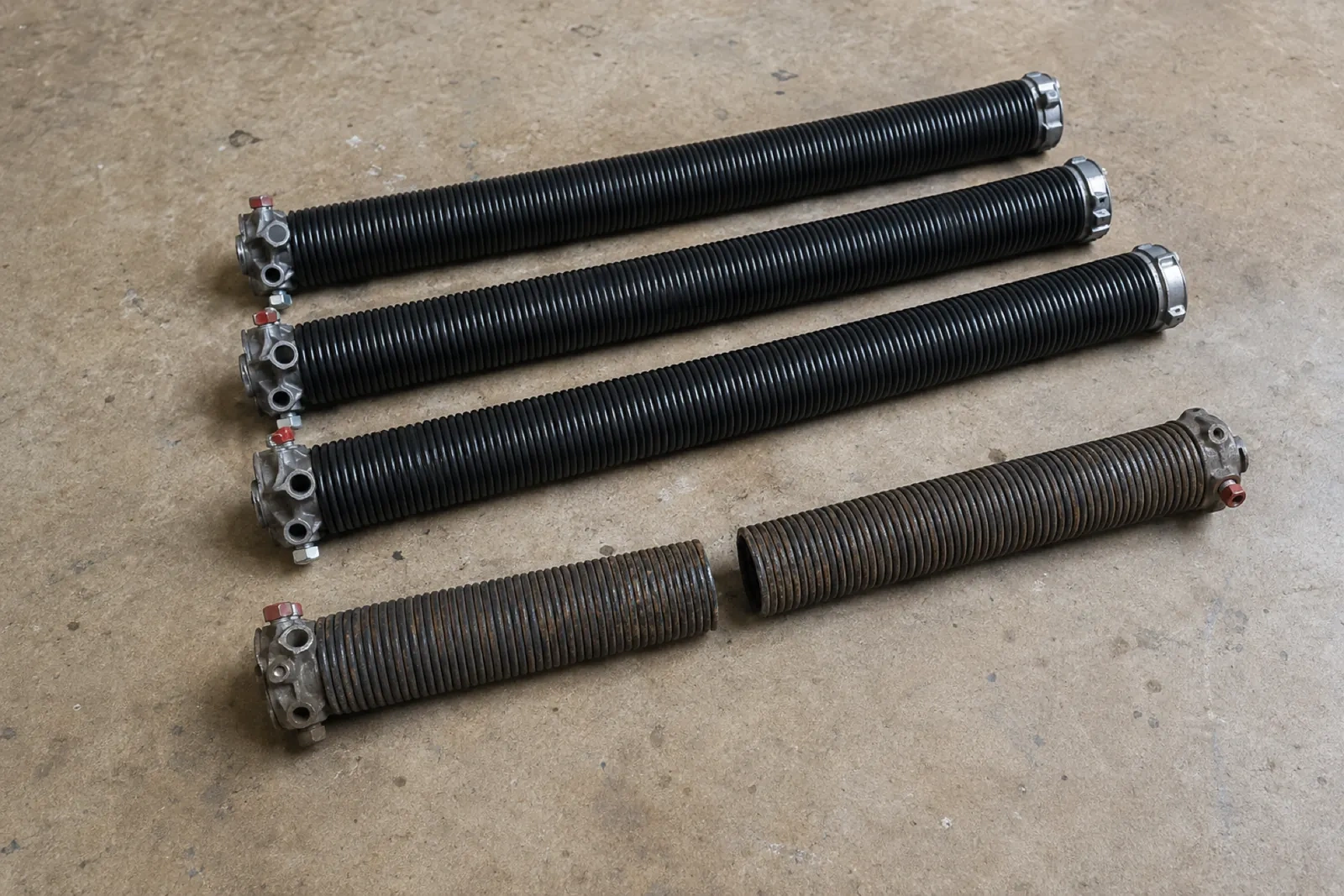
If the report lists planned repairs, it also suggests an order, because some items lean on others. A cable showing rust at the loop comes before a new roller set, since cables are changed with the counterbalance unloaded and rollers are a simple job at any time. Springs near the end of their cycle life are planned as a pair, with the cables checked in the same visit. Photo-eye alignment and a stripped bracket fastener are done first because they are small and they matter. You can take the list in one go or over a few months; either way, nothing in it is a surprise when the technician returns.
Garage Door Safety Inspection
In the van
Camera for findings
Lens cloth and cleaner
Spring and cable gauges
Socket set and nut drivers
Tape measure and level
Garage Door Safety Inspection
What affects the quote
An impact to trace
After a vehicle or object has hit the door, the technician follows the force through the hardware and photographs each point, which is a deeper assessment than a routine check.
Scheduling for a building or complex
A row of townhouse garages or a set of rental units is planned as one block of time with a record per door, and the quote is set by the count of doors and openers.
Access to overhead track or a locked mechanical room
Some tracks run behind storage or into a locked mechanical room, and reaching every bracket and fixture takes longer when a ladder or a key has to be found first. Clearing a path to the track ahead of the visit lets the inspection move through the whole door without interruption.
What to have ready
- When was the door last serviced, and do you have the paperwork?
- What make is the opener, and does it have sensors near the floor on each side?
- Is anything stored near the tracks, under the spring shaft or in front of the door?
Garage Door Safety Inspection: questions
QuestionsHow long does the visit usually take?
Plan for roughly an hour for a single door in ordinary condition, and longer for a double door, a second door on the property, or a door with a history that needs following up. Maintenance done on the spot adds a few minutes. A post-impact assessment, where the technician traces the force through the hardware, takes longer than a routine check. You are told at the door if the scope is growing.
Should I have the door inspected when buying a house?
It answers the questions a home inspection leaves open. A general inspector confirms the door opens and closes; a door technician records the make and age of the hardware, how much life the springs and cables appear to have, whether the safety devices pass, and what to budget for. For a seller, the same report settles a buyer's questions before they are asked and shows the door was cared for.
What happens if the report lists a stop-use item?
The door is parked in a safe position, usually closed, with the opener disconnected so nobody runs it by habit, and the reason is shown to you. The correction is explained and quoted as its own piece of work, and once it is done the door is retested through the balance, reversal and photo-eye checks before it goes back into daily service. Another door into the house or garage is used in the meantime.
Related services
- Off-Track Garage Door ResetYou tapped the door with the bumper while backing in, barely a nudge, and now the bottom corner has swung inward.
- Garage Door Panel ReplacementA stray ball went through one of the window panes in the top section.
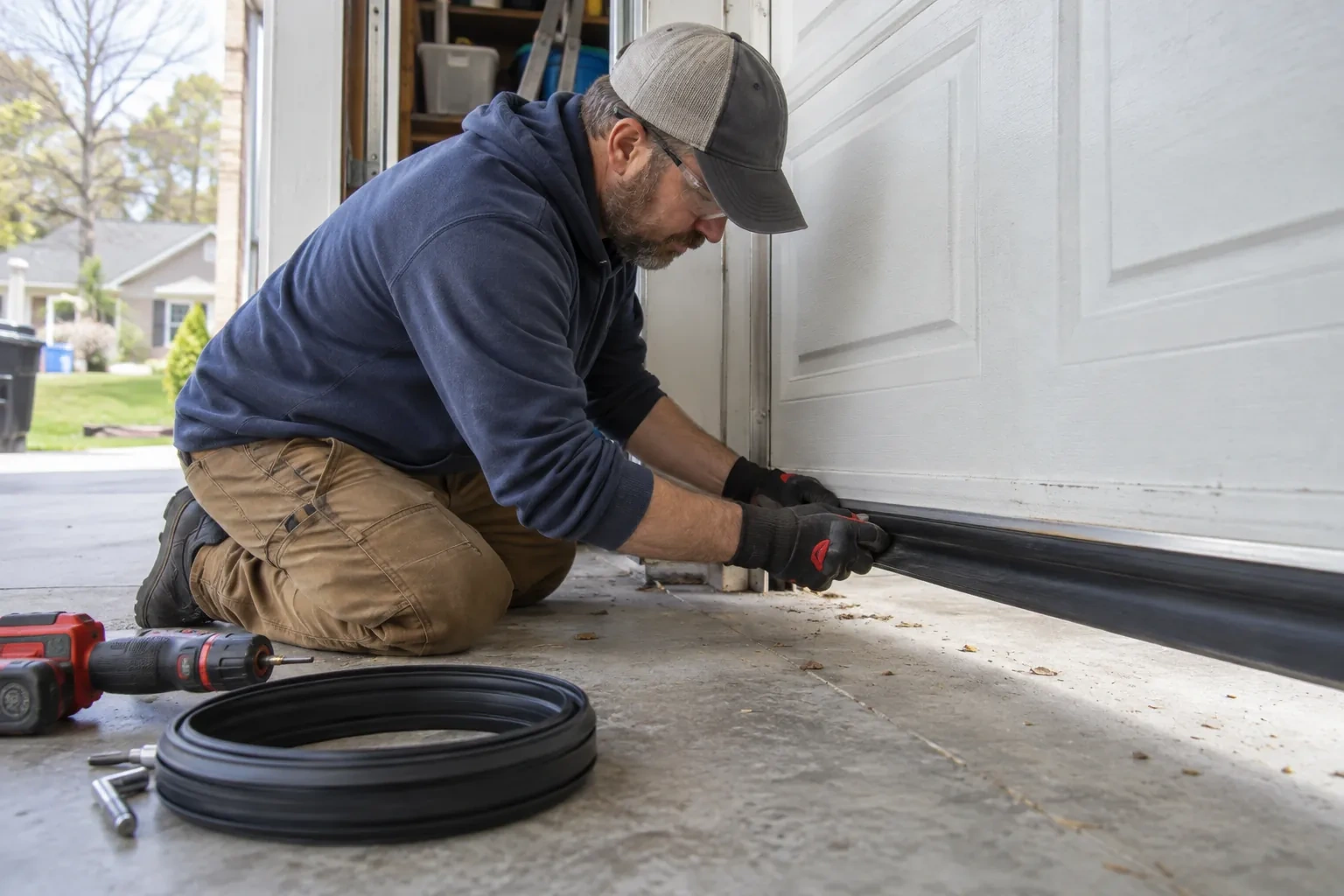
- Garage Door Bottom Seal ReplacementWith the door closed and the lights off, a bright line of daylight runs along the floor from one side to the other.