Springs · Barrie
Torsion Spring Replacement
After pulling the red release cord, you tried lifting the door yourself and it would barely leave the floor.
In plain words
The finished result is a door that behaves the way a good garage door should: it lifts by hand with light effort, stays where you leave it at mid-height, closes softly and lets the opener run with little strain. Reaching that point involves measuring the door, choosing a matched spring, winding it to the correct turns and testing the balance through the full travel. The technician then runs the opener's reversal test and lubricates the moving parts. You are left with a record of the spring installed, so future service starts from known specifications.
How the visit goesThe door drops the last stretch to the floor rather than settling, and when you stop it halfway by hand it slides down instead of staying put. Balance has drifted, and the spring is no longer holding its share of the weight.
Torsion Spring Replacement
How the visit goes
Reading the spring itself
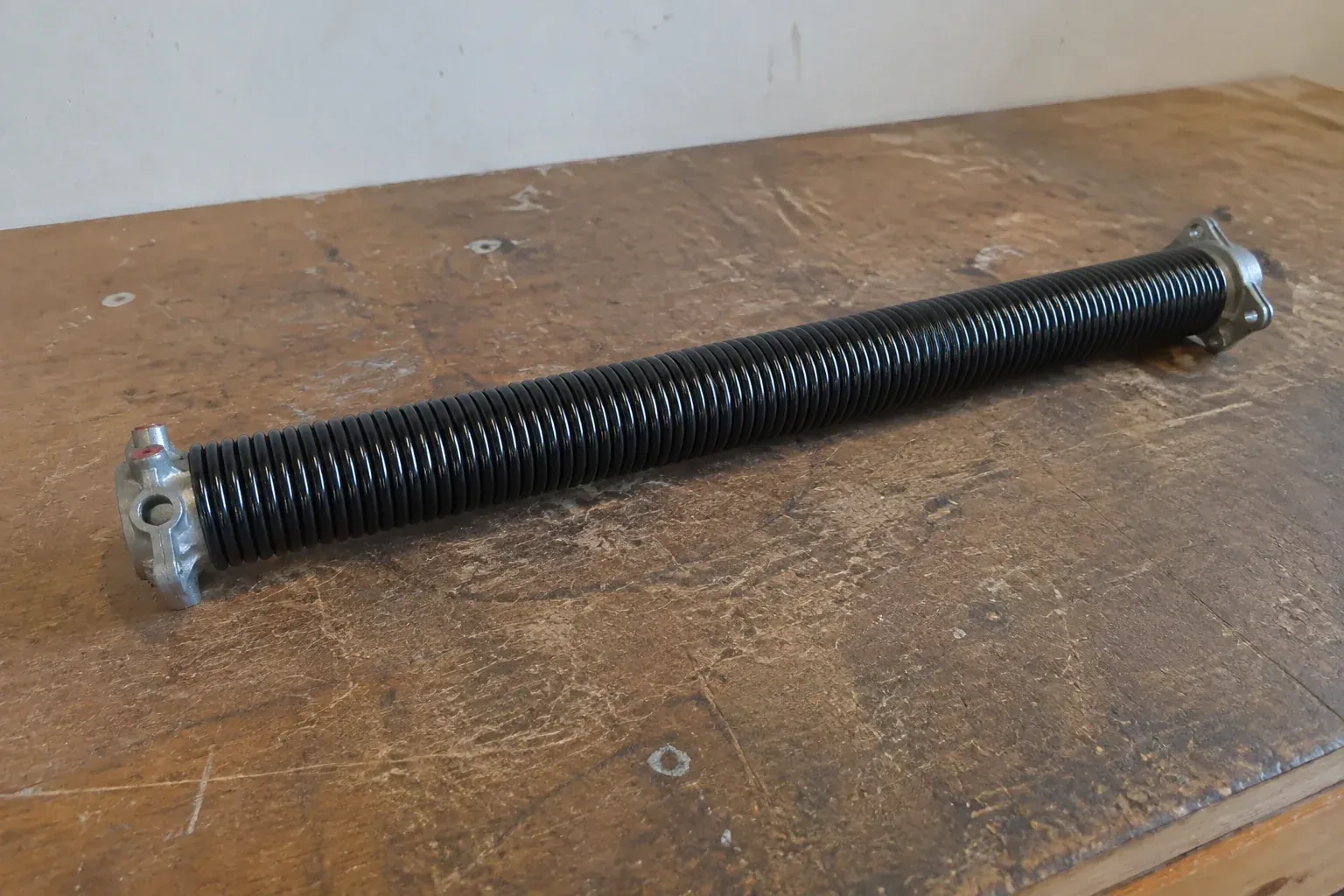
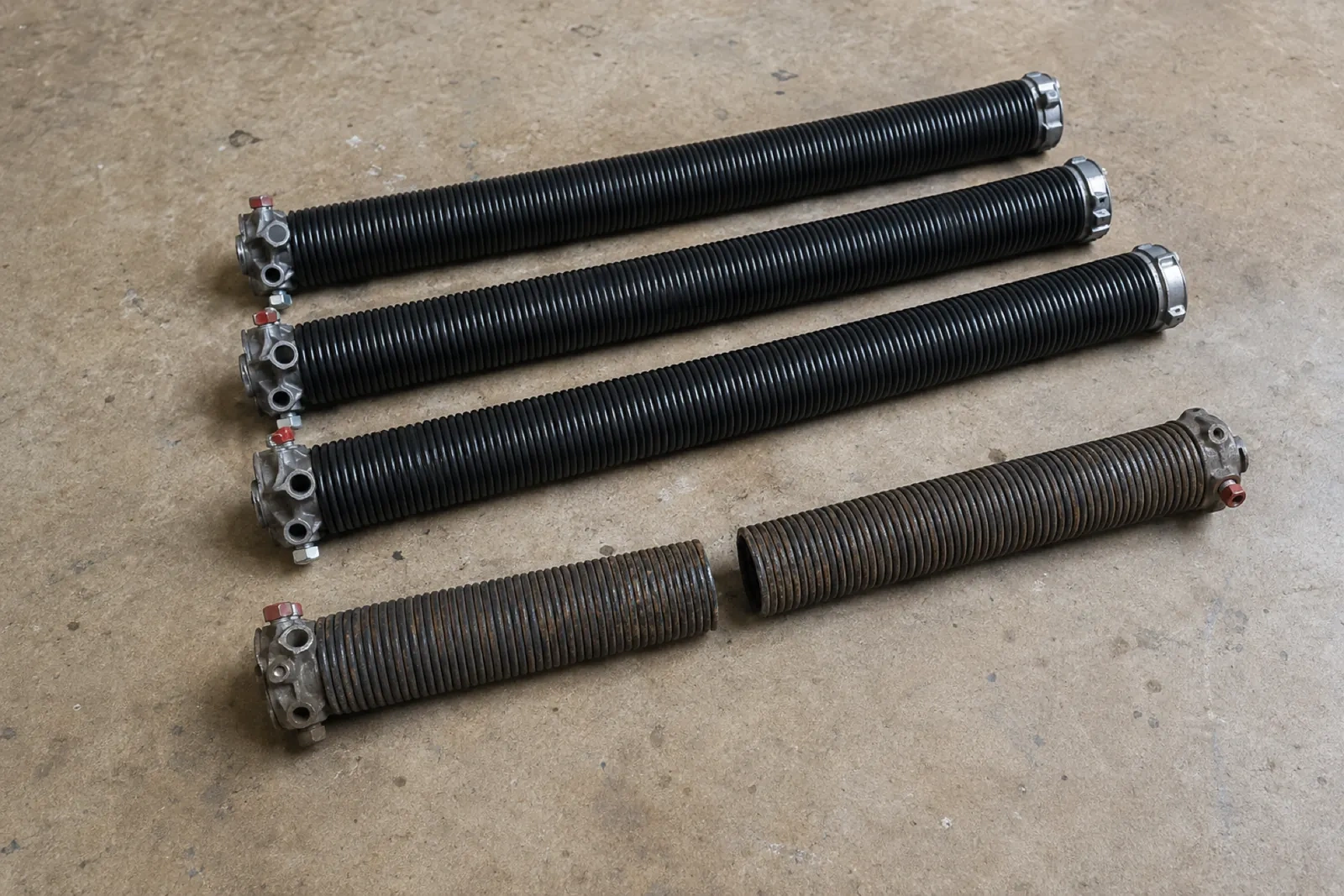
The first measurements come from the spring that is already on the shaft. The technician measures wire thickness across a run of ten or twenty coils, the inside diameter of the coil, the overall length of the spring when relaxed, and the wind direction, which is read from how the coils lean. On a two-spring door each spring is checked separately, because a left-wound and a right-wound spring sit on either side of the centre bracket. Any tag or colour marking is noted too. These numbers narrow down what the door was built with, and together with the door's weight they point to the correct replacement.
Renewing the bearings while the shaft is out
Removing a spring frees the shaft, which is the moment to deal with bearings. The centre bearing, which sits in the bracket between the springs and carries the shaft under constant load, is pressed out and replaced if it grinds or has play. End bearings in the plates at each side are checked the same way. New bearings are seated square, and the shaft is slid back through them and turned by hand to confirm smooth rotation before any spring is wound. Smooth bearings reduce the effort the spring and opener have to overcome, which extends the life of both.
Relief for the opener
Your opener benefits as much as the door. With the spring carrying the weight again, the motor, gear drive, trolley and rail return to the light duty they were designed for, which tends to mean a longer working life and less noise. Force settings have been reset to suit a balanced door, so the safety reversal reacts to a genuine obstruction rather than to a heavy door. Once a year, repeat the simple reversal test by placing a length of wood flat on the floor in the door's path and confirming the door reverses on contact. The opener's photo-eye sensors deserve a wipe at the same time.
Torsion Spring Replacement
In the van
Garage-door spring lubricant
Locking pliers for the track
Centre bearing bracket and bearing
Cable drums
End bearing plates
Torsion Spring Replacement
What affects the quote
Anchoring to the header
A centre bracket with pulled lag bolts, a split header or a corroded bracket needs refastening, reinforcing or replacement before the spring can be wound, which is included when found.
Age of the door and matching hardware
Older doors sometimes carry shaft diameters, bearing plates or drum patterns that are no longer common. Sourcing compatible hardware or adapting the mounting adds to the scope for these doors.
Spring finish
Oil-tempered and galvanized springs suit different garages. A coated or galvanized spring for a damp or salt-exposed space is a choice the customer can make when the specification is discussed.
What to have ready
- Can you see a gap in the spring above the door?
- Did you hear a loud bang before the door stopped working?
- Is the door currently closed, open, or stuck partway?
Torsion Spring Replacement: questions
QuestionsDoes the opener need adjusting after the spring is replaced?
Usually a little. A balanced door presents a much lighter load than a door with a broken spring, so the opener's force settings are reset to suit it, and the travel limits are checked so the door seals at the floor and stops cleanly at the top. The technician then runs the reversal test and the photo-eye check to confirm the safety system responds correctly with the new balance.
Can a spring be adjusted rather than replaced?
A spring that is intact but has relaxed slightly can be given a little more tension, within limits, to restore balance; this is a normal adjustment on a door that has settled. A spring with a broken coil is replaced as a unit, since the wire has reached the end of its life. The technician checks the condition of the steel and recommends whichever restores a balanced, safe door.
How do you know which spring my door needs?
The spring is chosen from measurements rather than appearance. The technician records the door's width, height and weight, the drum type and track lift, and reads the old spring's wire size, inside diameter, length and wind direction. Those inputs together determine the spring that will balance the door. The choice is confirmed on the spot by lifting the finished door by hand and feeling it hold at mid-height.
Related services
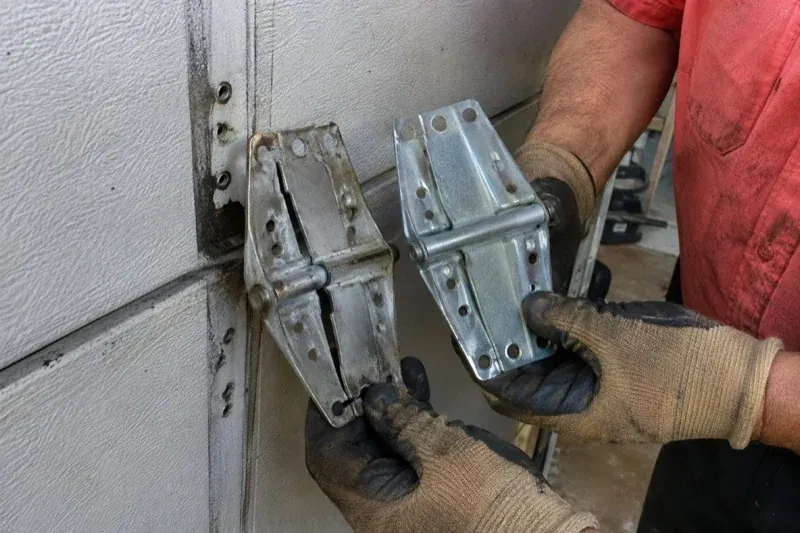
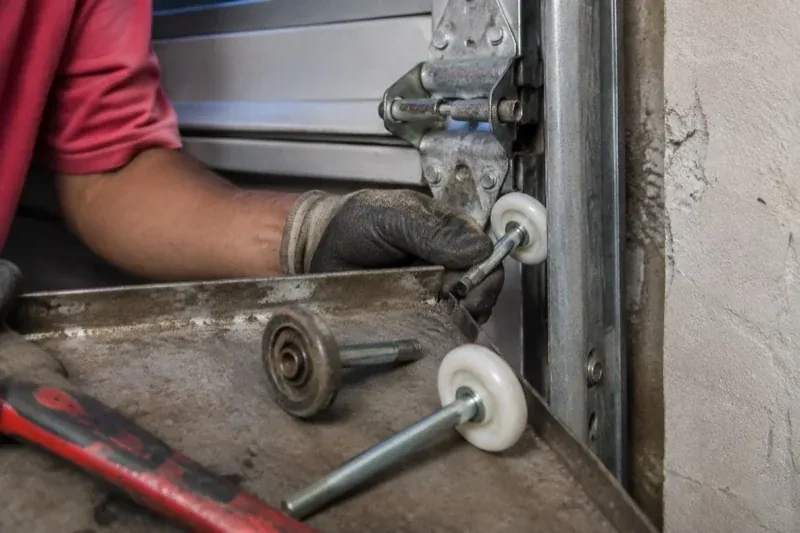
- Garage Door Hinge ReplacementThe roller at the top of the second panel is leaning outward and only half of the wheel is still in the track.
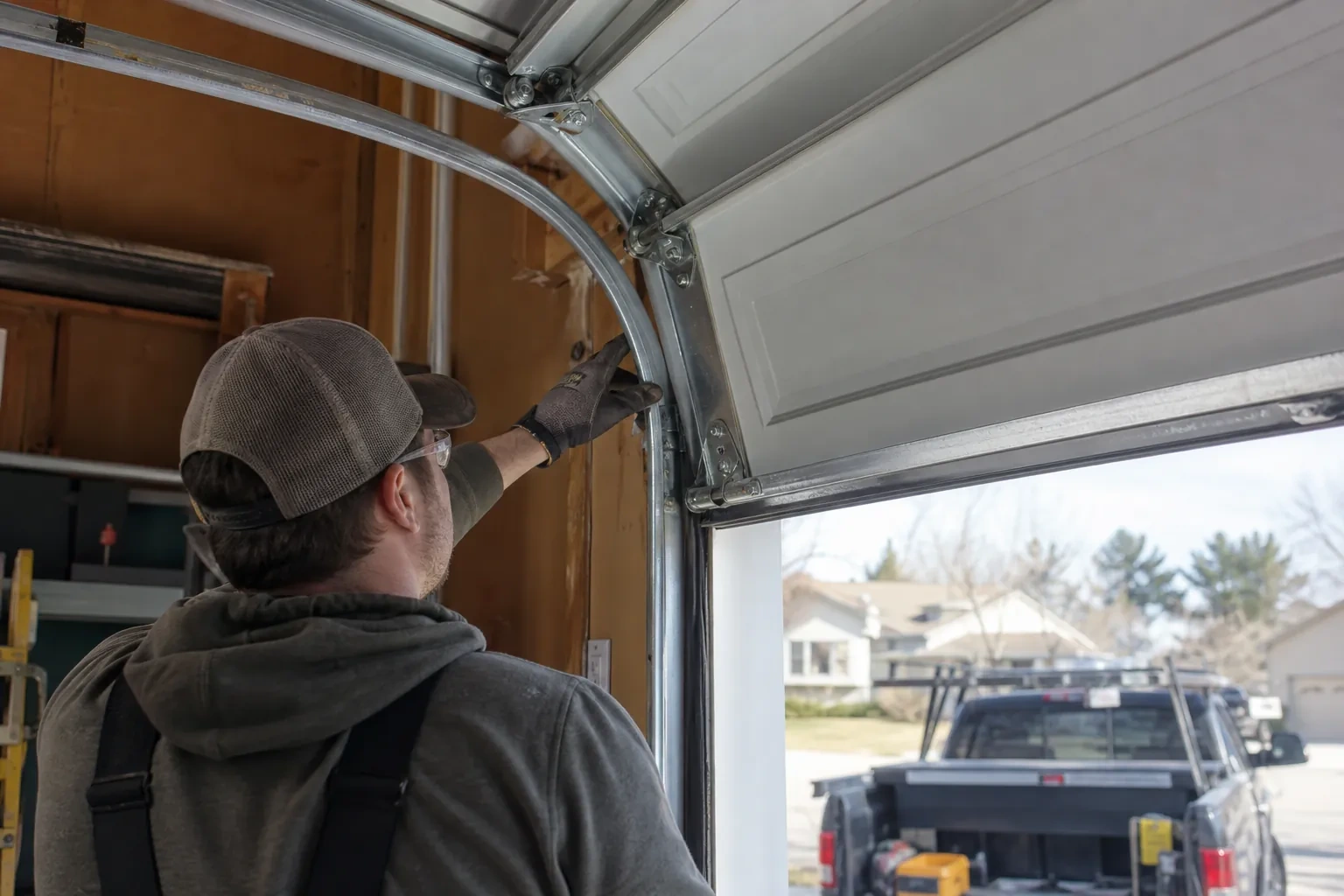
- Garage Door Track Repair or ReplacementHalfway up, the door lurches and one roller rides onto the lip of the channel.
- Garage Door Cable ReplacementStanding inside with the door closed, you notice the cable on the right side near the floor has gone fuzzy.