Springs · Barrie
Garage Door Roller Replacement
Every morning the door announces itself: a rattle on the way up, a grinding squeal on the way down, loud enough that the neighbours know when you leave.
In plain words
Most of the noise a garage door makes comes from its rollers. Steel wheels on a steel track are loud by nature and grow louder as their bearings dry out and pit, and the plastic wheels fitted to many new doors have no bearings at all, so they simply grind as they wear. Moving to nylon rollers with sealed ball bearings changes the sound of a door more than any other single part, because the nylon tire absorbs vibration instead of passing it into the track and the ceiling. The same visit lubricates the hinges and squares the track so the quiet lasts.
How the visit goesA roller near the top corner is riding on the lip of the track rather than inside it, and the section above leans back a little more each week. The door still moves, but it looks one bump away from coming out altogether.
Garage Door Roller Replacement
How the visit goes
Every roller, one by one
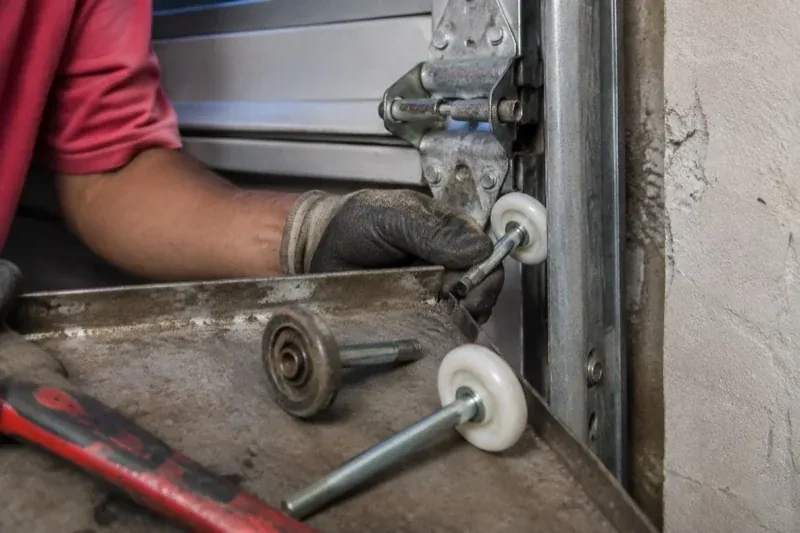
Each roller is examined in place before anything is unbolted. The wheel is checked for flat spots, for chips and cracks in a nylon tire, or for a plastic wheel worn to an oval; the stem is checked for bends and for how much it wobbles in its hinge; the bearings are spun by hand for grit, roughness or the loose rattle of balls that have pitted their race. The technician also notes whether each wheel sits centred in the track or has been riding on one lip. Ten or twelve wheels take only minutes to read this way, and the pattern of wear across them tells the story of the door as a whole.
Securing the door before a roller comes out
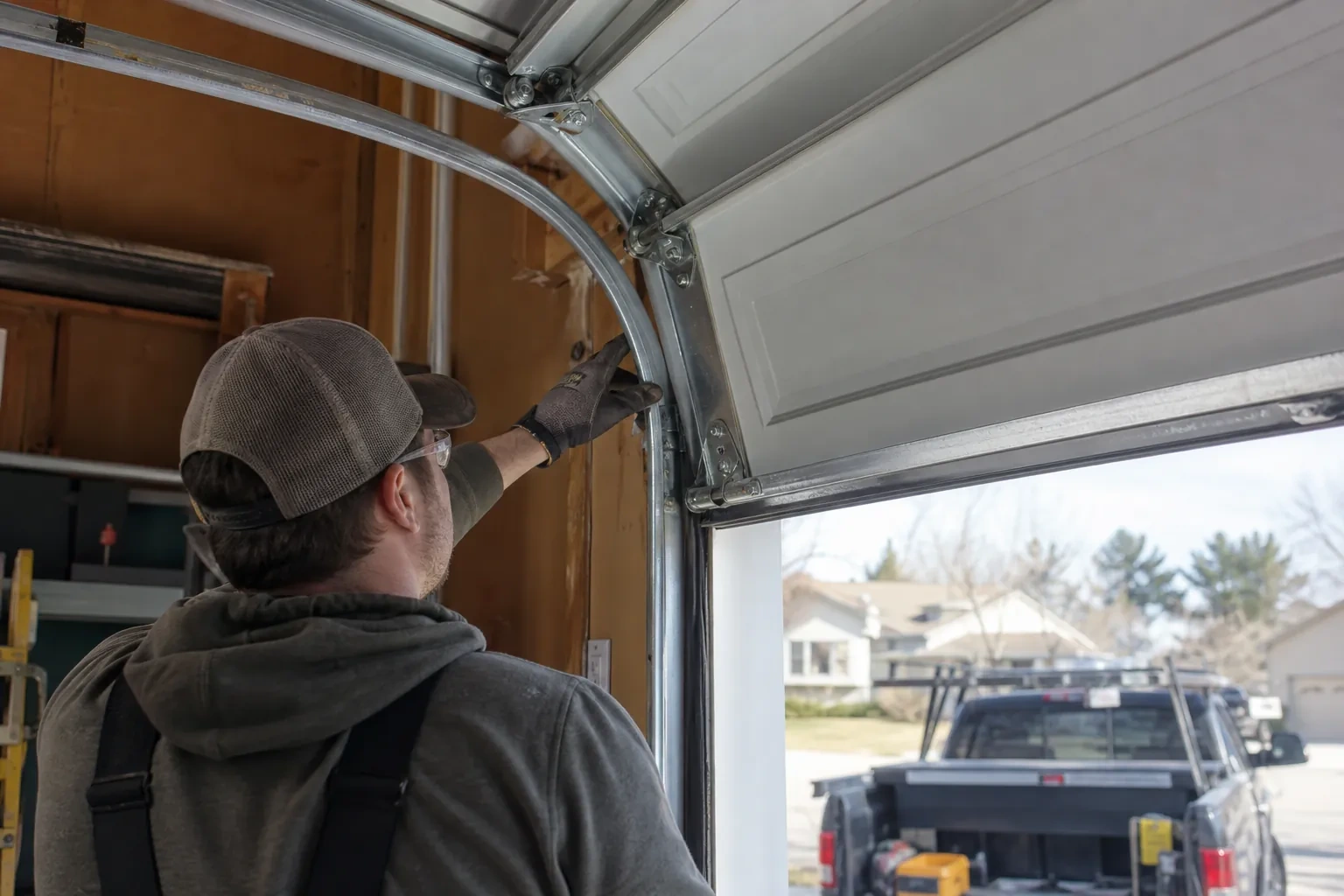
Nothing is unbolted until the door cannot move. The technician disconnects the opener, positions the door where the work is safest for the rollers being changed, and locks it there with clamps or locking pliers set in the track under the wheels so the sections cannot slide or drop. With a heavy door left in the open position, the horizontal track and its hangers are checked for a firm hold first. This set-up takes a few minutes and is the reason the rest of the job can proceed calmly, one roller at a time, without a section shifting while a hinge is loose.
A door that runs quietly and squarely
The first thing most people notice is the quiet. A door on new nylon ball-bearing rollers moves with a low hum instead of a clatter, sections stay level as they rise, and the landing at the floor is soft rather than a thump. Because the top fixtures have been reset, the top section pulls snug to the header and the draught that used to come over the top of the door is reduced. Beneath the quiet is the structural benefit: every wheel is centred in its track with the right stem through the right hinge, so the door has far less tendency to wander toward the track lip.
Garage Door Roller Replacement
In the van
Adjustable top fixtures
1-1/2 inch reversal test block
Garage door lubricant
Three-inch rollers for commercial track
Replacement numbered hinges
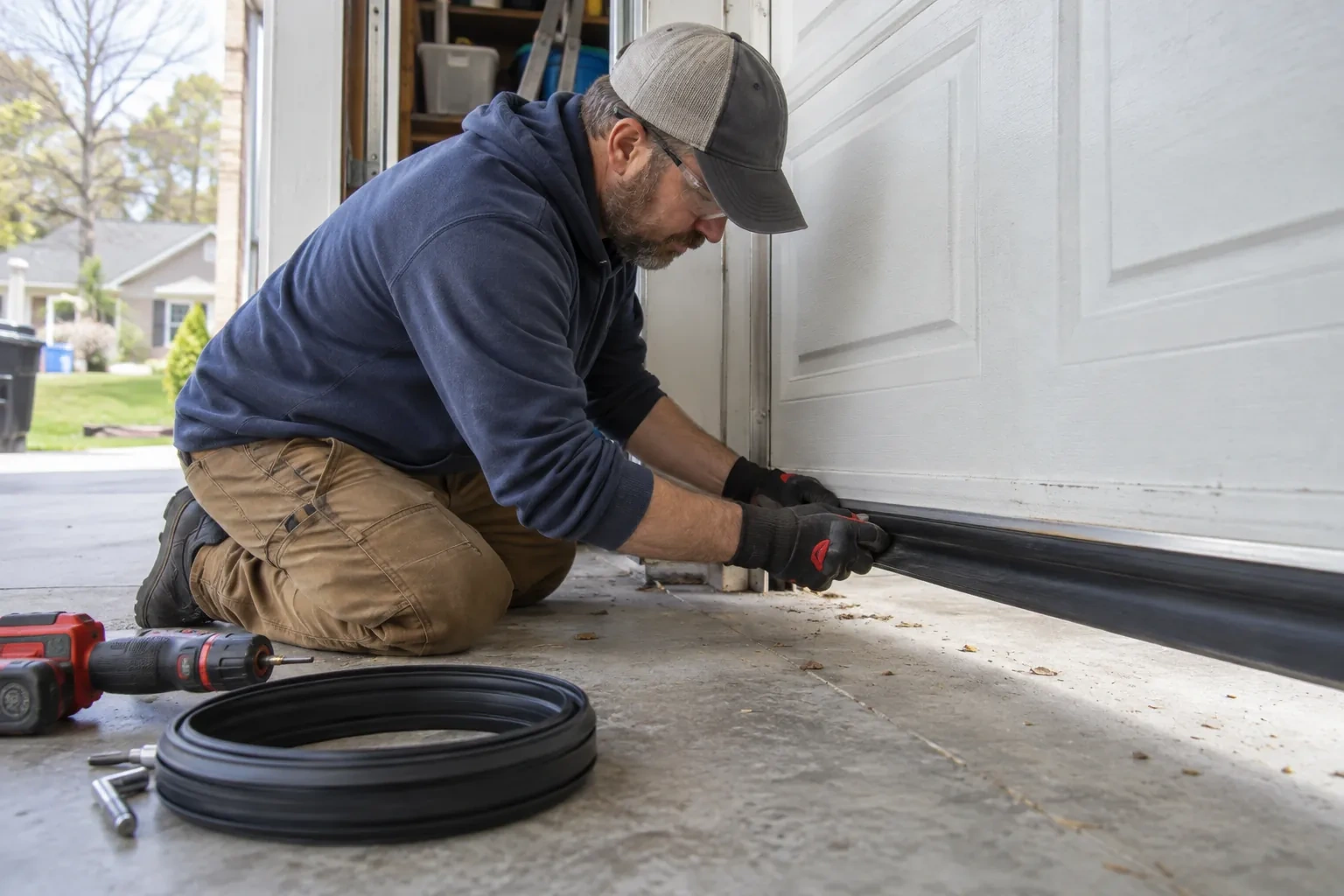
Garage Door Roller Replacement
What affects the quote
Hinges that need replacing
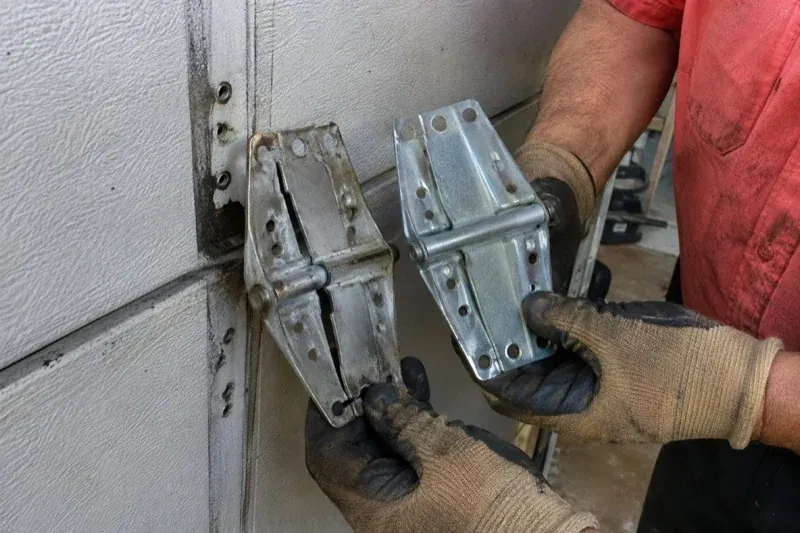
Cracked, elongated or rusted hinges found during the inspection are replaced with the correct numbered hinge, each priced as its own item alongside the rollers.
Residential or commercial track
Three-inch commercial track takes larger, heavier rollers and usually a heavier door behind them, and both the parts and the method of securing the door differ from a residential job.
Top fixtures and bottom brackets
A top fixture that no longer adjusts, or a bottom bracket that has corroded or bent, is changed while the door is secured, and the quote names each piece.
What to have ready
- Do any wheels look chipped, crooked, or sitting on the lip of the track?
- Is there rust, slush or salt residue in the bottom of the track?
- When were the springs last replaced, if you know?
Garage Door Roller Replacement: questions
QuestionsDo nylon rollers need lubricating?
The nylon tire itself needs none; spraying it or the track only collects dust that grinds the wheel. The hinge knuckles and stems where they turn benefit from a light coat of garage door lubricant once or twice a year, worked in by running the door. The ball bearings themselves are lubricated only where the roller's own maker calls for it, since some nylon rollers should not be greased there. Rollers with sealed bearings come greased from the factory and need only a wipe and a look.
How does the technician tell rollers from hinges or track as the cause?
By watching where and when the trouble happens and then checking the parts in that spot. Rollers are spun and wiggled to reveal rough bearings and worn wheels; hinges are checked for cracks, elongated holes and loose bolts; tracks are checked for plumb, dents and spacing. A shudder at the curve tends to be rollers, a pop as sections pivot tends to be a hinge, and a rub the full height of the door tends to be track. Often more than one is involved, and the visit covers them all.
What is the difference between nylon and steel rollers?
Both are a wheel on a steel stem, commonly on ball bearings though standard nylon rollers can be bearingless; the bigger difference is the wheel material. A steel wheel is tough and suits very heavy or commercial doors, but steel on a steel track is loud and grows louder as bearings wear. A nylon wheel wraps a tire around the hub, absorbing vibration rather than passing it into the track, so the door runs more quietly and the wheel never rusts. For most residential doors, nylon is the usual recommendation.
Related services
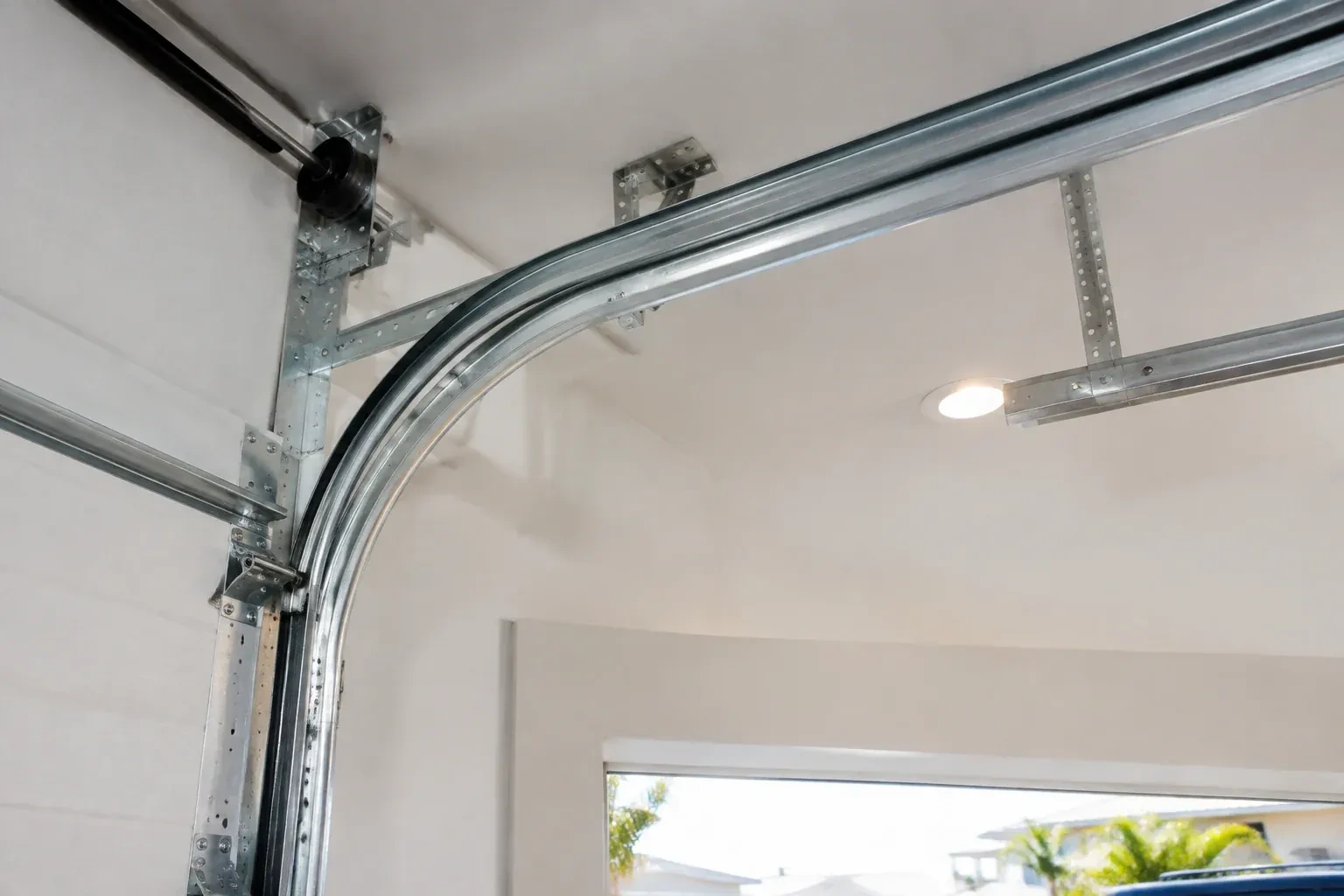
- Garage Door Track Repair or ReplacementHalfway up, the door lurches and one roller rides onto the lip of the channel.
- Garage Door Cable ReplacementStanding inside with the door closed, you notice the cable on the right side near the floor has gone fuzzy.
- Torsion Spring ReplacementAfter pulling the red release cord, you tried lifting the door yourself and it would barely leave the floor.