Repairs · Barrie
Garage Door Manual Lock Repair in Barrie
You have just moved in.
In plain words
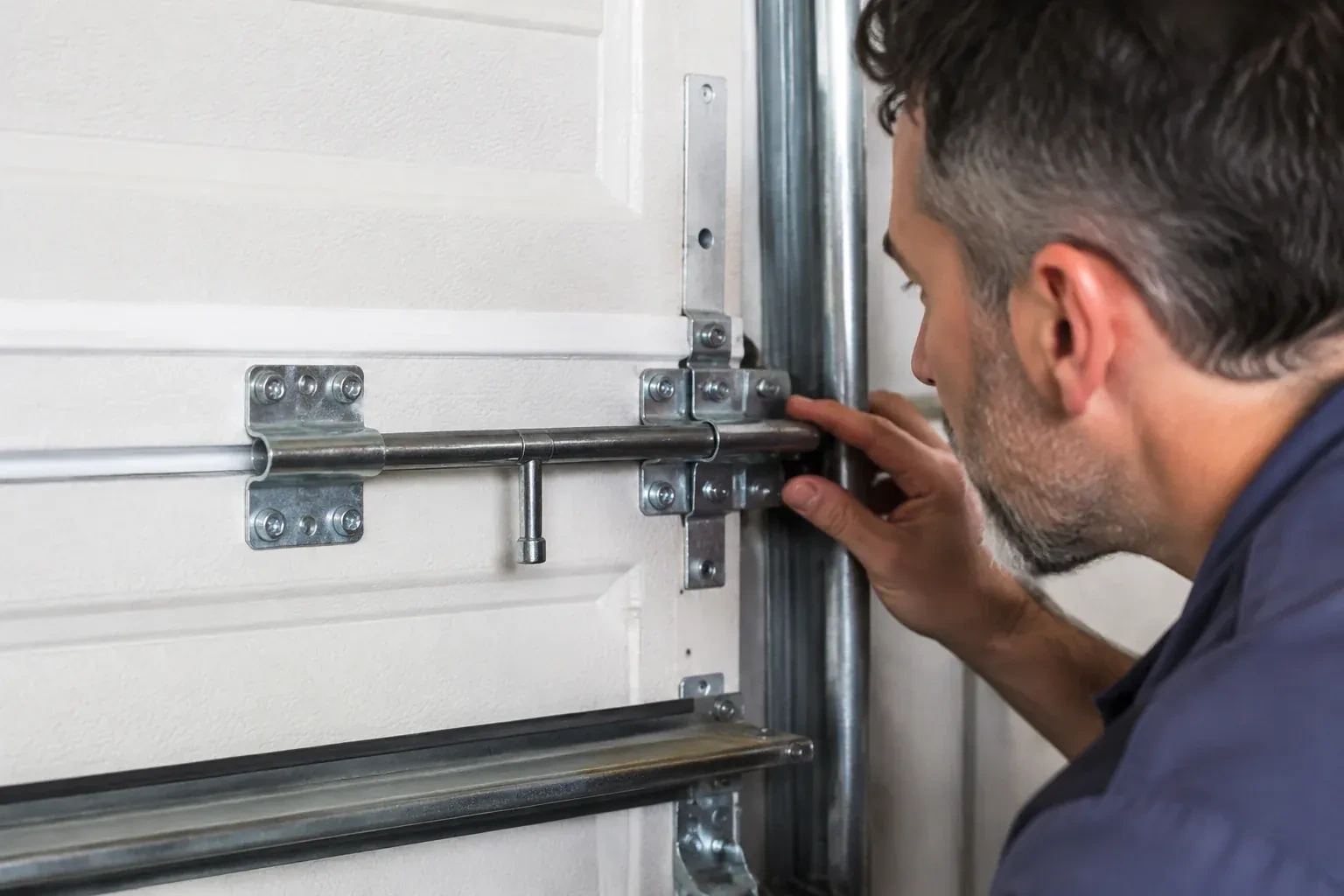
A keyed garage handle hides more than it shows. On the common bar-style handle, a spindle passes through a centre lock body, where a spring and cam convert the quarter turn into a push on two long bars, each riding in a guide and ending in a track slot; other models pull a cable to release spring latches instead. Any of these can wear: springs weaken, cams round off, spindles twist, guides rust, bars bend. The repair replaces whichever pieces have given up, matching spindle length to the door's thickness and bar length to the door's width, so the rebuilt lock throws and releases with a crisp action.
How the visit goesIt is a February morning and the key goes only halfway into the garage handle. Yesterday's melt ran down the door face and into the keyway, and overnight it set like glass. The key flexes; the cylinder stays put.
Garage Door Manual Lock Repair
How the visit goes
Signs the opener and the lock have met
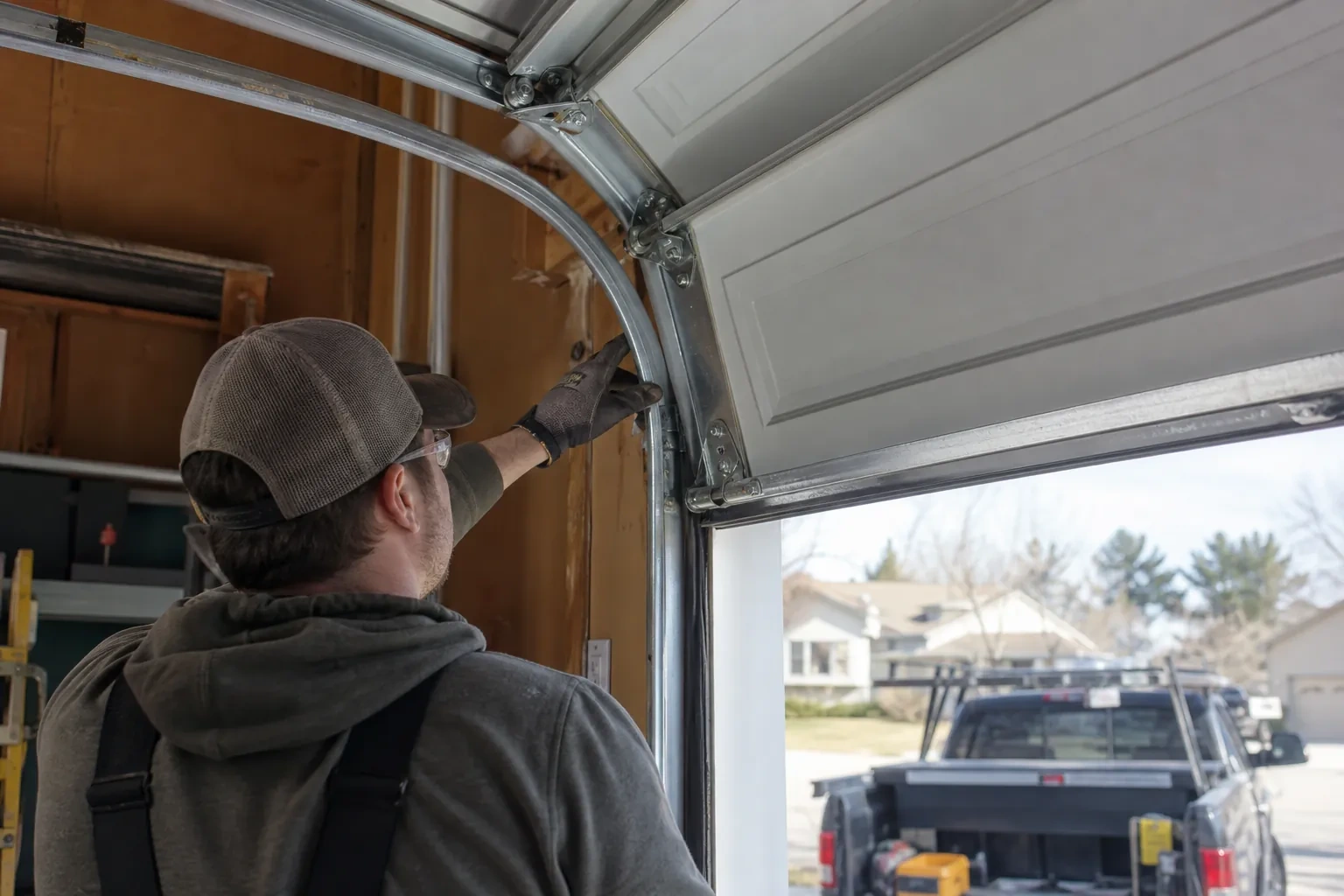
When an automatic opener shares the door, the technician looks for evidence that the two have collided: a bar bent at the track, a lock body pulled part-way from the section, a crease above the lock, a bent opener arm or a bracket strained at the top panel, and an opener that labours or reverses. The current arrangement is noted as well. Has the lock been disabled as opener makers direct, left live with no reminder, or removed altogether? Does the wall console have a lock-out feature the household knows about? These observations decide what is repaired and, just as importantly, how the door will be set up so the same thing does not happen again.
Fitting a new keyed handle set
When the outside handle is cracked, corroded through or of a pattern that no longer has parts, a complete T-handle set is fitted: exterior handle with cylinder, spindle, inside turn handle and the mounting hardware. The technician measures door thickness to choose spindle length and bolt length, and checks that the new handle's mounting holes match the existing cutout or dresses the opening to suit. On insulated doors a sleeve keeps the spindle centred through the foam. The set is tightened evenly so the handle turns without rubbing the door face, the cylinder is tested with its keys, and the connection to the bars is set so lock and release positions are definite.
One rule at the wall button
Where an opener shares the door, opener makers direct that the manual lock be removed or positively disabled rather than left in service on habit alone. The technician demonstrates the opener's own lock-out feature at the wall control and shows everyone who uses the garage how to tell at a glance whether the bars are in or out. Spring-loaded snap latches are left with their holding catch explained, since they lock on their own when the door closes. Most families settle into the routine after a few days, and the label is there for visitors, house-sitters and the one morning when someone is half asleep.
Garage Door Manual Lock Repair
In the van
Dry graphite or PTFE lubricant
Track lock-slot punch
Centre lock body and return spring
Opener lock-out reminder label
Key blanks and rekeying pins
Garage Door Manual Lock Repair
What affects the quote
Related hardware noticed on the way
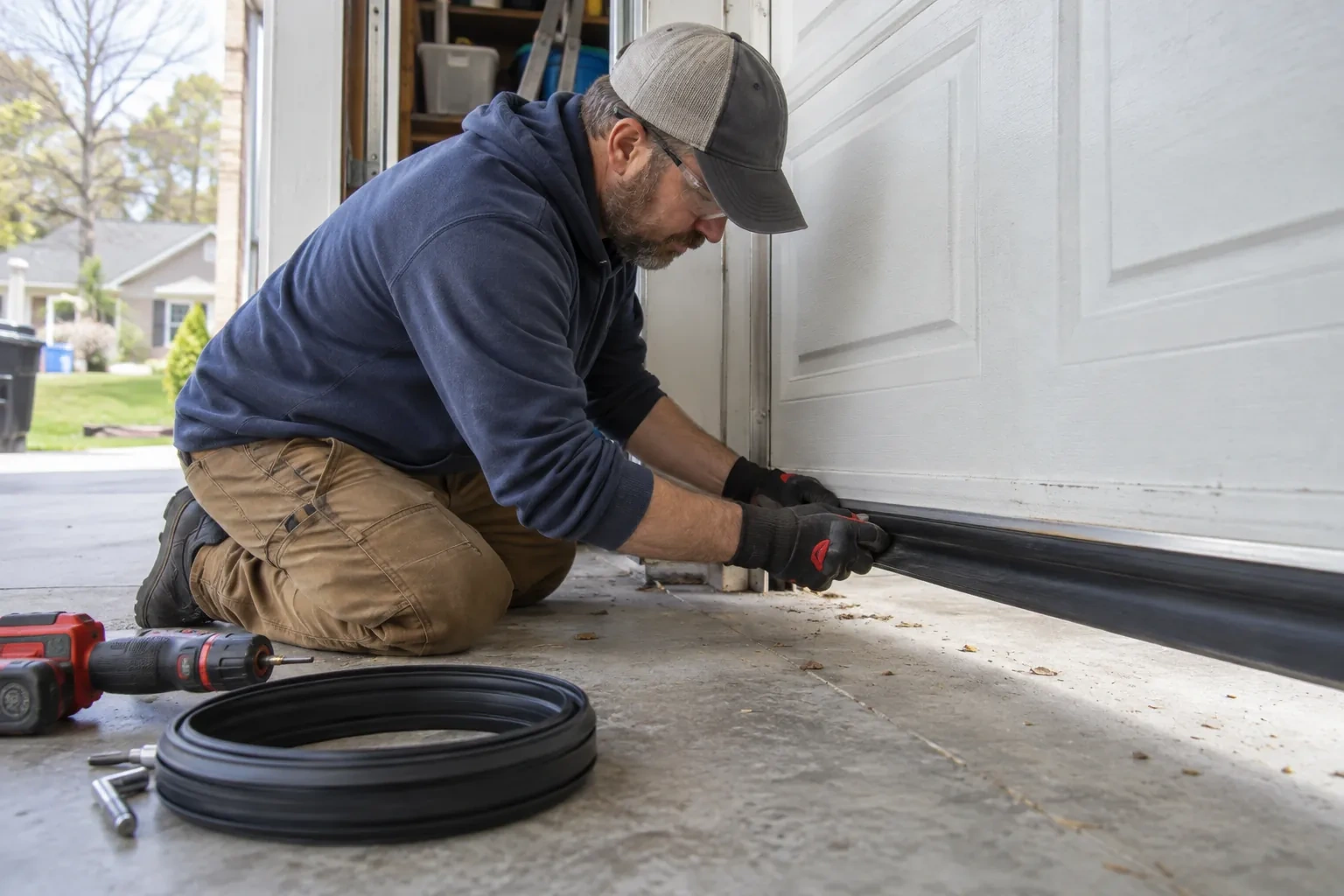
Worn rollers, a loose track bracket or a tired bottom seal seen while the door is being aligned are pointed out and offered as optional items, since they are easy to do in the same visit.
Door alignment behind the fault
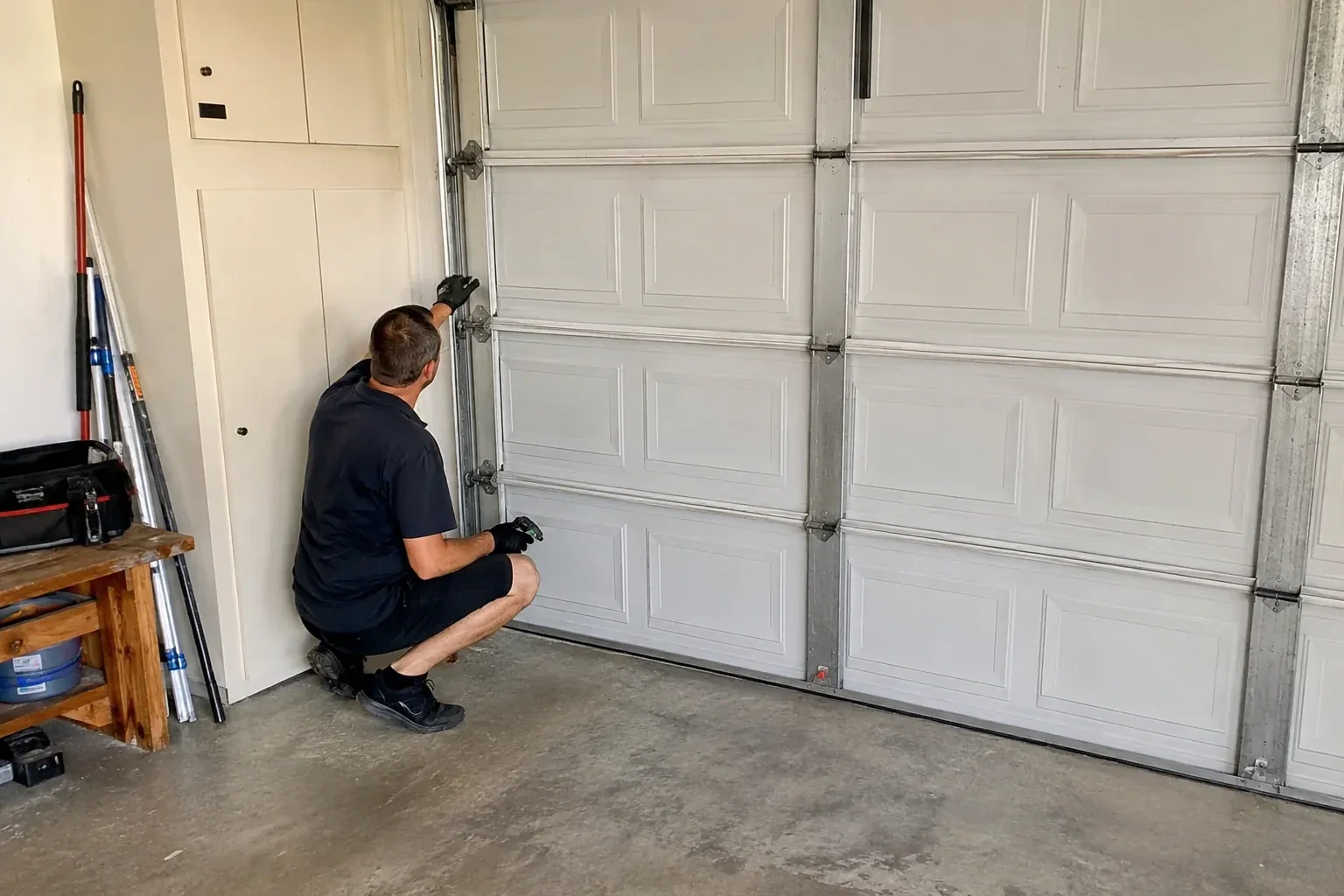
When the bar misses its slot because the door sits high or crooked, the fix reaches into track brackets, opener limits or the door's closed position, and that adjustment is quoted alongside the lock work.
One door or two
A garage with two single doors, or a house with a second garage, doubles the hardware to check and often the parts to fit. Doing both in one visit is efficient and quoted as such.
What to have ready
- Does the door close fully to the floor and sit level?
- Do you want to be able to lock the door by hand during a power outage?
- Is the lock a sliding bar inside, a T-shaped handle outside with a key, or both?
Garage Door Manual Lock Repair: questions
QuestionsWhy should the opener never run with the manual lock engaged?
Because the opener is strong enough to lift a door heavier than a person, and it has no way of knowing a bar is in the track. It pulls, the bar bends, the lock body tears at its screws, the section can crease and the opener's gear or trolley takes the shock. Opener makers ask for manual locks to be disabled or removed when a motor is installed for exactly this reason.
My key will not turn in the cold. What is happening?
Meltwater has run down the door face into the keyway during a thaw and frozen overnight, or cold has stiffened old lubricant inside the cylinder. Lock de-icer or gentle warmth frees it; hot water is avoided because it refreezes and can crack cold metal. Afterwards the cylinder is dried and given a dry graphite or PTFE lubricant that sheds moisture instead of trapping it.
Does lock work involve the springs or cables?
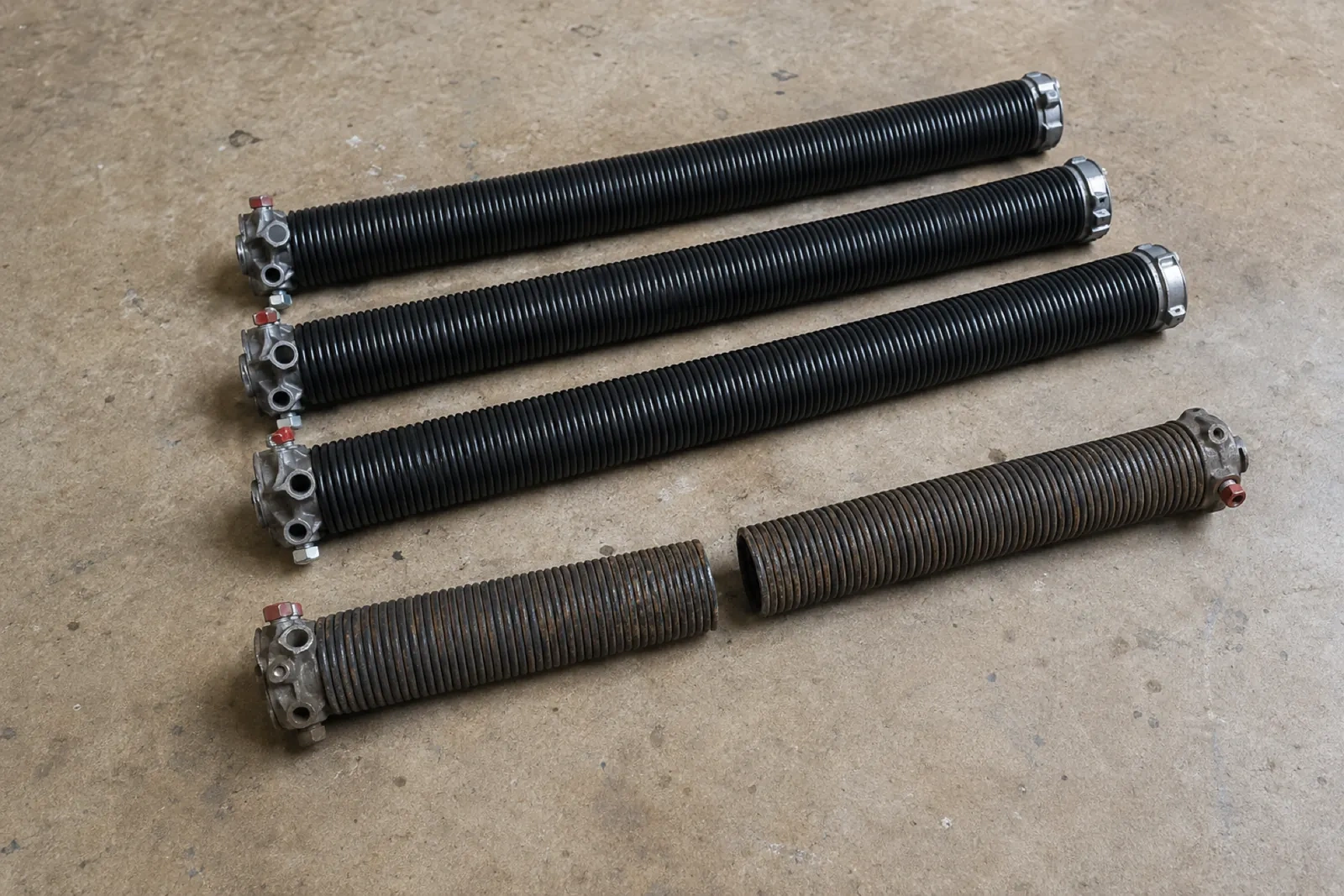
The lock, its bars and its guides all live on the door sections and the tracks, well away from the counterbalance, so the visit involves no winding or unloading of springs. Where a lock misses its slot because the door hangs crooked or sits high, the door's balance or a cable may be part of the story, and the technician points that out so it can be dealt with properly.
Related services
- Garage Door Tune-UpThe door lands with a thud you can feel through the kitchen floor, and sometimes it bounces back up a few centimetres before settling.
- Off-Track Garage Door ResetYou tapped the door with the bumper while backing in, barely a nudge, and now the bottom corner has swung inward.
- Garage Door Panel ReplacementA stray ball went through one of the window panes in the top section.