Repairs · Barrie
Garage Door Tune-Up in Barrie
The door lands with a thud you can feel through the kitchen floor, and sometimes it bounces back up a few centimetres before settling.
In plain words
A tune-up is also a safety check of the opener. Openers made since the early 1990s carry two ways of protecting anything in the door's path: photo-eyes near the floor that reverse the door when the beam is broken, and a contact reversal that sends the door back up if it meets resistance. The technician cleans and aligns the sensors, then tests both: an object waved through the beam while the door closes, and a 2x4 laid flat under the centre of the door. A door that reverses cleanly on both is doing what its maker intended, and you learn how to repeat the test yourself each month.
How the visit goesYou pulled the red cord to lift the door by hand during a power cut and it felt like lifting a car. The opener has been doing all the work and grumbling about it, and you are not sure how long that can go on.
Garage Door Tune-Up
How the visit goes
The opener's connections and safety devices
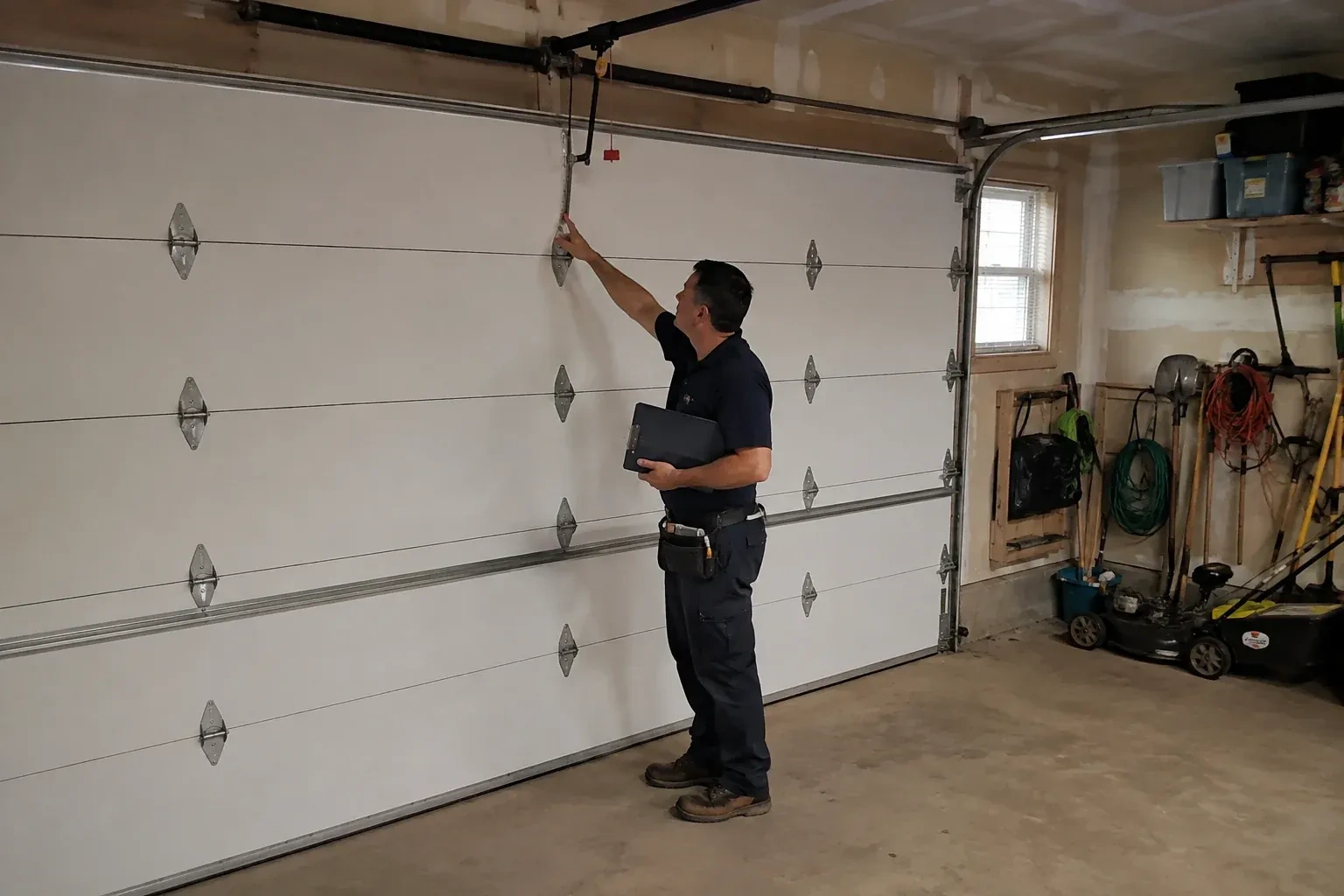
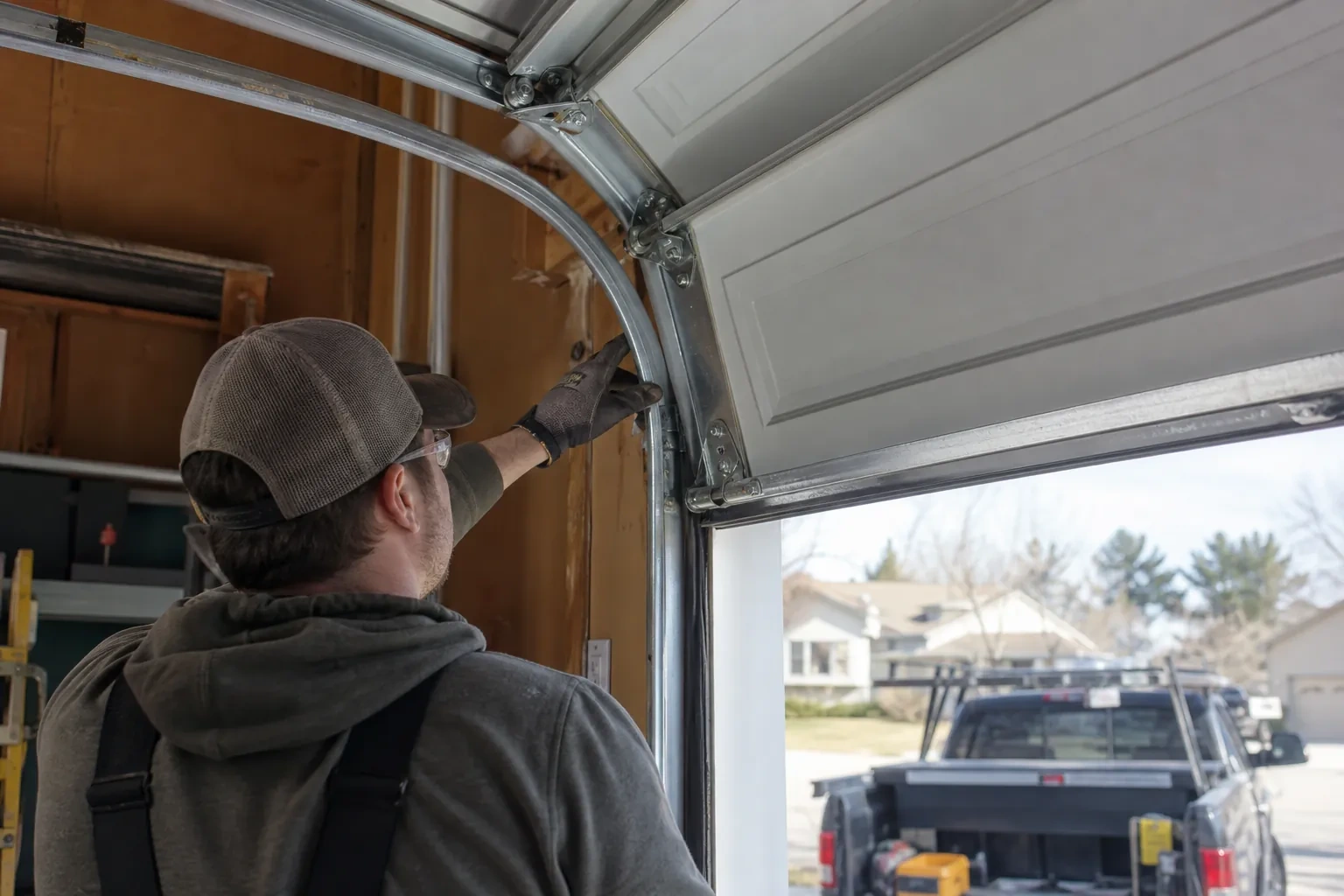
The opener is inspected as part of the door system, not as a separate appliance. The technician checks that the rail is firmly attached at the header and the ceiling hangers, that the chain or belt has the right sag, that the trolley and door arm are not worn or bent, and that the arm sits at the angle the manufacturer intends when the door is closed. Photo-eyes are located and their height measured, since the beam belongs no higher than about 15 centimetres off the floor. Indicator lights are read: steady means aligned, blinking means the pair are not seeing each other. The wall control and the red manual release are confirmed present and reachable.
Cleaning and aligning the photo-eyes
Photo-eyes work only when each sensor can see the other. The lenses are wiped clean of dust, cobwebs and salt film, the brackets are checked for the bends that a bin or a bicycle tire leaves behind, and the pair are aligned until both indicator lights hold steady. Height is confirmed at no more than about 15 centimetres off the floor, and the wiring is traced back to the opener head for a chafed or loose connection. Where low sun fools a sensor at a certain hour, a small shade or swapping the two units settles it. Once aligned, the beam is tested with the door closing to confirm it reverses and returns fully open.
Ready for the cold months
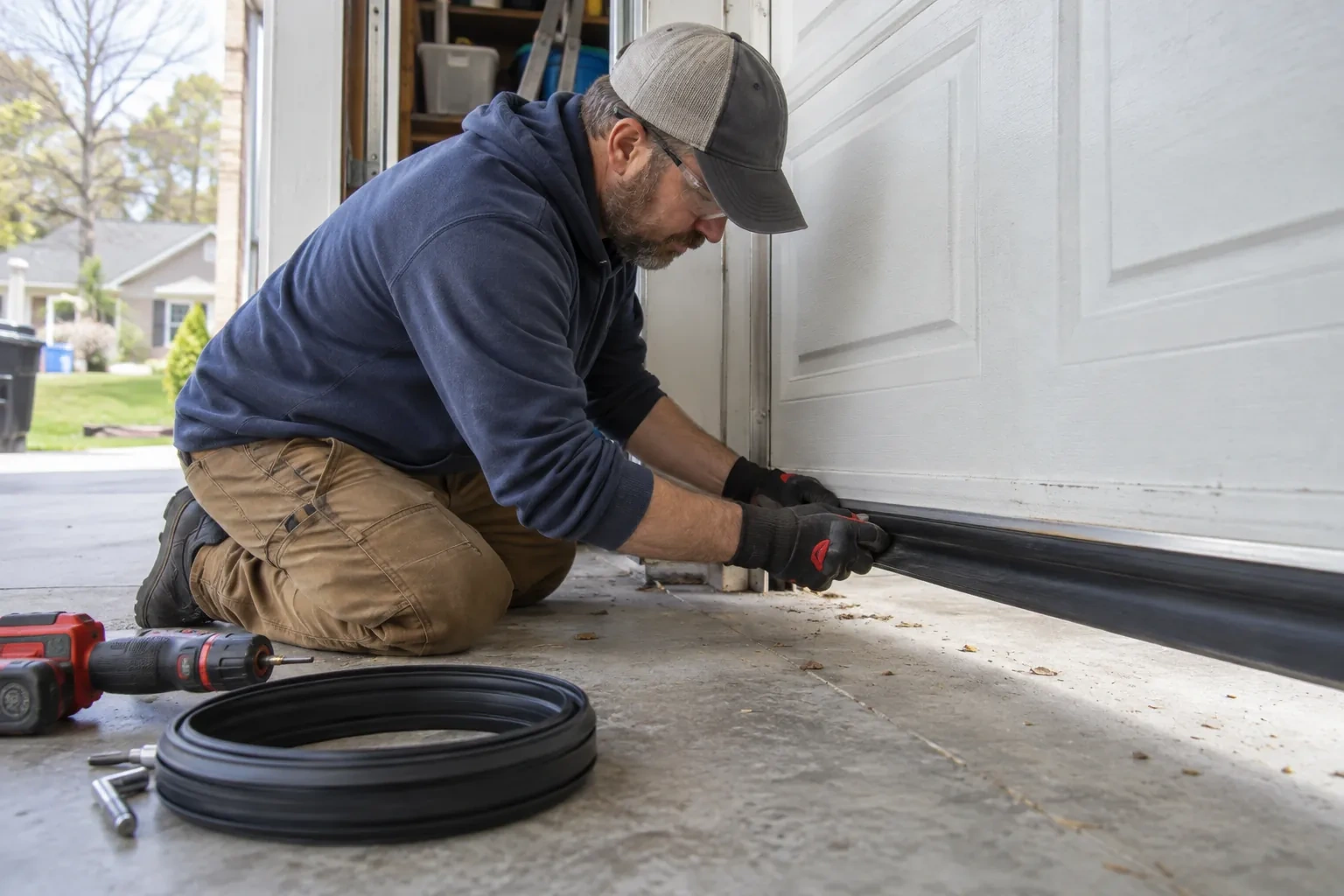
After a fall tune-up the door is set up for the season that tests it hardest. The lubricant on the moving parts stays fluid in the cold rather than thickening into a drag on the opener. The bottom seal and jamb weatherstrip have been treated so they stay flexible below freezing and release from the slab instead of tearing. If the seal ever freezes down on a bad morning, free the ice and dry the area before running the door rather than letting the opener force it; that habit protects the top section better than any force setting. You have been shown the threshold spot where water pools, and clearing snow and ice there becomes part of shovelling the driveway.
Garage Door Tune-Up
In the van
Socket set and drivers
Locking pliers or C-clamps
Lag screws for brackets and header
Bottom seal (astragal)
Replacement steel or nylon rollers
Garage Door Tune-Up
What affects the quote
Torsion or extension springs
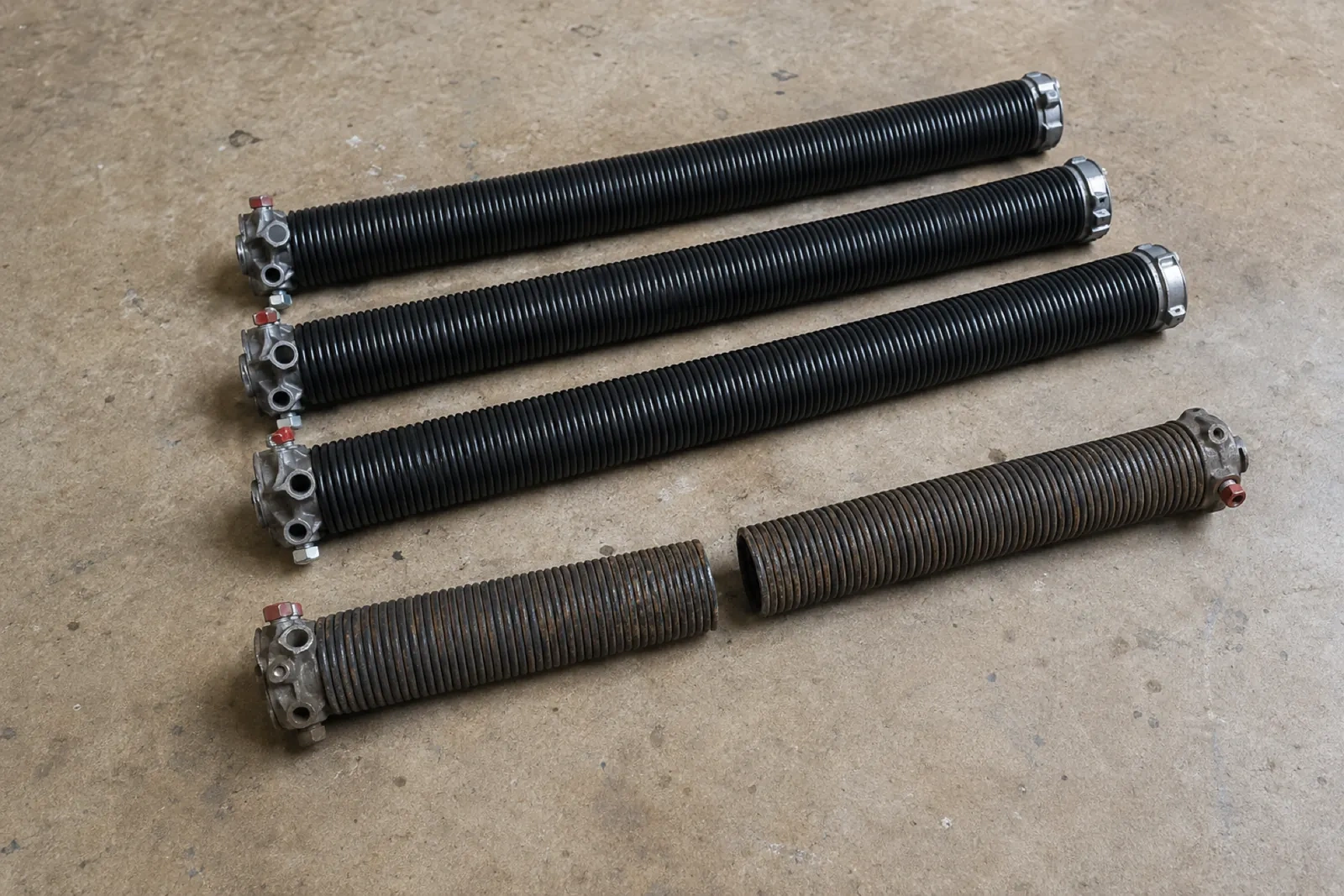
Torsion springs above the header and extension springs beside the tracks are inspected differently, and extension systems have pulleys and safety cables that add items to the checklist.
Height and access
A tall door with the opener and springs high on the header, or a garage packed with storage along the tracks, adds ladder work and time compared with a clear standard-height bay.
Type of opener
Chain, belt, screw and wall-mounted jackshaft openers each have their own tension checks and lubrication points, and older units take longer to set for travel and force than newer ones.
What to have ready
- When was the door last serviced, and do you have any paperwork?
- Are the springs mounted above the door or along the sides beside the tracks?
- Can vehicles and stored items be moved clear of the door and tracks before the visit?
Garage Door Tune-Up: questions
QuestionsMy door has a lock bar. Should it be used with an opener?
Not while the opener is connected. If the slide lock is engaged and someone presses the remote, the opener pulls against a locked door and can bend the top section or strip its gear. On a door driven by an opener the lock is usually disabled or removed during a tune-up, and the opener's own hold on the door provides the security. If you want a manual lock for holidays, the technician can show you how to use it safely with the opener unplugged.
Can a tune-up make my noisy door quieter?
Usually, yes, and often dramatically. Most garage door noise comes from dry hinge pins, dry roller bearings and hardware that vibration has loosened, and those three are exactly what a tune-up addresses. Some noise comes from parts that have worn, such as a roller gone out of round or a chain that has stretched, and the technician tells you which sounds were settled by maintenance and which point to a part worth replacing, with a separate quote for that.
Do you adjust the springs during a tune-up?
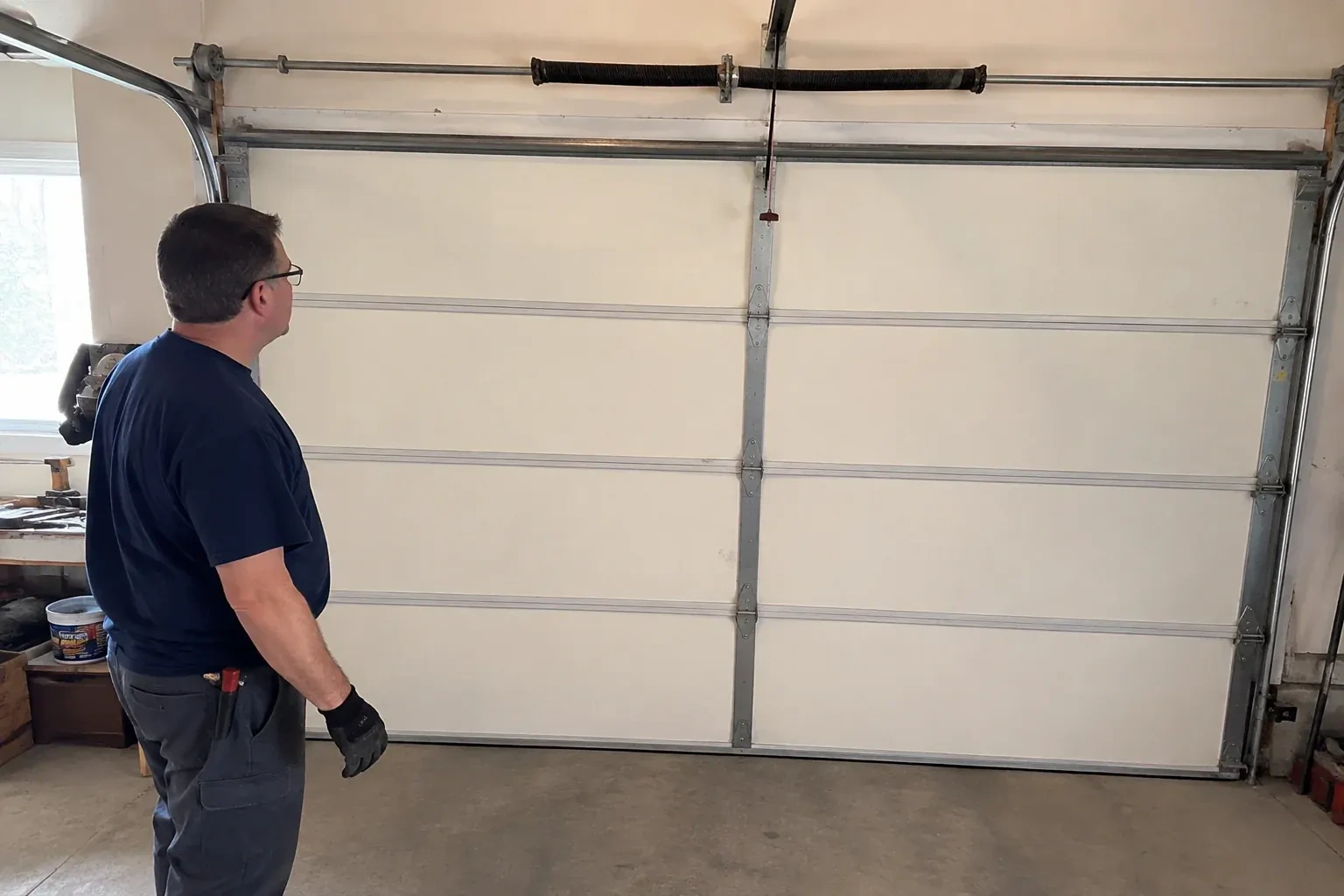
Springs are inspected and lubricated during a tune-up, and the balance test tells us whether they are carrying the door's weight properly. Changing their tension is a separate, deliberate job: the door is clamped to the track, winding bars are used on a torsion spring, and the technician works from a stable position. If the balance check shows the springs need adjustment or replacement, you receive that as its own recommendation with its own quote.
Related services
- Off-Track Garage Door ResetYou tapped the door with the bumper while backing in, barely a nudge, and now the bottom corner has swung inward.
- Garage Door Panel ReplacementA stray ball went through one of the window panes in the top section.
- Garage Door Bottom Seal ReplacementWith the door closed and the lights off, a bright line of daylight runs along the floor from one side to the other.