Garage Doors in Barrie, OntarioBikes, strollersand a door that behaves.
Family garages in Barrie are busy places, with kids ducking under the door and a bike wheel always somewhere near the track. We set the auto-reverse so it trips on a light touch, aim the photo-eyes properly, and make sure the door closes fully every time so the house stays secure behind it.
Family garages in Barrie are busy places, with kids ducking under the door and a bike wheel always somewhere near the track. We set the auto-reverse so it trips on a light touch, aim the photo-eyes properly, and make sure the door closes fully every time so the house stays secure behind it.
Tuned for the seasons it lives through.
We keep things plain for people in Barrie. No jargon in the explanation, no surprises on the invoice, no work started before you have agreed to it. The technician shows you the problem, prices the options on the spot, and gets on with the repair once you say yes.
Maintenance is a quiet part of our work in Barrie, and we like it that way. A yearly look at the door, with the balance tested, hardware tightened, rollers and hinges lubricated and sensors checked, keeps small wear from becoming a snapped spring in January. We remind households when the season comes around and handle any repair that turns up along the way.
16years in business
24/7open every day
Honest about condition. You get a frank picture of the door's state, good parts included, so you know what to expect from it over the coming years.
Work that leaves no trace. Apart from a door that runs properly, you would not know we had been there. Clean floor, tidy hardware, nothing left behind.
Advice, then your decision. We recommend, we explain why, and then we do what you choose. The door belongs to you, and so does the decision.
Book an on-site assessment for your door in Barrie.
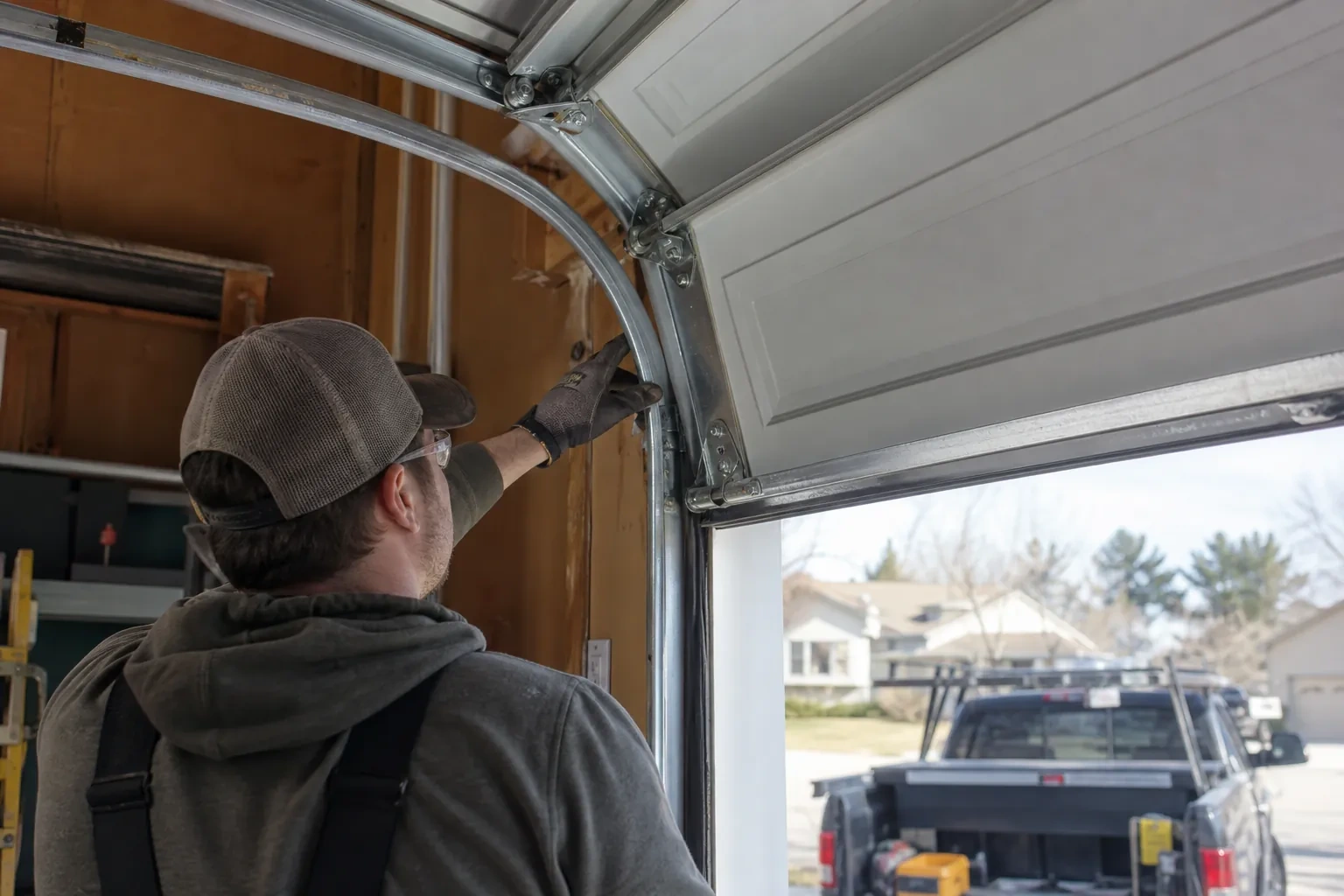
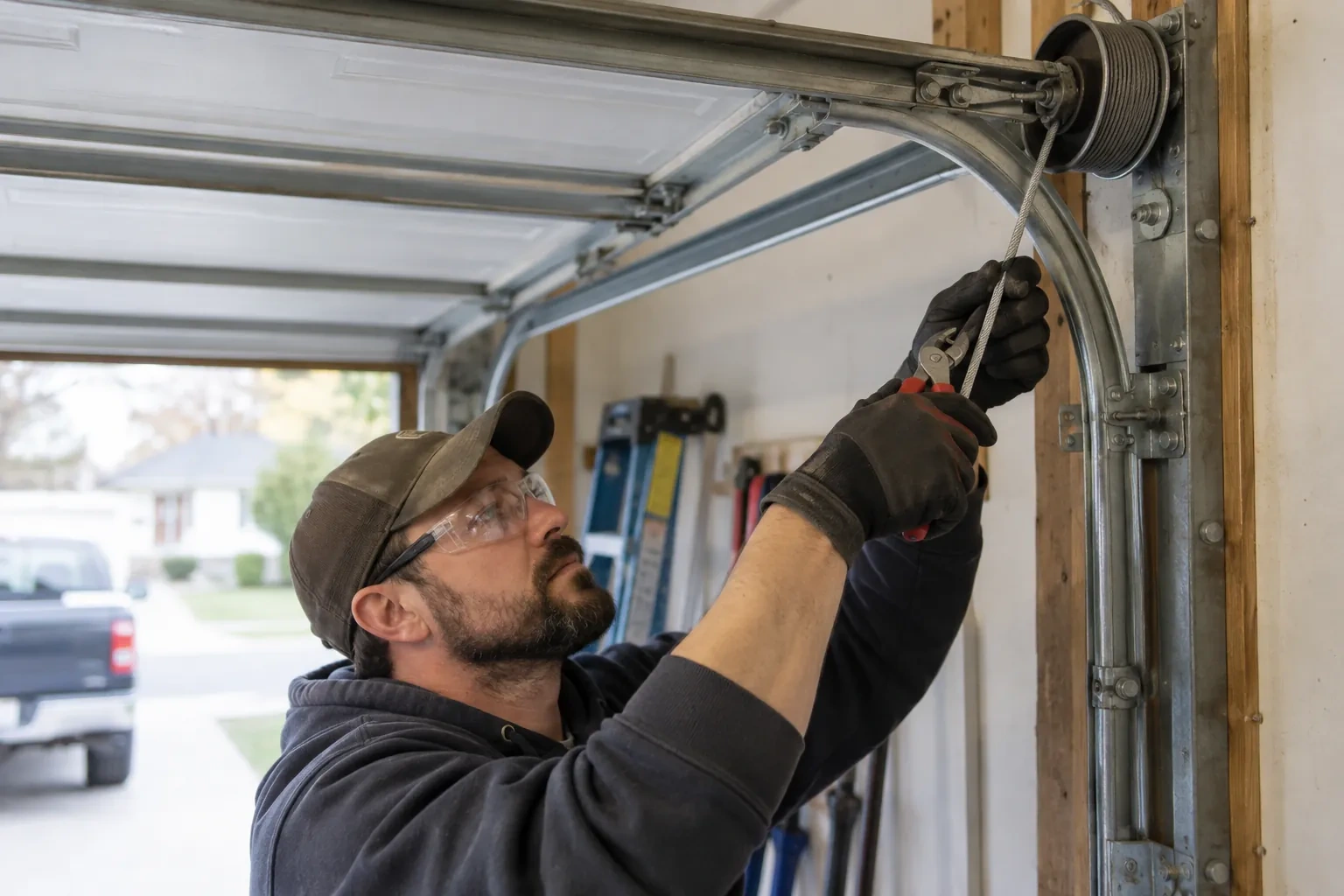
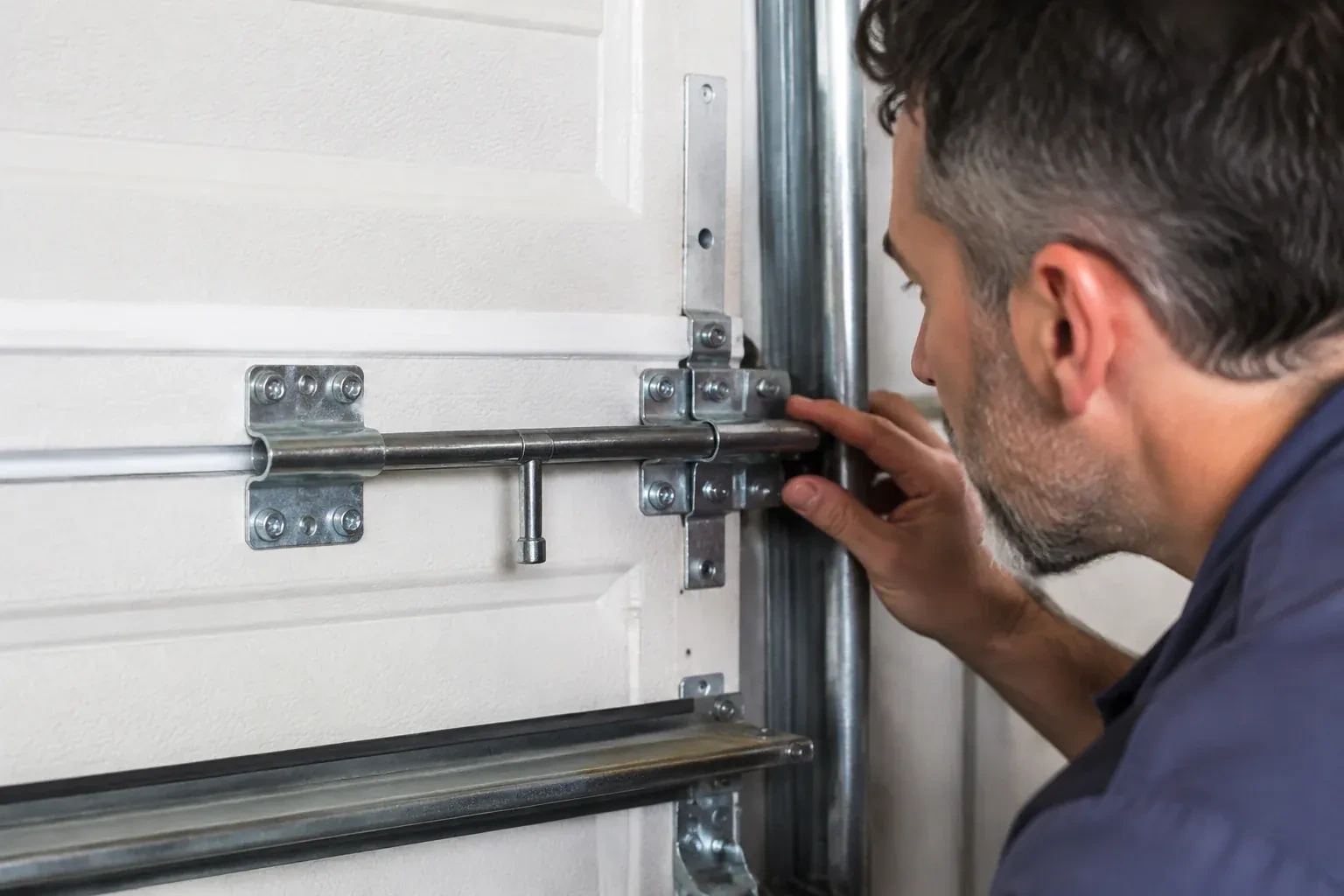
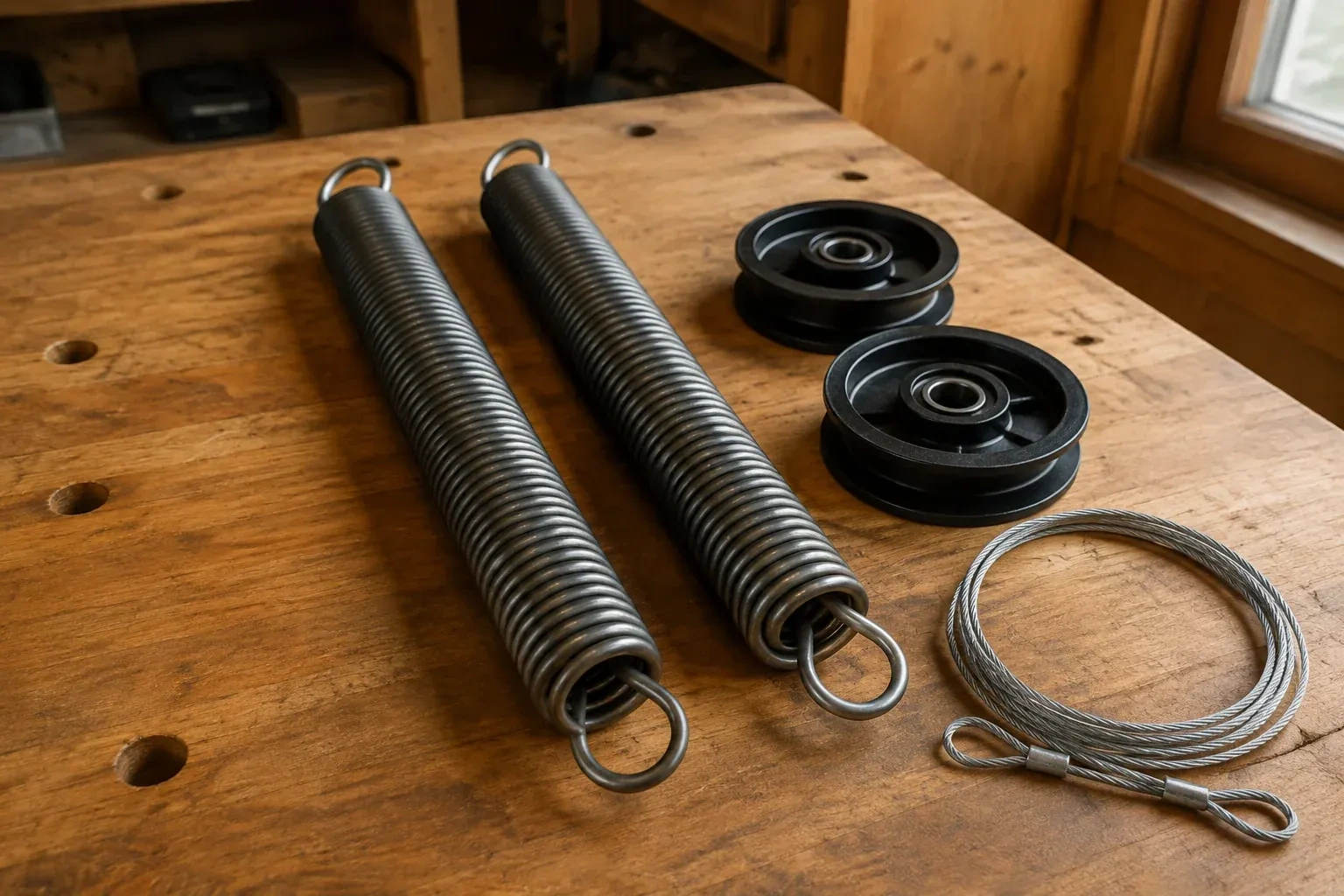
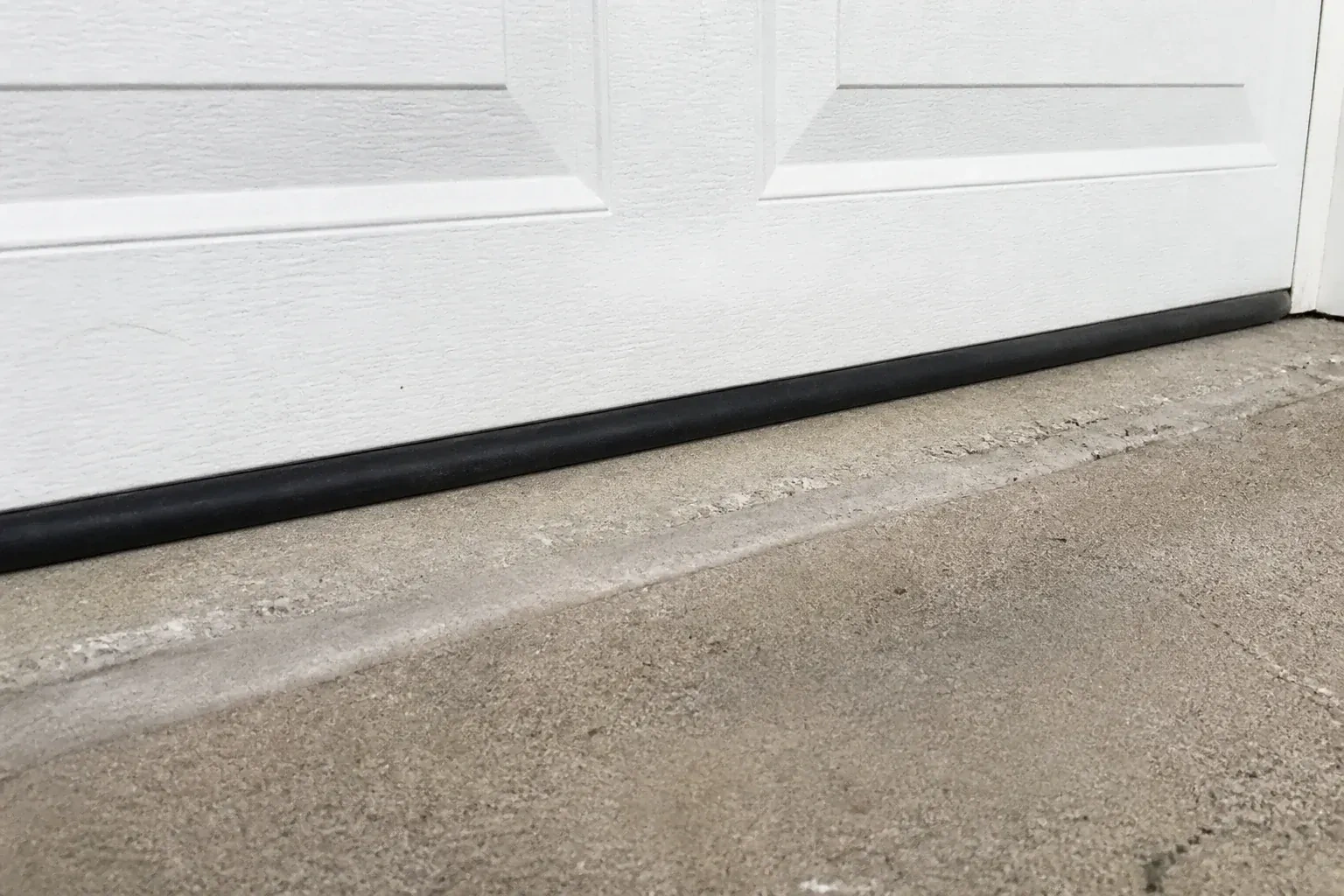
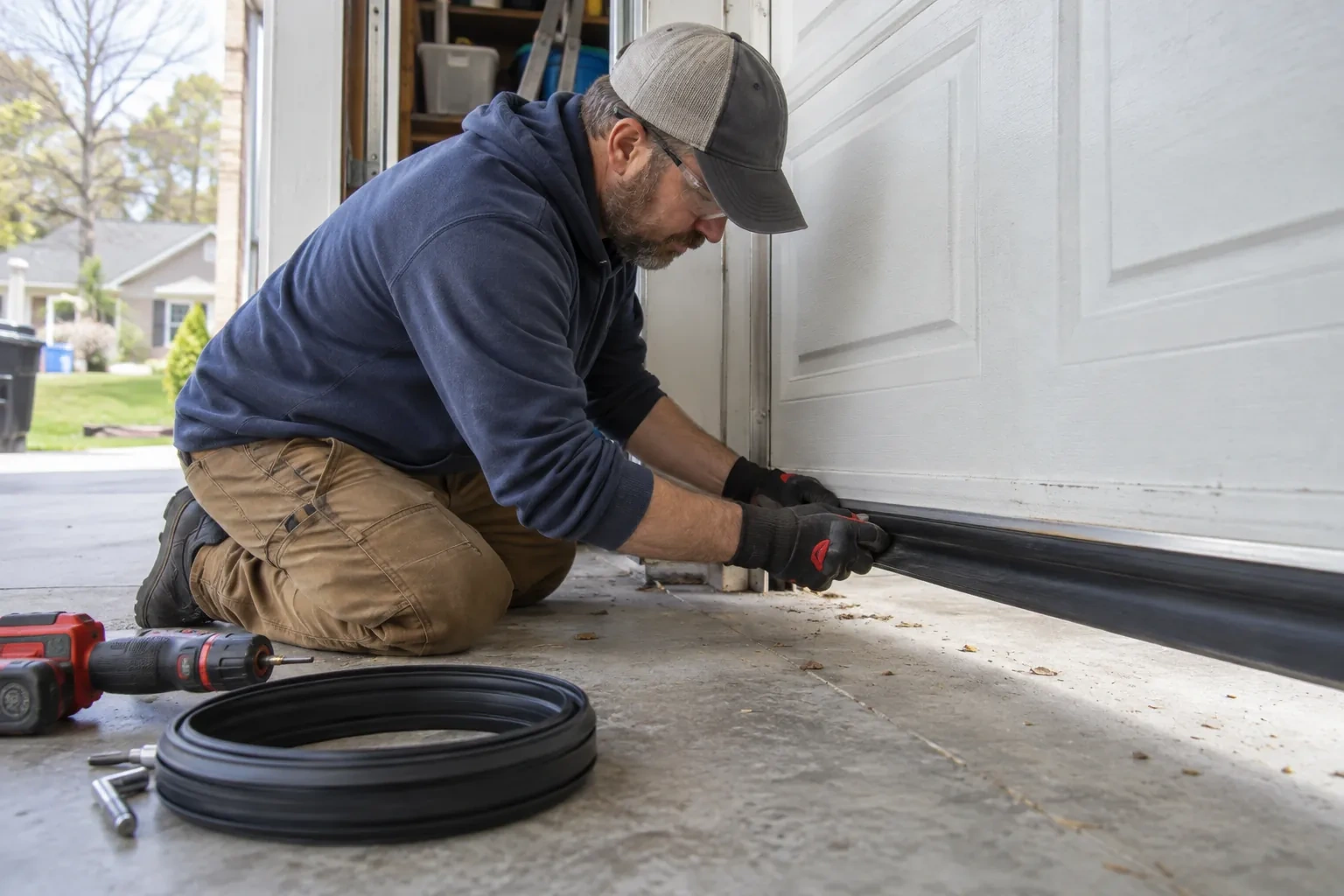
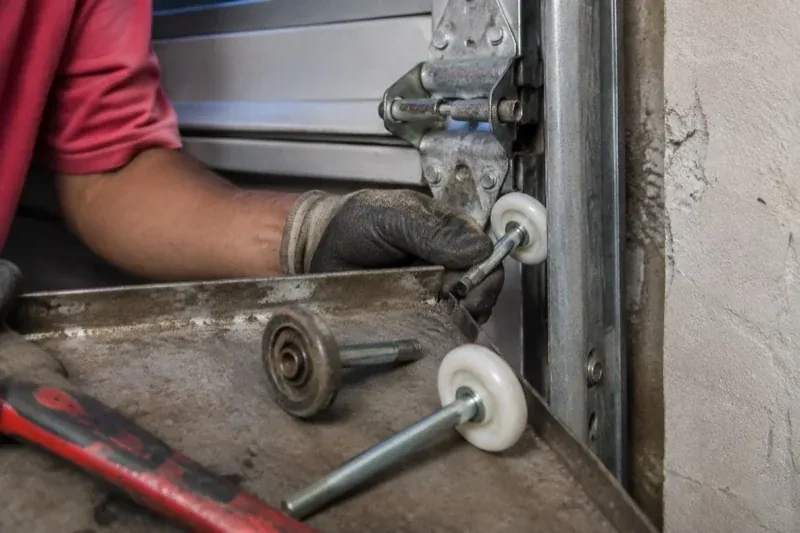
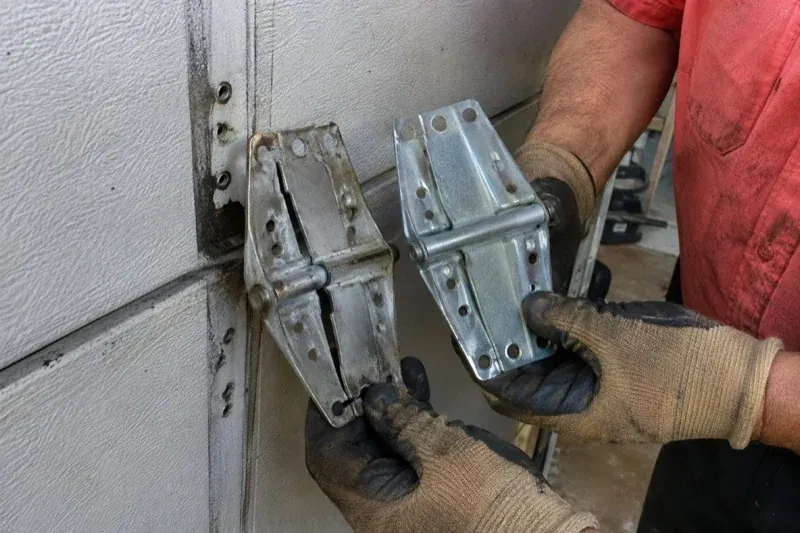
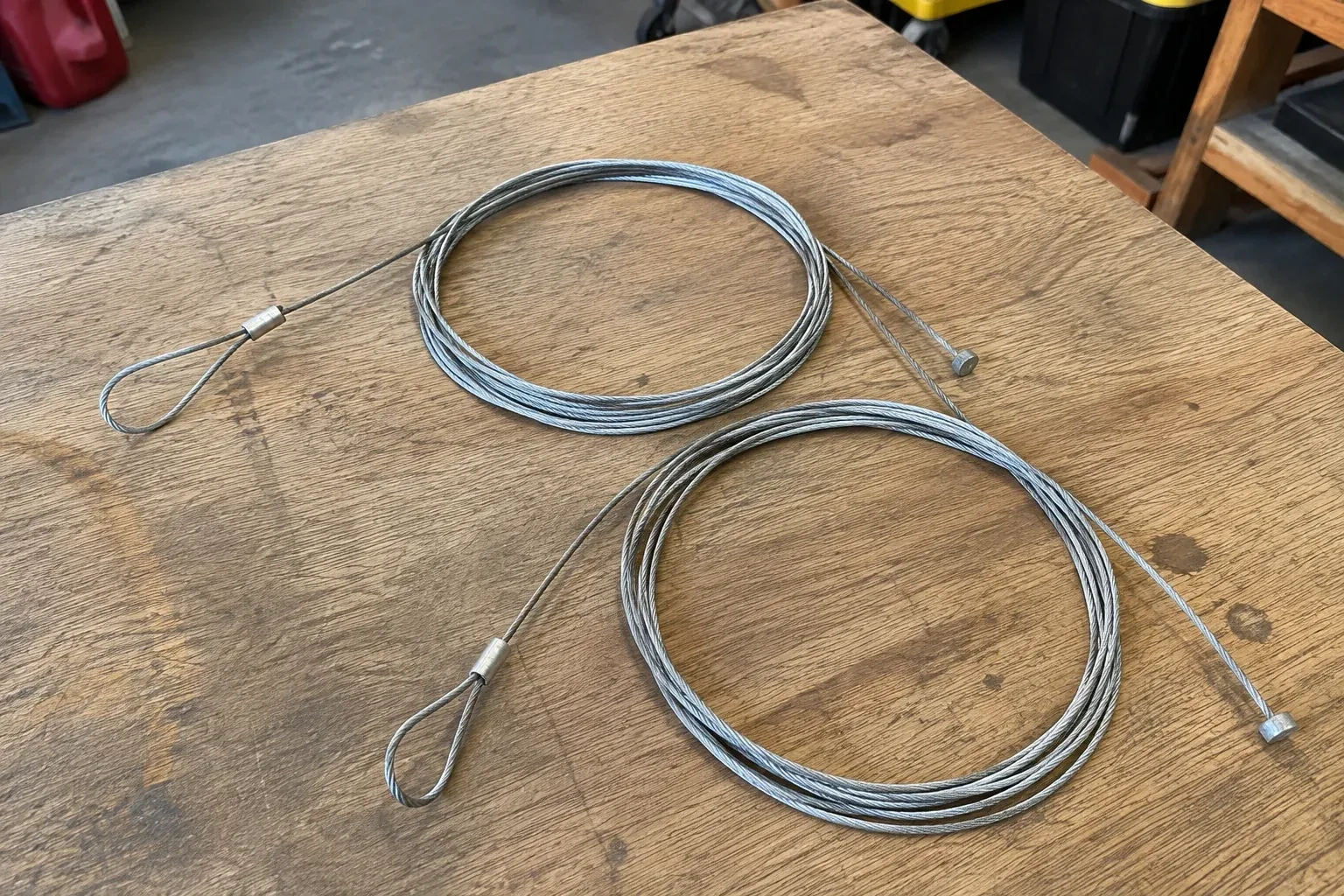
Our technicians arrive in Barrie ready for the everyday repairs: torsion and extension springs, lifting cables and drums, rollers, hinges, bottom seals, photo-eyes and opener gears. For bigger decisions, such as a new insulated door or a modern opener, we measure, advise and install as a separate service.
About 29% of homes in Barrie were built in 1980 or earlier, according to the 2021 Census.
Newer homes
Builder-grade hardware is common on newer doors: light rollers, thin hinges and a basic opener that met the specification on the day. Upgrading to nylon rollers, heavier hinges and a belt-drive opener turns a serviceable door into a quiet one, which matters when bedrooms sit above.
Single-detached houses make up about 58% of homes in Barrie (2021 Census).
A blend of housing means a blend of garages: spacious attached garages with full headroom on the detached lots, and tight tandem garages with little side room in the attached units. Openers, tracks and springs are all sized at the door rather than assumed from the street.
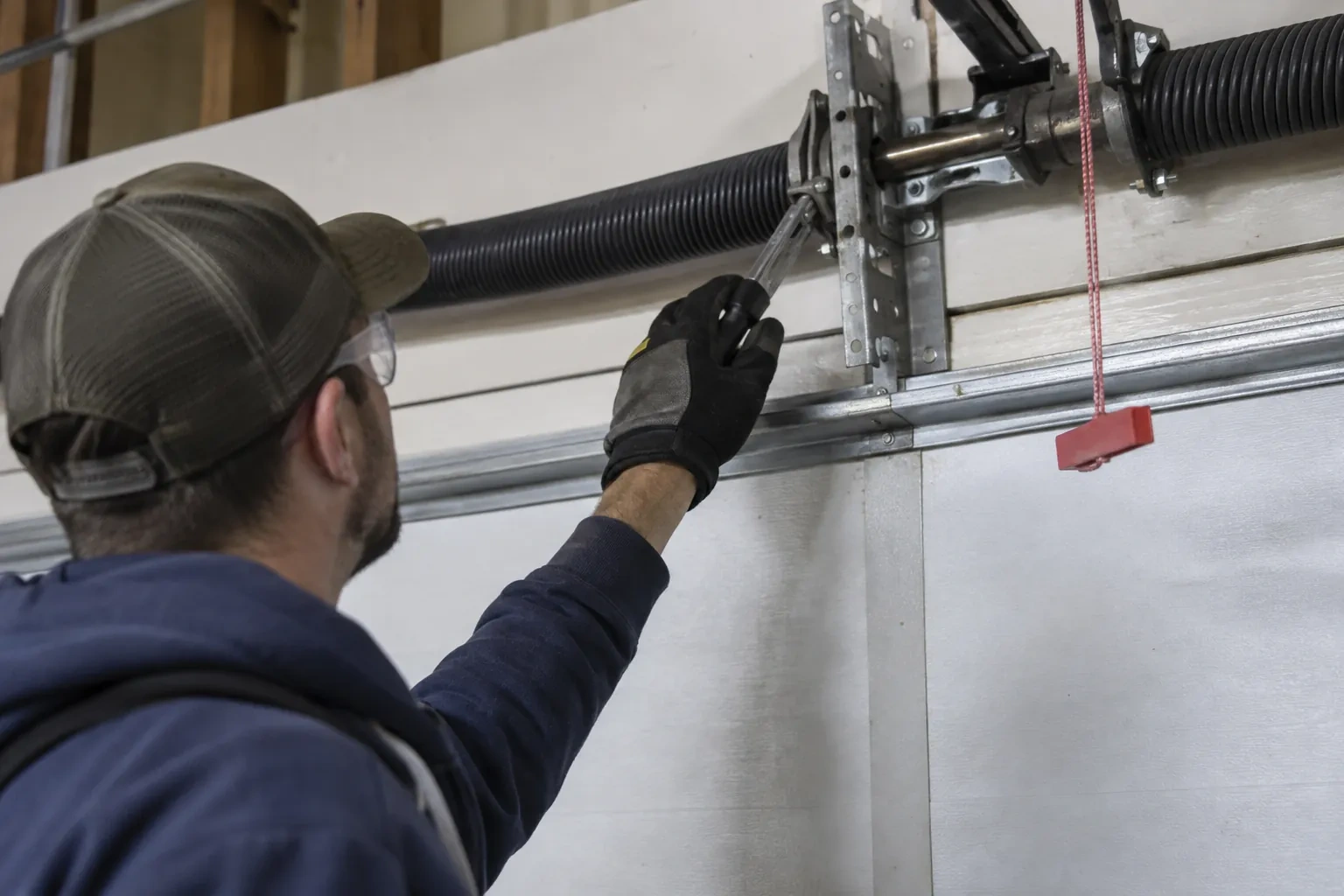
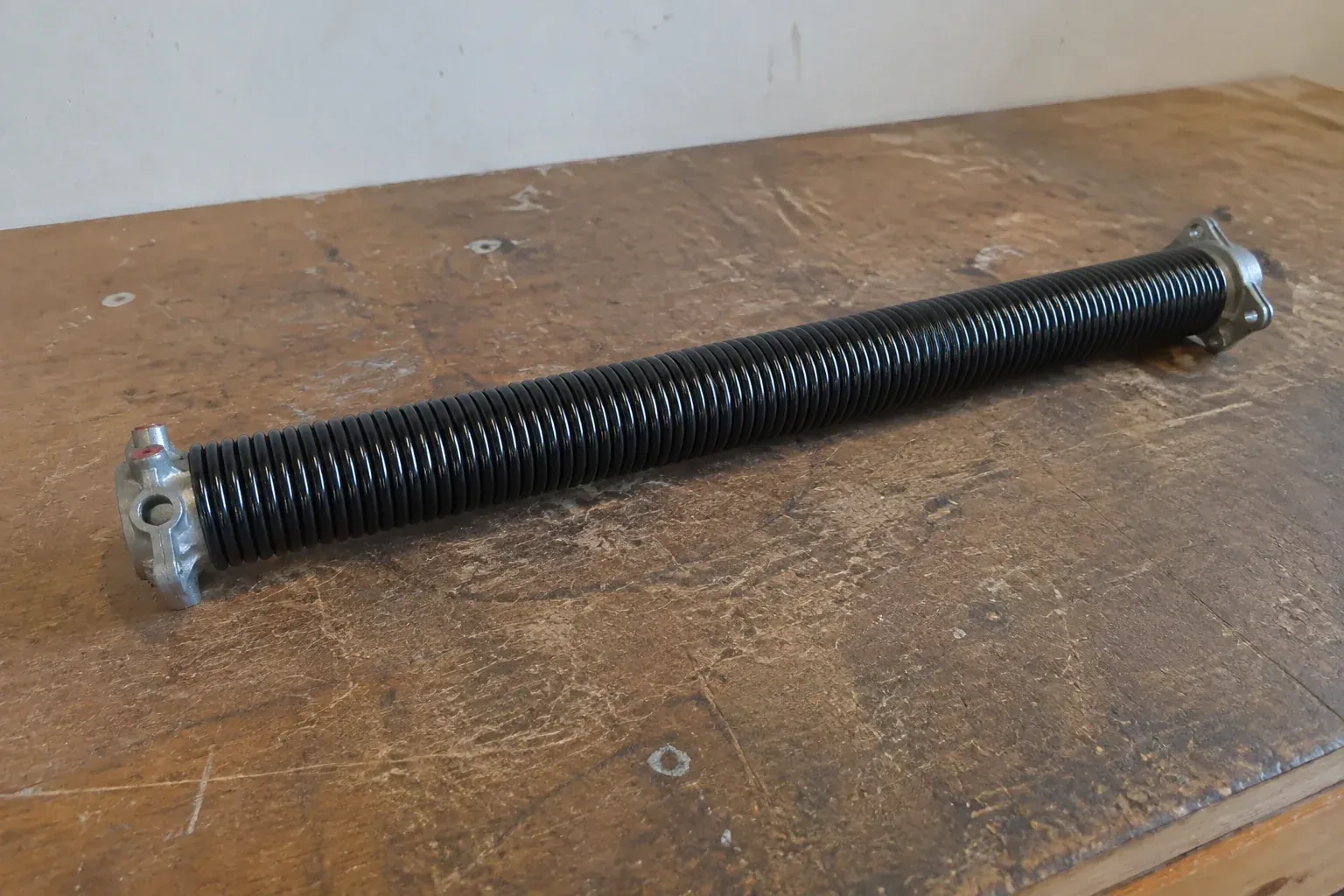
A well-set spring system means the door will stay wherever you leave it, half open included. That is the standard we work to on every spring and cable job.
Every morning the door announces itself: a rattle on the way up, a grinding squeal on the way down, loud enough that the neighbours know when you leave.
The door goes up perfectly. Coming down is the trouble: partway to the floor it stops, climbs back to the top, and the light on the opener blinks at you.
The door closes, touches the floor, then climbs straight back up as if it hit something. Nothing is in the way, the sensor lights are steady, and it has been doing this since the weather turned.
Halfway up, every single time, the door hesitates and there is a ratcheting sound from the motor head, then it carries on. A closer look shows a stretch of the belt where the teeth are worn almost flat.
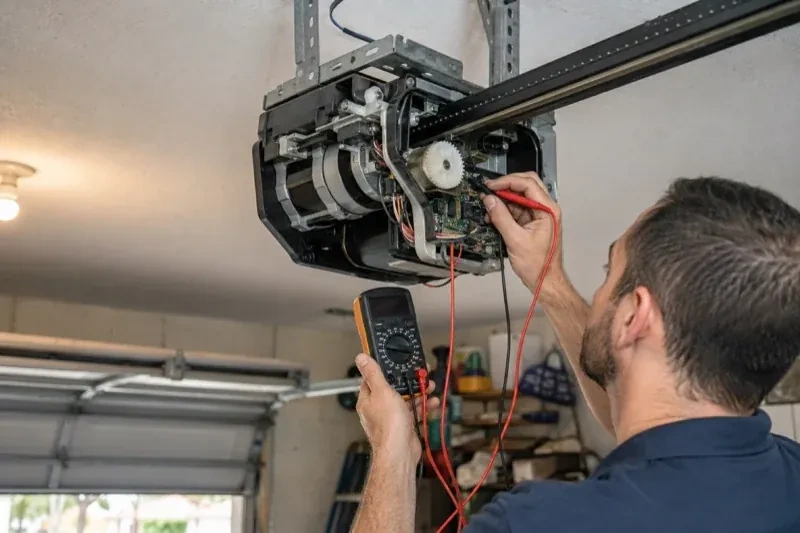
The opener in the ceiling is older than the car parked under it. It groans on the way up, the light fixture rattles, and there are no small sensors near the floor.
Since shelving went up along the garage wall, the door will not close and both sensor lights are dead. A screw or staple may have gone through the thin wire that runs from the opener to the sensors.
A smart hub arrived in the mail with a coin-cell sensor and two wires. The instructions ask what colour your learn button is and how old the opener is.
It is the coldest morning of the year. A week of slush and road salt has crusted over the outside release lock, the key will not seat, and the opener inside is silent after the overnight outage.
Which fix fits?
You pulled the red cord to lift the door by hand during a power cut and it felt like lifting a car.
WhyA spring that breaks with the car inside puts the whole morning on hold, and this service is designed to get that door working again in a single visit.
You pulled the red cord to open the door during a power cut and it barely moved.
WhyImpact damage often looks local but changes the path of the entire curtain.
How a visit goes
Describe the property, the hardware and what has changed, and the visit starts from what you have seen.
01
We listen first
You describe what the door did and when it started. A stuck door, a bang, a remote that stopped: every detail helps us arrive with the right parts.
02
We check the whole door
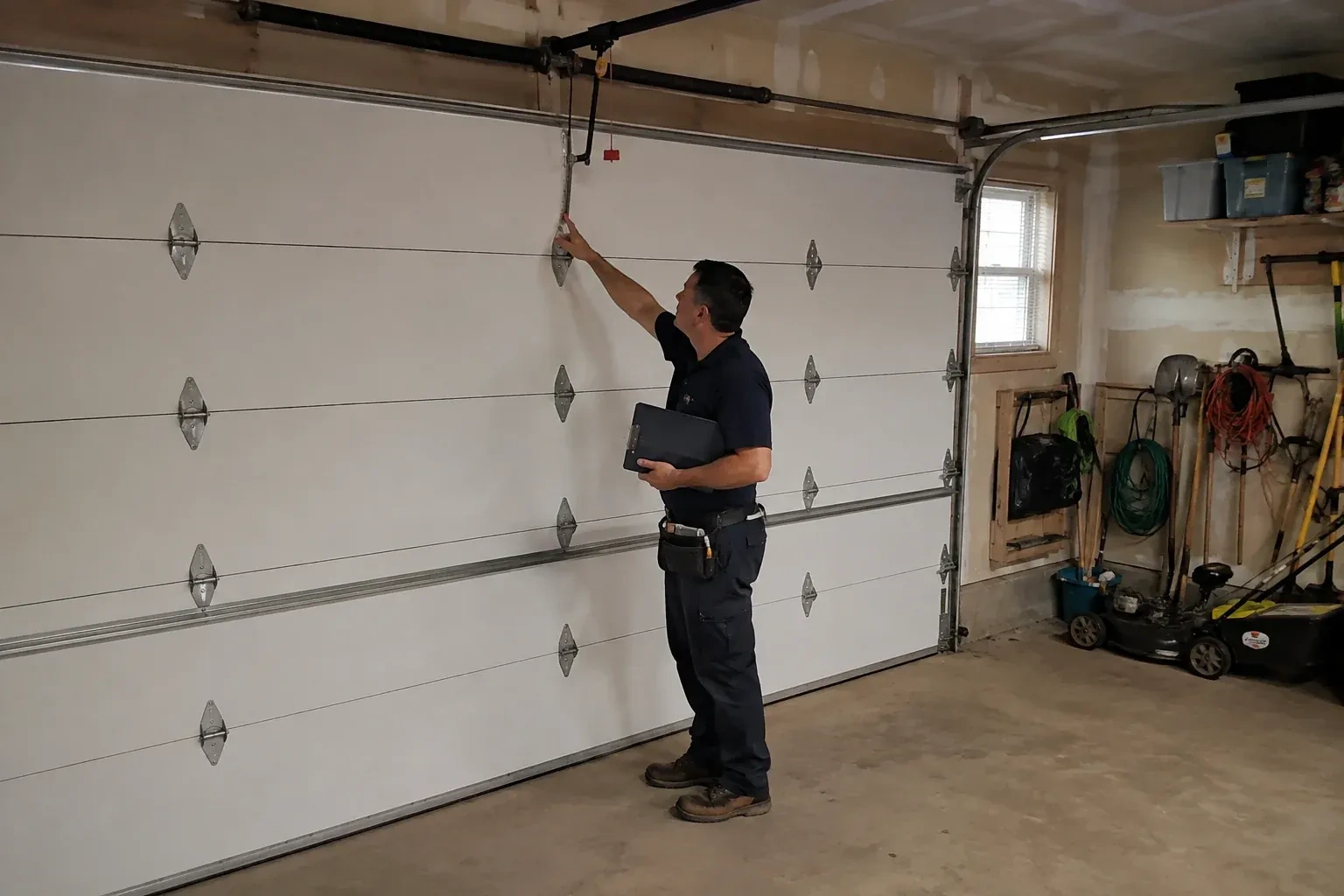
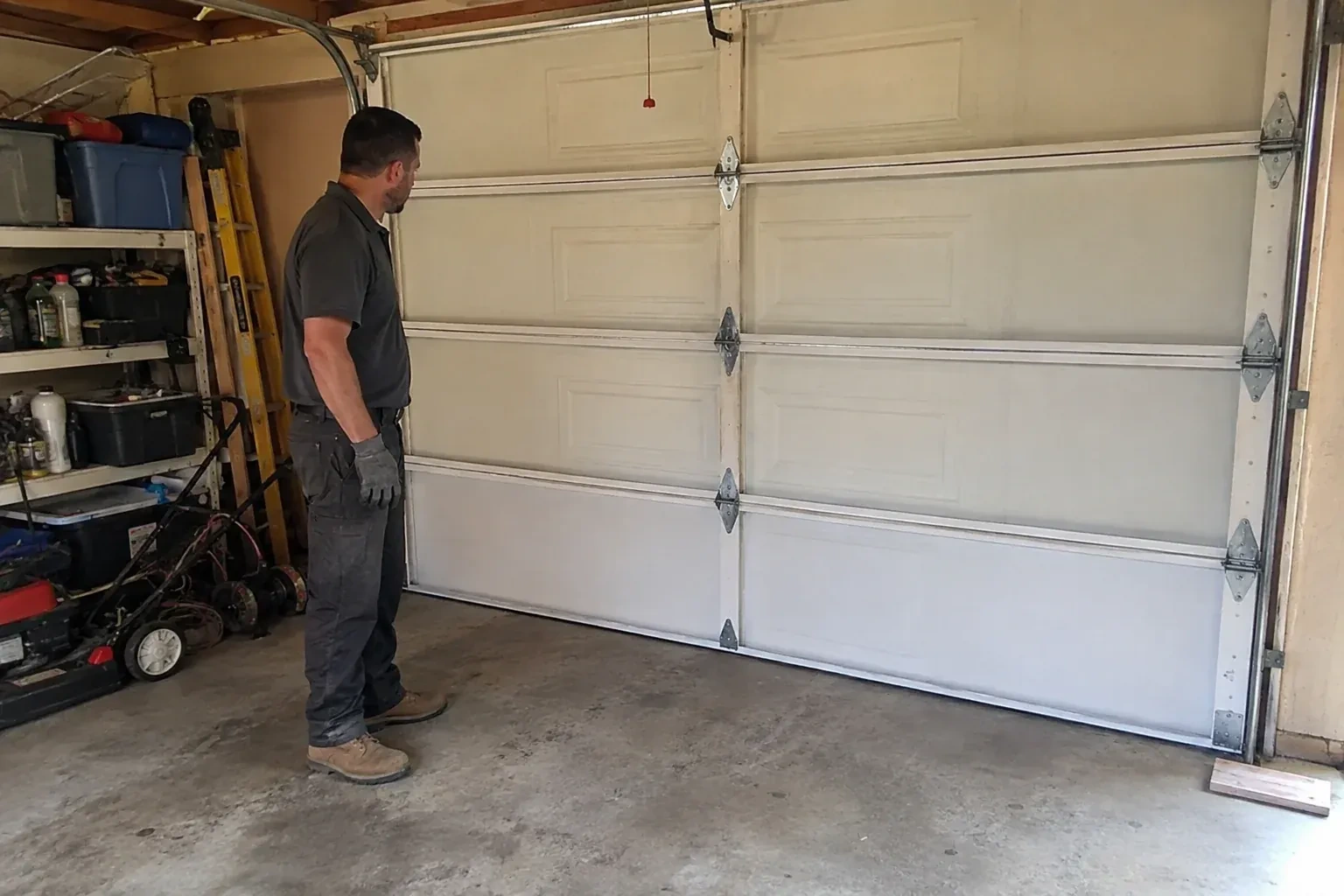
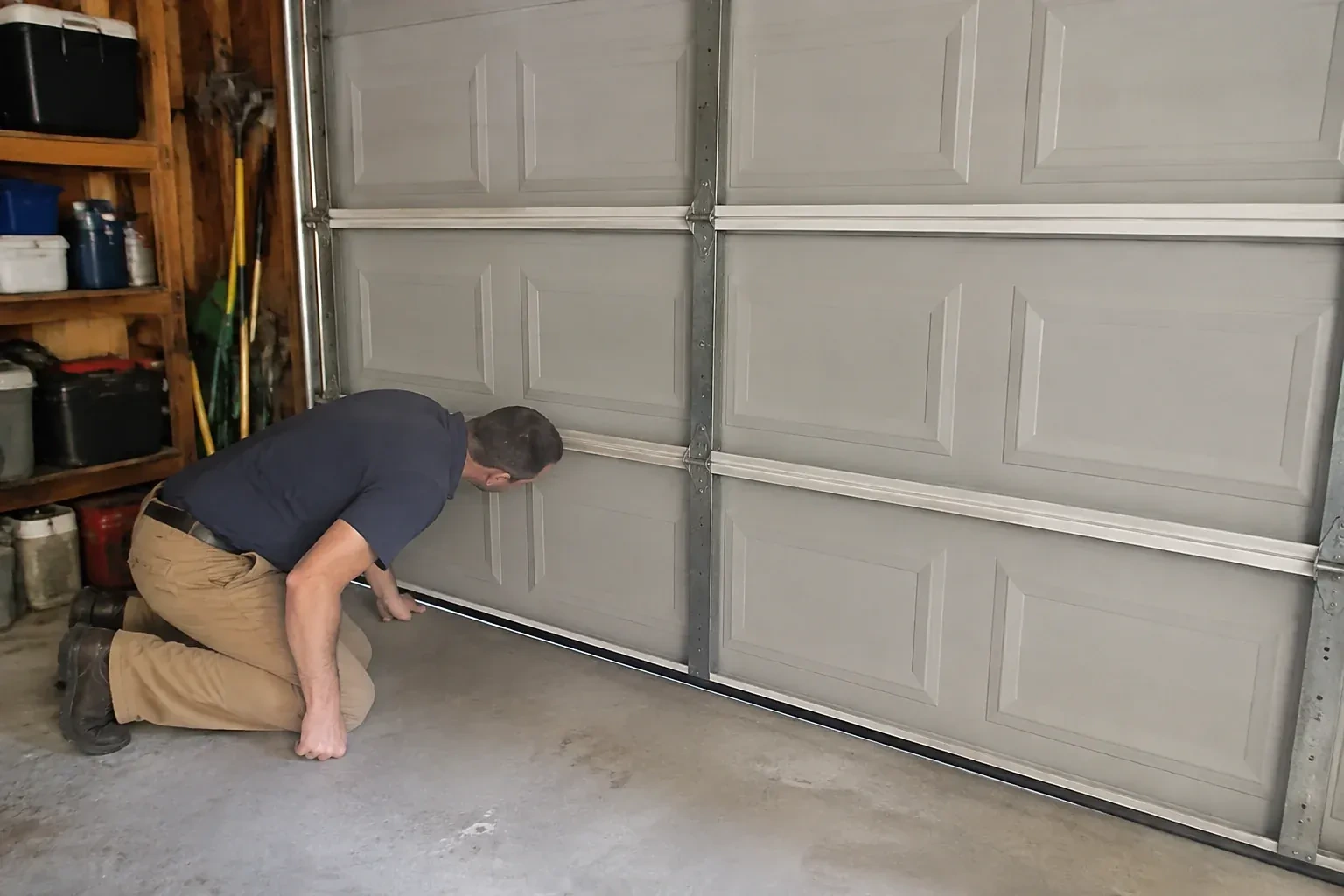
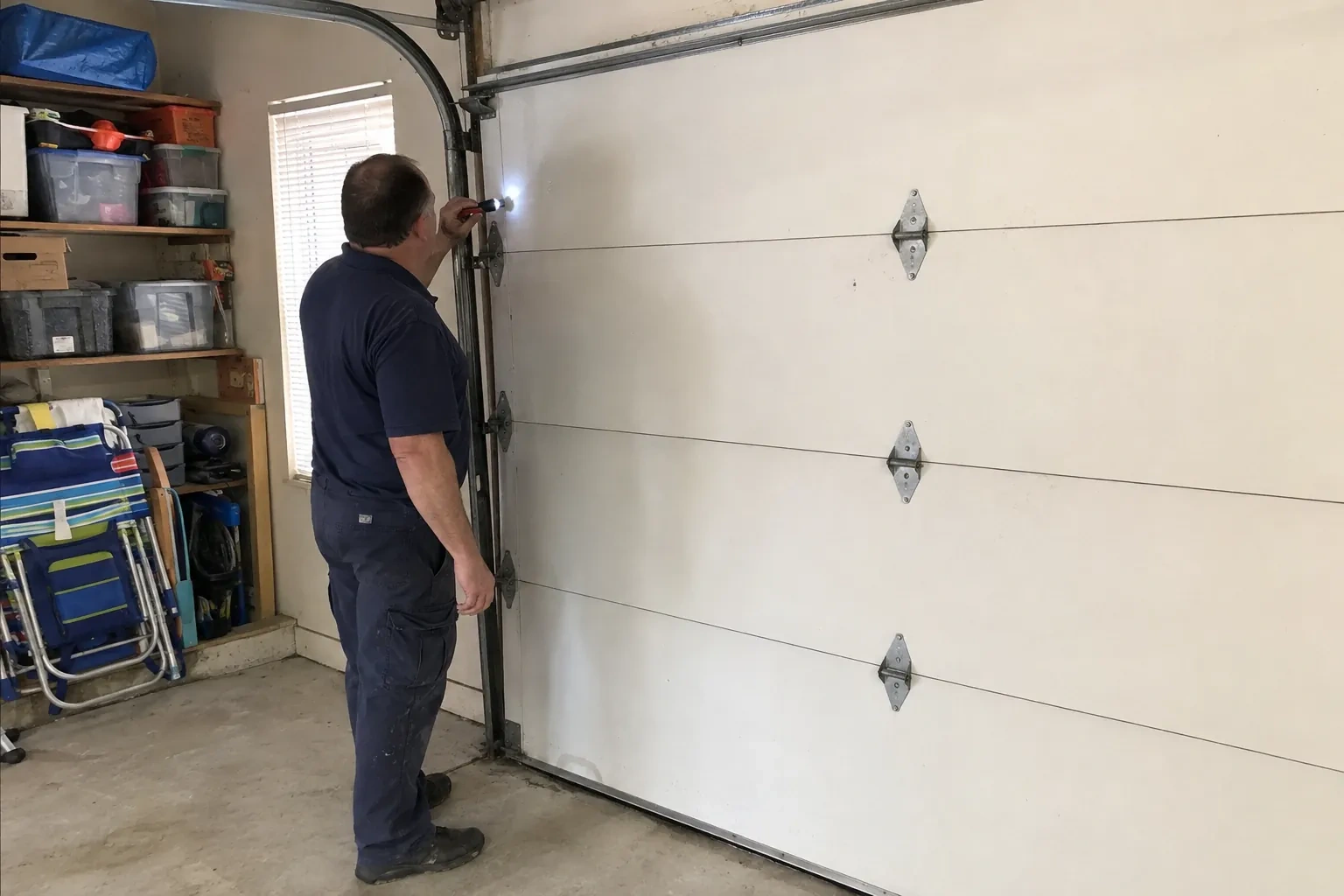
Before touching anything, the technician runs the door, watches the travel, tests balance by hand and looks at springs, cables, rollers and sensors.
03
We explain, then work
You hear what we found and what the choices are before any repair begins. Then the work is done carefully and tested through full cycles.
An entrance. Not an afterthought.
1/10Garage Door Tune-Up
You pulled the red cord to lift the door by hand during a power cut and it felt like lifting a car. The opener has been doing all the work and grumbling about it, and you are not sure how long that can go on.
It is a February morning and the key goes only halfway into the garage handle. Yesterday's melt ran down the door face and into the keyway, and overnight it set like glass. The key flexes; the cylinder stays put.
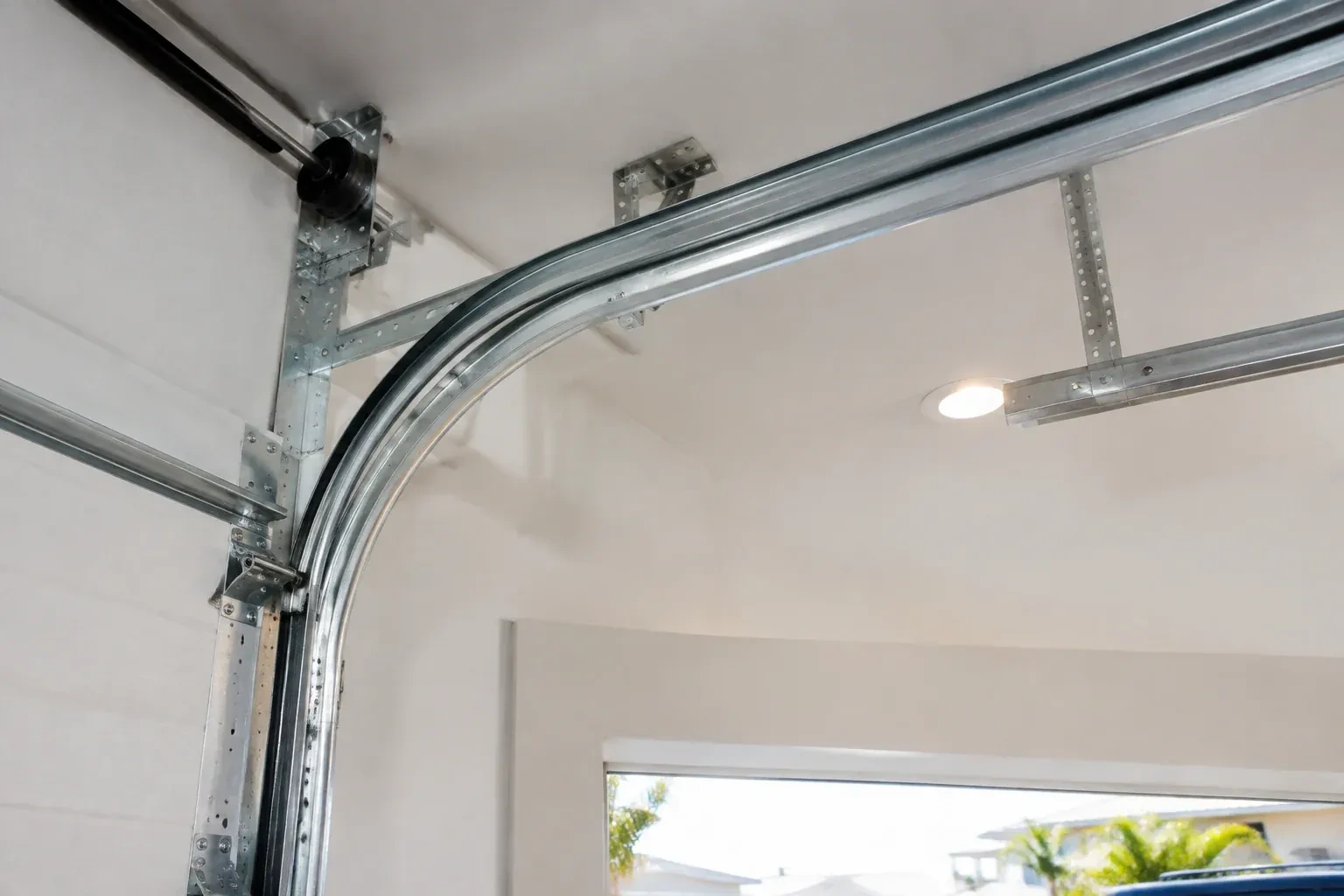
The horizontal rail toward the back of the garage sags noticeably. The hanger that once held it to the ceiling swings on a single screw, and the open door drifts back down a few inches.
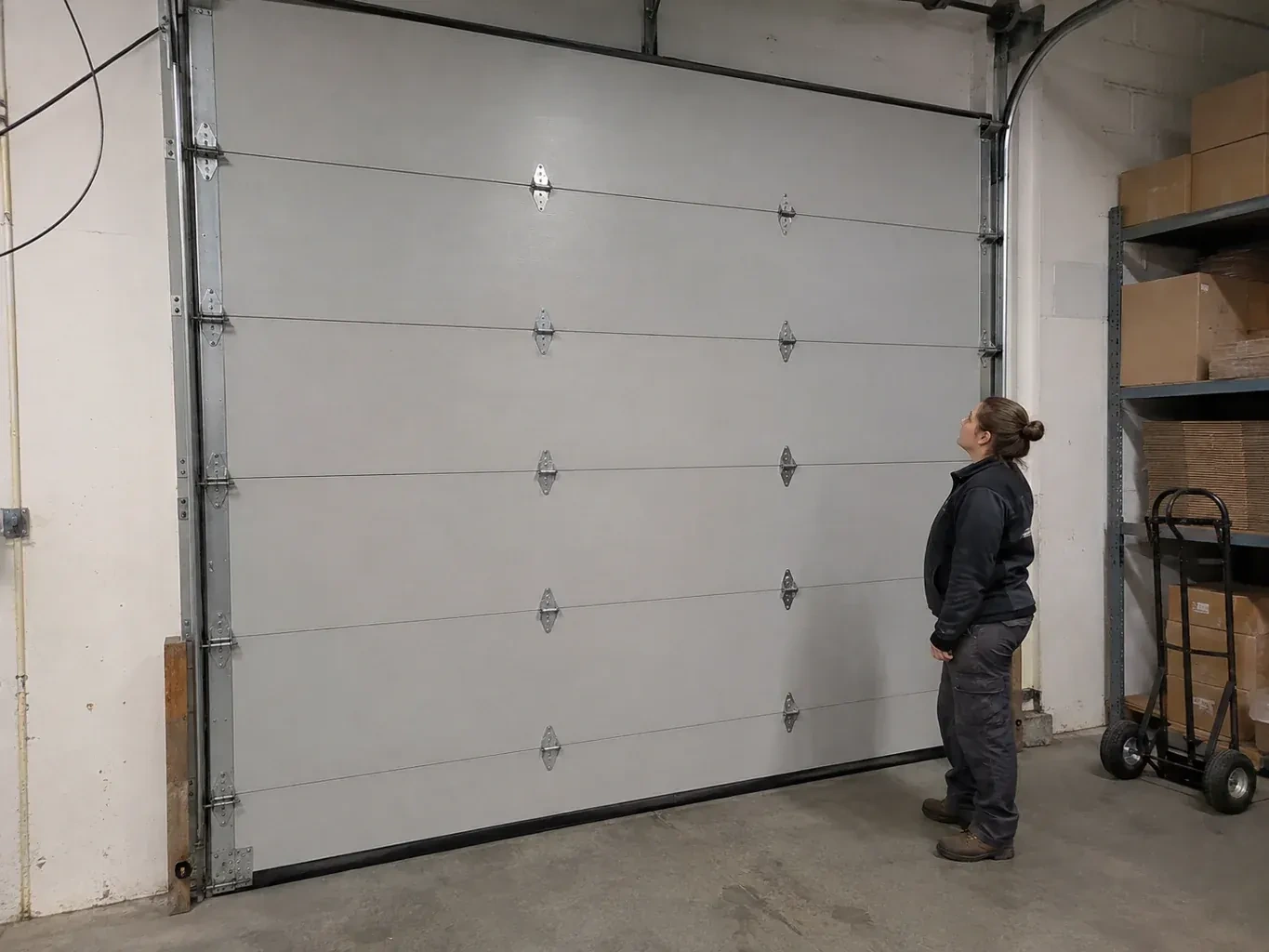
The door drops the last stretch to the floor rather than settling, and when you stop it halfway by hand it slides down instead of staying put. Balance has drifted, and the spring is no longer holding its share of the weight.
You pulled the red cord to open the door during a power cut and it barely moved. Lifting it took your whole weight, and when you let go it came down hard. It used to float up with one hand.
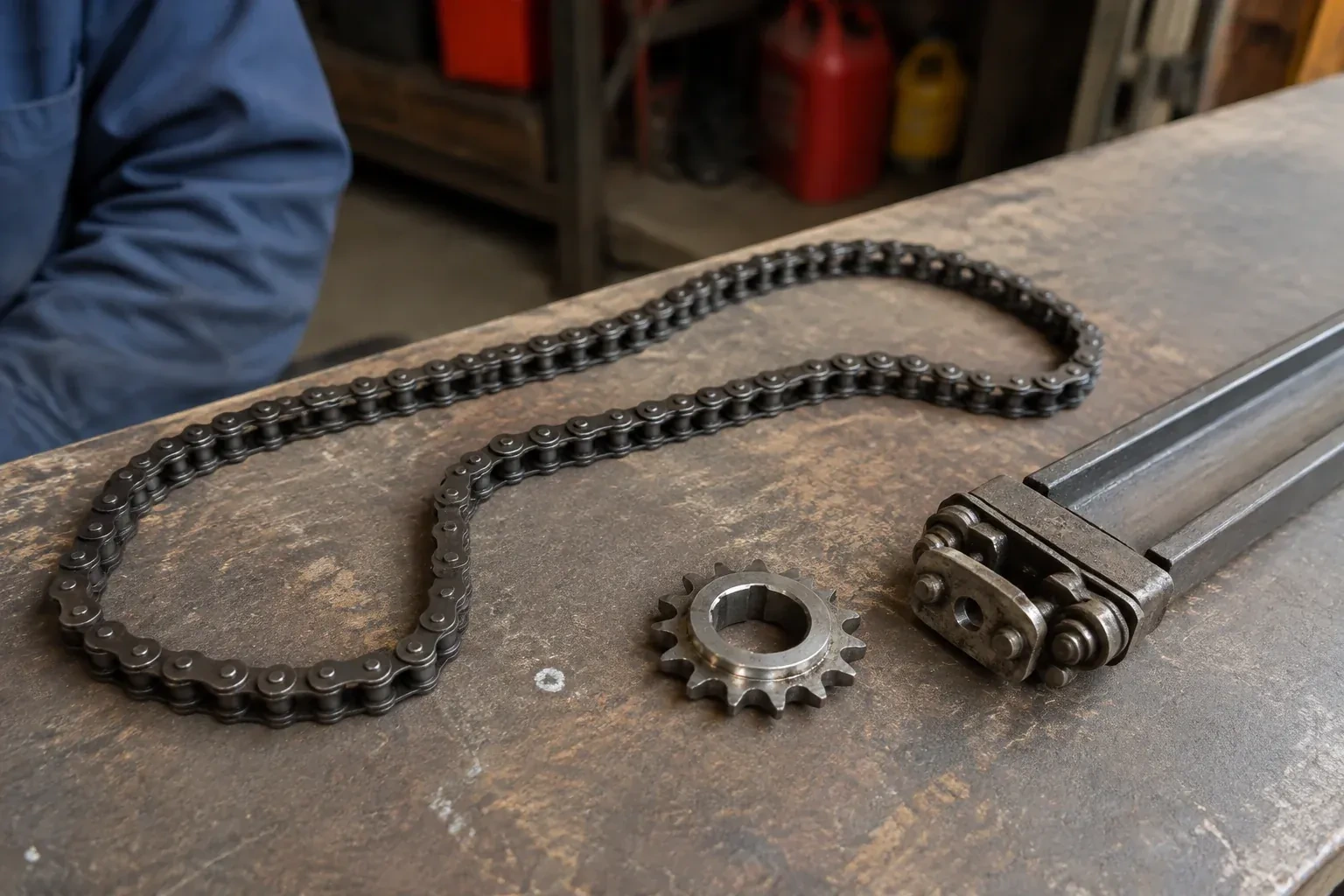
The chain hangs in a loop under the rail and slaps against it on every cycle. It used to sit snug. Now the whole house hears the door leave, and the sound has a metallic clatter it never had before.
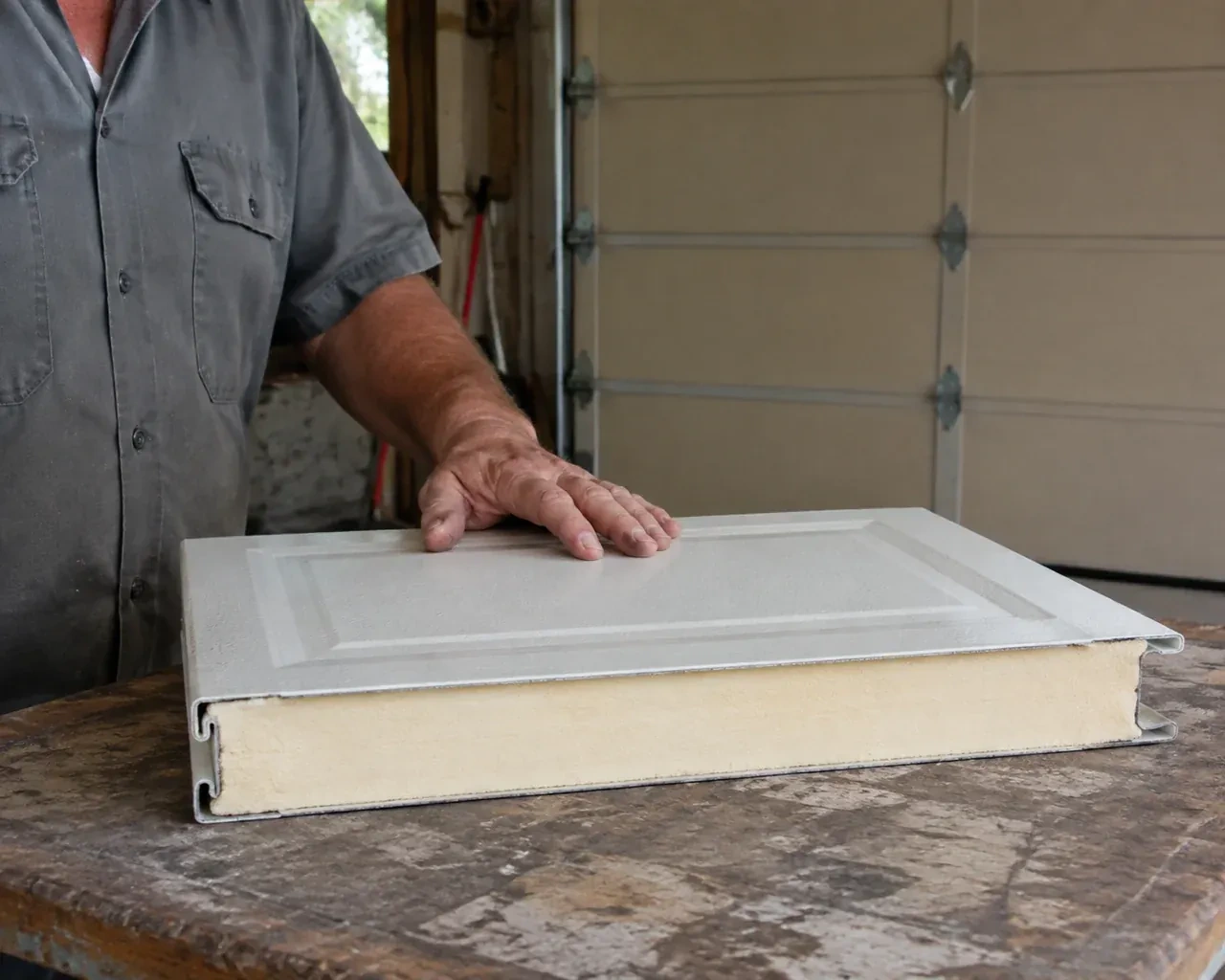
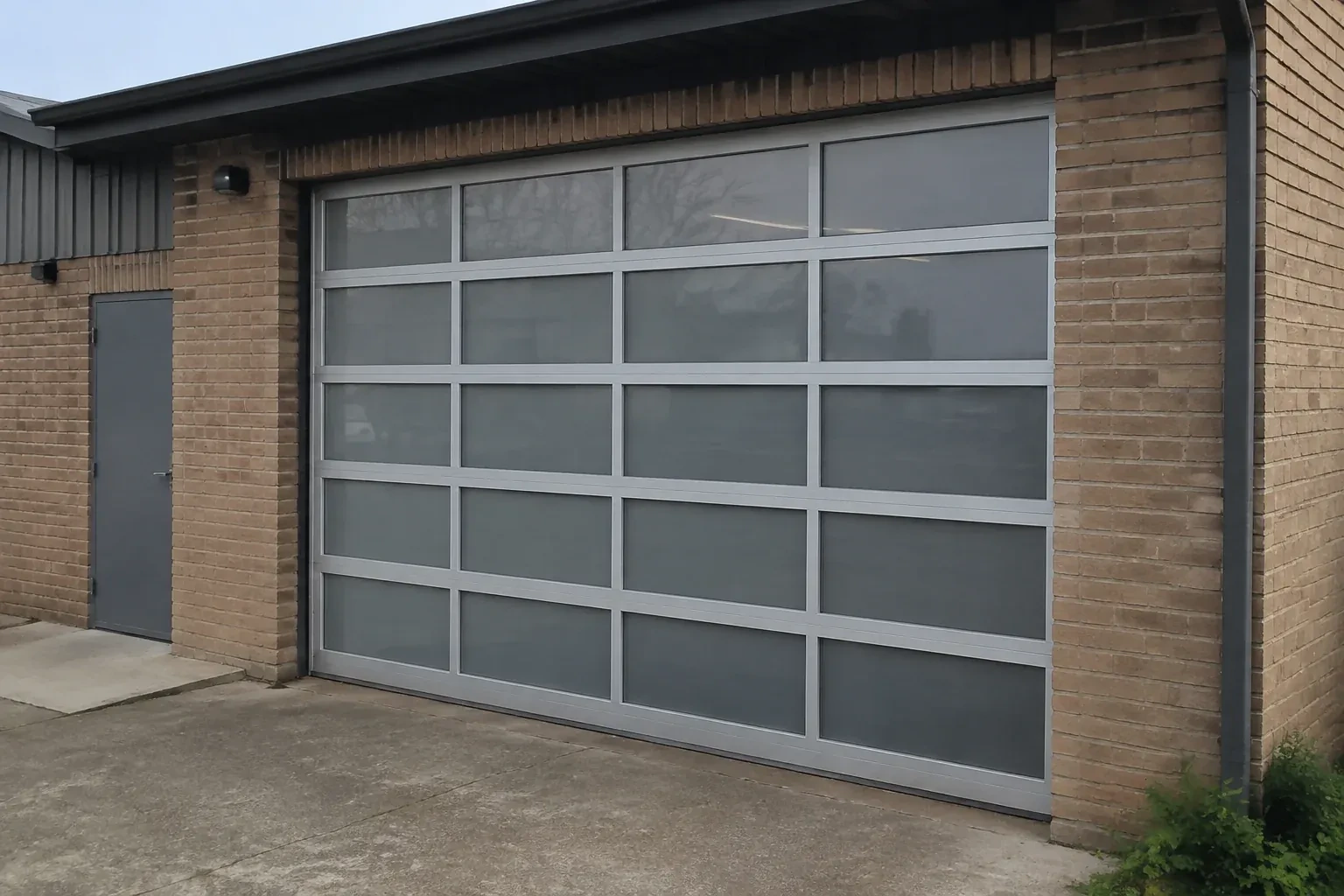
You want windows for natural light without turning the garage into a cold glass wall. The glazing layout, insulated sections and door weight all need to be selected as one working system.
The garage works as a studio during the day, yet the closed solid door leaves it dependent on electric lights. A full-view door could bring daylight across the room while keeping vehicle access.
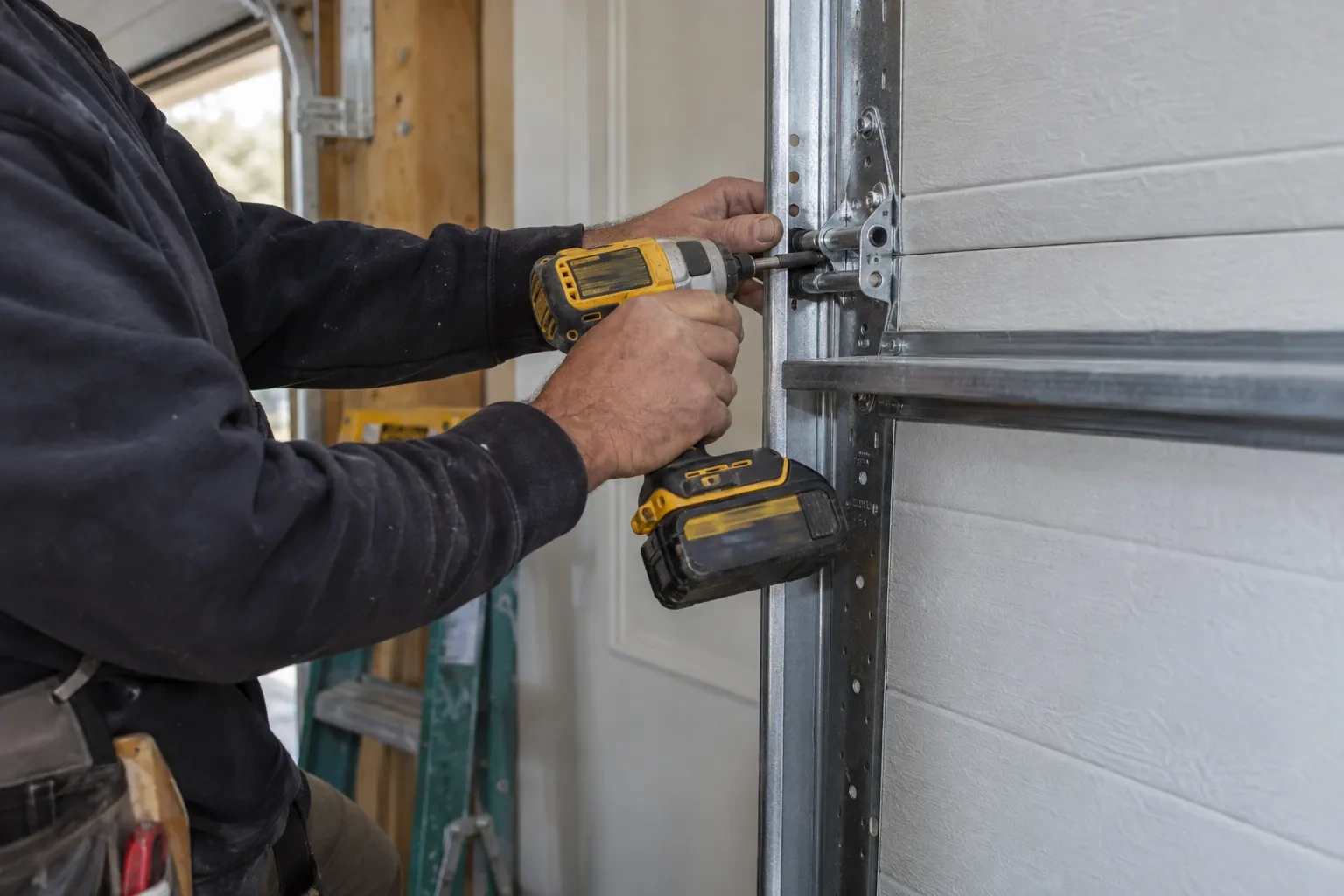
Each opening cycle brings a metallic knock followed by a shudder through the horizontal track. The sound grows near the curve, where a worn roller and loose hinge allow the section to shift under load.
A metallic clatter now comes from inside the hood whenever the curtain coils. The sound follows each revolution, the travel has become jerky, and fine metal dust is visible near one bracket and bearing.
Usually, yes, and often dramatically. Most garage door noise comes from dry hinge pins, dry roller bearings and hardware that vibration has loosened, and those three are exactly what a tune-up addresses. Some noise comes from parts that have worn, such as a roller gone out of round or a chain that has stretched, and the technician tells you which sounds were settled by maintenance and which point to a part worth replacing, with a separate quote for that.
My key will not turn in the cold. What is happening?
Meltwater has run down the door face into the keyway during a thaw and frozen overnight, or cold has stiffened old lubricant inside the cylinder. Lock de-icer or gentle warmth frees it; hot water is avoided because it refreezes and can crack cold metal. Afterwards the cylinder is dried and given a dry graphite or PTFE lubricant that sheds moisture instead of trapping it.
Why does the door catch at the same spot every trip?
A catch that repeats in one place is the signature of a local track fault: a dent, a spread section, a step at a joint, or a bracket that has let the track drift. Each roller reaches the flaw at the same point in the travel and bumps over it. The technician finds the spot by running a roller through the channel by hand, then dresses or replaces that length and checks the rest of the run for the same problem.
Can a spring be adjusted rather than replaced?
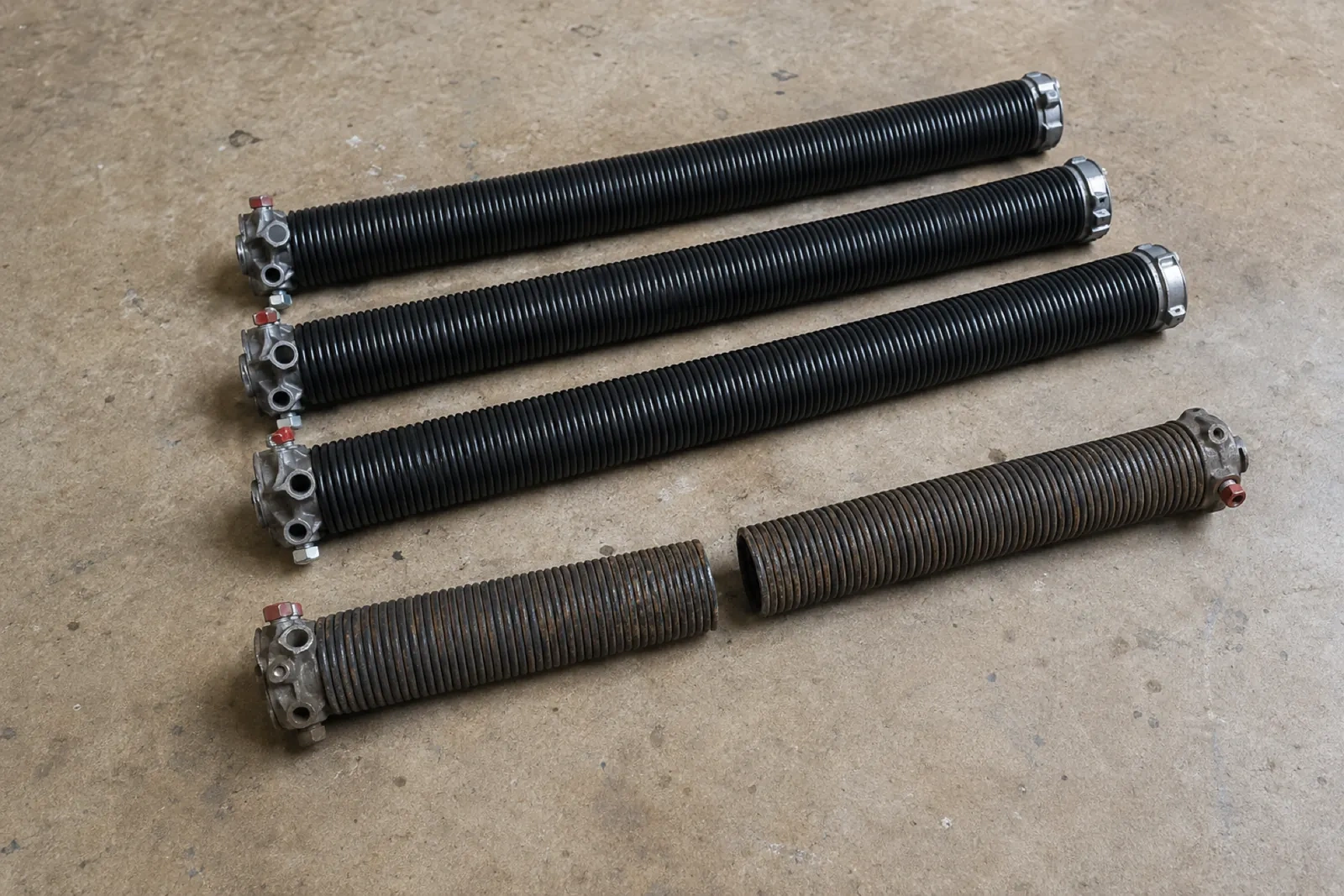
A spring that is intact but has relaxed slightly can be given a little more tension, within limits, to restore balance; this is a normal adjustment on a door that has settled. A spring with a broken coil is replaced as a unit, since the wire has reached the end of its life. The technician checks the condition of the steel and recommends whichever restores a balanced, safe door.
What can I do to make the new springs last?
Three things. Spray the springs, pulley axles and hinges with a garage-door lubricant twice a year, which slows rust in an unheated garage. Keep the threshold clear of bins and packed snow so the door never stops short with the springs still pulling. And leave the opener's force setting where the technician put it, since a door that starts needing more push is a balance question rather than a dial to turn.
Can a sagging chain be tightened, or does it have to be replaced?
Most sagging chains are tensioned, not replaced. The technician takes up the slack at the trolley nuts to the rail's figure and locks it. Replacement is the answer when the chain has stretched so far that tensioning leaves it uneven over the sprocket, when links are seized with rust, or when the sprocket teeth are worn to hooks and would chew a new chain. In that case chain and sprocket are renewed together.
How should painted steel sections be cleaned?
Use the care method provided for the selected finish. Common guidance involves mild soap, clean water and a soft cloth or sponge, followed by a thorough rinse. Work on a cool surface and avoid abrasive pads that can mark the coating. Seasonal washing removes road film and winter residue while giving you a chance to notice scratches, seal wear or developing corrosion.
What maintenance does a full-view door need?
Routine care combines gentle surface cleaning with observation of the moving system. Watch complete cycles, keep sensor paths clear, inspect seals and glazing gaskets, and note new rubbing or uneven movement. Use the operator manual for reversal checks. Springs, cables, drums and bottom brackets store substantial tension, so trained personnel handle adjustments involving those components.
How are replacement rollers chosen for a commercial door?
Roller diameter, stem length, bearing construction, track size and expected door use all shape the choice. The hinge position also matters because numbered end hinges place rollers at different offsets as the panels stack. The technician checks track condition and the mounting areas before fitting new rollers, so renewed hardware runs in a stable and correctly aligned guide.
What gets tested before the door returns to use?
Testing follows the repaired system and can include full travel, curtain tracking, bottom-bar level, open and closed limits, manual effort, brake action, controls, locks, interlocks and protective-device response. Several controlled cycles help reveal repeated contact or noise. The completed record names the checks performed instead of relying on a general statement that the door operates.
Request a visit
We keep things plain for people in Barrie. No jargon in the explanation, no surprises on the invoice, no work started before you have agreed to it. The technician shows you the problem, prices the options on the spot, and gets on with the repair once you say yes.